An unfinished basement containing a metal furnace with ductwork, exposed wooden joists on the ceiling, cardboard boxes, a coiled cable, and a single hanging incandescent bulb.

Furnace Maintenance in Adrian, MI

Tell us about the job

Takes about a minute. No obligation.

Tune-up, service, or cleaningFurnace or heatingLenawee County, MI
Step 1 of 2

What ZIP code is the job in?

Weather here takes a toll

Lenawee County logged 84 severe weather events between 2015 and 2024, most of them damaging wind. A furnace sits inside, but the vent hood and intake tie it to the outside of your house, and both take the brunt of wind-driven debris.

Power loss means no heat

More than a third of Michigan households went at least 24 hours without power in 2024. A furnace needs electricity to run even when the fuel is gas, so when the power drops, so does your heat until it's back.

Furnaces in Adrian start working hard the day October turns cold.

Have it checked in September, before it has to run.

Most of this county runs on gas, so the burner and venting are what maintenance here is really about

74.6% of homes heat with gas
Heat runs October through May
Winter nights average 20°F

Between visits, change the air filter. A clogged filter starves the burner of airflow and that shows up as short cycling or a furnace that runs long without warming the house. Look at the vent hood outside and brush away leaves or anything nesting near it, since a blocked vent keeps exhaust from leaving the way it should. Keep furniture and boxes away from the return grille and the furnace cabinet so air can move freely in and out. If the pilot light or igniter won't hold, or you smell anything unusual when the burner fires, that's not a homeowner fix. Leave the cover panels on except to check the filter, and leave anything past that to a licensed contractor.

Eight months of winter wears a furnace down faster

Furnaces here run about eight months a year, and overnight lows average 20°F through December, January and February. That is a long stretch of hard, cold-weather running, and it wears down igniters, burners and blower motors faster than it would somewhere milder. A furnace that has not been looked at before the season starts is more likely to show its wear once it does.

Find a contractor
A gray residential gas furnace installed in an unfinished basement, surrounded by ductwork, a metal flue pipe, and a gas supply line.

Get ahead of it before the cold sets in

A pre-season check catches the igniter or blower motor that's already wearing thin, while there's still time to get parts ordered before you're relying on this thing every night through December and January.

The filter is doing more than cleaning air

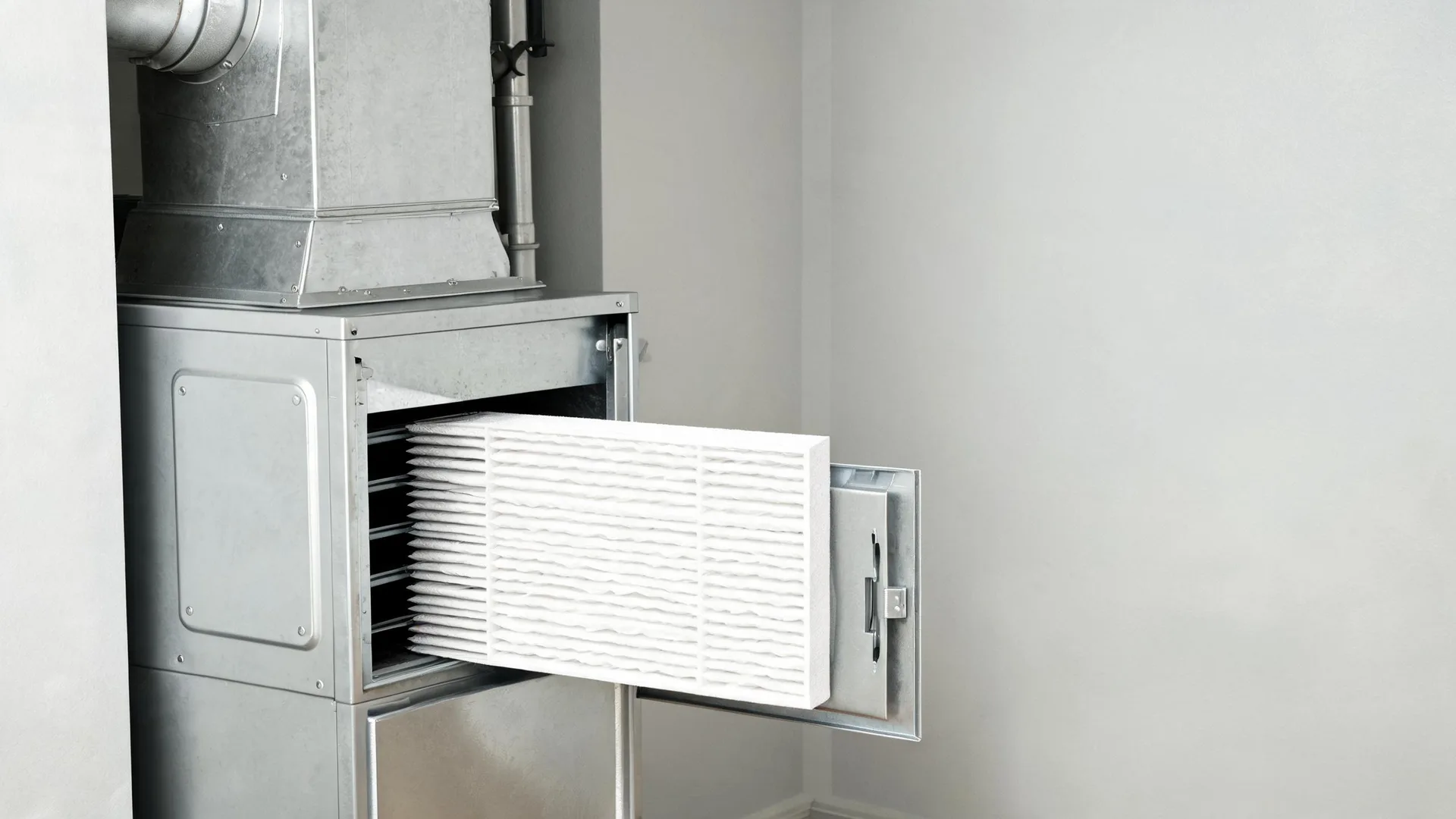
A furnace filter keeps the blower and the burner compartment clean, but its real job is letting air move. When it loads up with dust, the blower has to pull harder to get air through, and the burner can overheat because the warm air isn't carrying heat away fast enough. That's what trips a furnace into shutting off mid-cycle or running long without the house warming up.

The drain only matters on certain furnaces

A high-efficiency furnace produces condensation as it runs and drains it out through a tube to a floor drain or a small pump. If that line clogs with algae or sediment, the furnace senses the water isn't draining and shuts itself down rather than let it back up. Older, standard-efficiency furnaces don't have this drain at all, so it's only something to check if your furnace vents with PVC pipe instead of metal.

A tune-up gets inside the parts of the furnace a homeowner never opens up. The burner flame should burn steady and blue. A tech pulls it apart enough to see the color and shape instead of guessing from the sound it makes. The flame sensor gets cleaned, since a thin layer of residue on it is enough to make the furnace shut off right after it starts, long before the igniter itself is actually bad. Amp draw on the blower motor gets checked against what it should be, because a motor pulling too much power is wearing out its bearings even while it still runs fine today. The heat exchanger gets inspected for cracks that you'd never see without pulling a panel most homeowners are told to leave alone. None of that shows up as a symptom yet. It shows up next month, or in the middle of a cold night, if nobody looks.

A tune-up also covers the parts that don't fail quietly. The igniter draws a small, exact amount of current to glow hot enough to light the burner, and a tech checks that draw rather than just watching it light, because an igniter can still spark and still be on its way out. Gas pressure gets measured at the manifold, since too much or too little changes how the burner actually fires regardless of how the flame looks for a second. Electrical connections get tightened, because a loose one can arc or heat up a wire that was never built to run warm. The inducer motor gets checked for the draw that clears exhaust out ahead of the burner firing, and if it's lagging, the furnace can end up trying to light before the flue is actually clear. A tech also checks the safety switches that are supposed to shut the furnace down if any of this goes wrong, since a switch that's failed open does nothing until the day it's needed.