Three illuminated two-story brick houses on a tree-lined residential street photographed at twilight, with warm window light and landscape uplighting visible against a deep blue evening sky.

Furnace Installation in Port Huron, MI

Tell us about the job

Takes about a minute. No obligation.

New system or replacementFurnace or heatingSt. Clair County, MI
Step 1 of 2

What ZIP code is the job in?

St. Clair County sees real storm damage

St. Clair County recorded 110 severe weather events between 2015 and 2024, including 82 damaging wind events, 13 winter storms and 3 tornadoes. That's weather that brings down lines and knocks out power, not just a rough afternoon.

A new furnace needs a plan for no power

A gas furnace still needs electricity to run its blower and controls. More than a third of Michigan households went at least 24 hours without power in 2024. A furnace installed here should be installed with that in mind.

8 months
October through May, your furnace is on duty
20°F
the average winter night it heats against
74%
of homes here heat with gas, so most furnaces here burn gas
80% AFUE
the federal minimum any new unit must meet
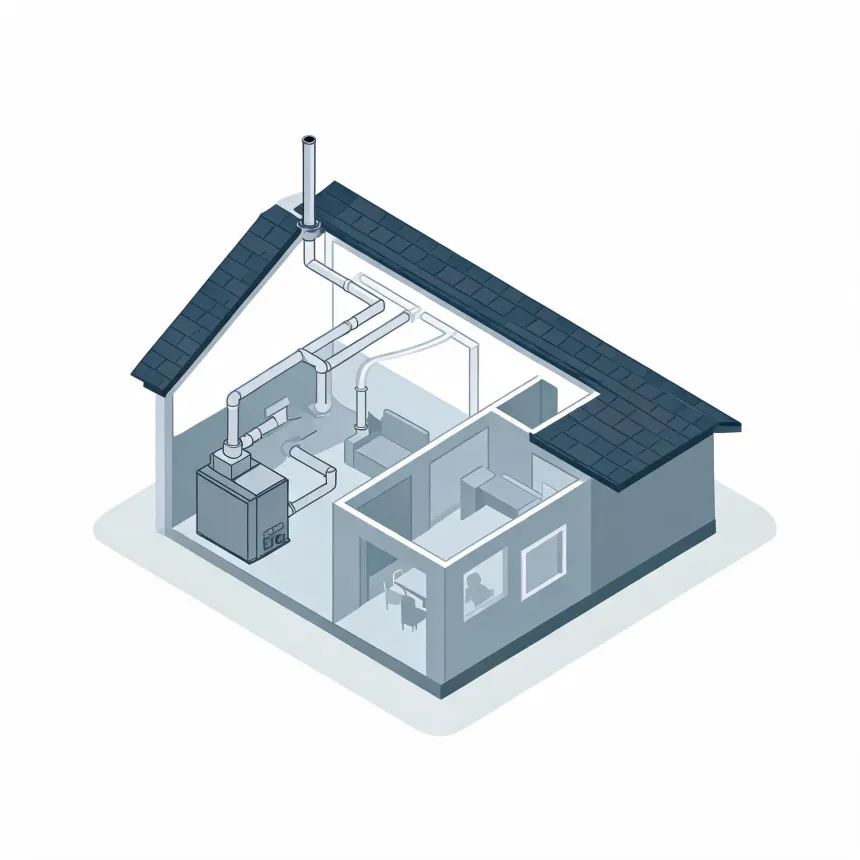
Isometric cutaway illustration of a single-story house showing interior rooms, a furnace unit with connected ductwork, and a flue pipe extending through the dark shingled roof.
Your furnace works hardest from November through March.

NOAA nClimDiv, 1991–2020 normals

Gas heats 74.4% of homes in St. Clair County.

Replacing a gas furnace with another gas furnace is the straightforward path for most homes here.

October is the month to get it done, before the cold and the outages start

Heat runs October through May
Climate zone 5A
Winter nights average 20°F

St. Clair County falls under zone 5A, a cool, humid climate code where heating carries the bigger share of the year's work. Any furnace installed here has to meet the federal minimum for that load: units built from November 19, 2015 on must turn at least 80 percent of their gas into heat over the winter. That floor holds until December 18, 2028, when new units have to reach 95 percent. A furnace bought today still has to clear 80 percent, but the market is already shifting toward the higher mark, and it narrows what you'll find on the shelf as that date gets closer.

Ask how the new furnace holds up when the power doesn't

A gas furnace won't run without power, and this county loses it more than most. When you're having one installed, ask what happens to heat the next time lines come down. A battery backup or a transfer switch for a generator keeps the blower and controls running until power's back.

Find a contractor
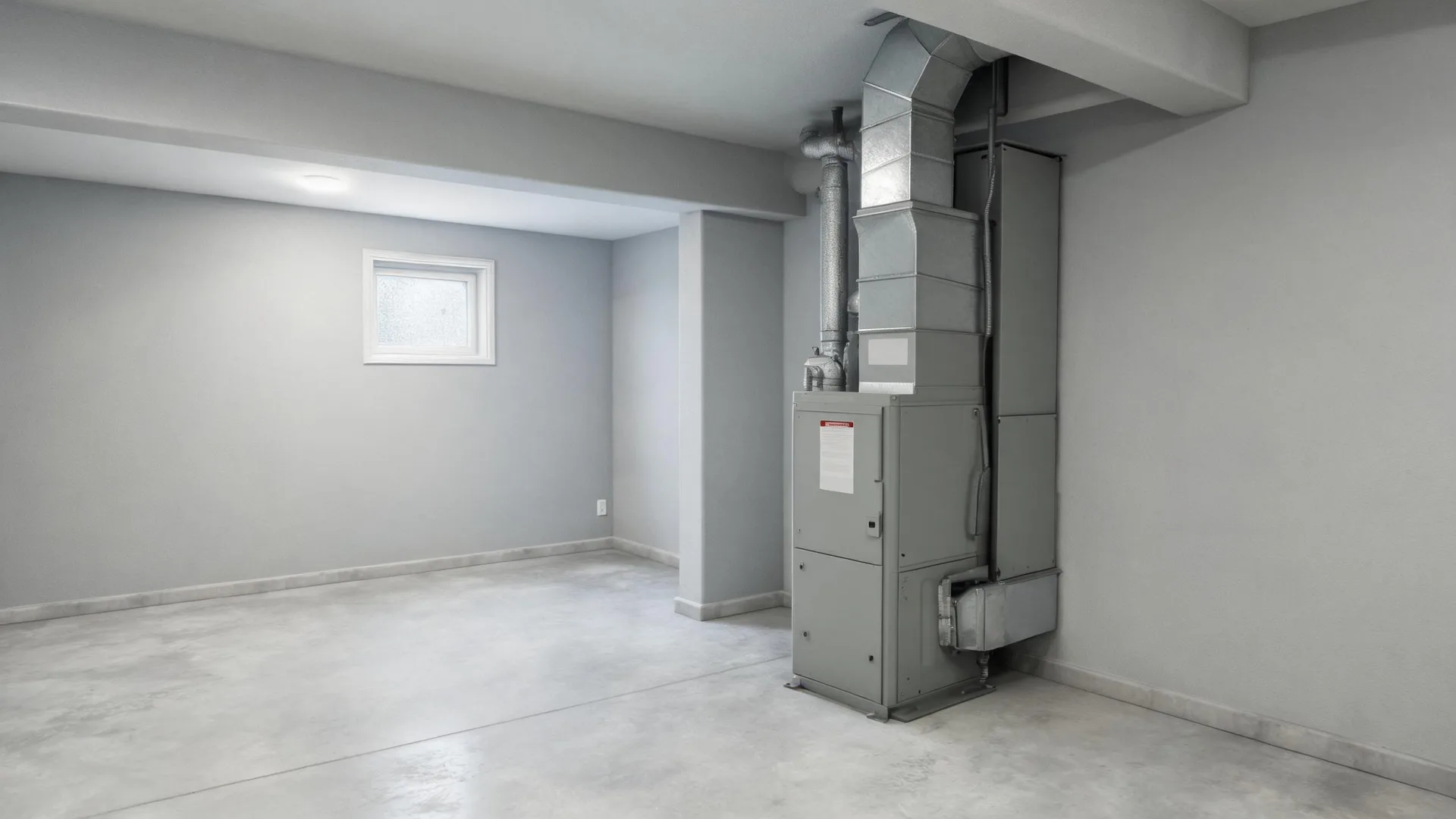
A gray residential gas furnace installed in an unfinished basement, connected to sheet-metal ductwork and PVC pipes.

Eight months of heat a year

Eight months of heat a year, October through May, is a long season. That furnace will spend most of its life running, not sitting idle. More hours of runtime means the igniter, the blower motor and the burners all see more cycles before the year is out, and whatever is going to wear out or drift out of adjustment will show up sooner than it would somewhere with a shorter winter. A furnace sized right for this house, and installed with that workload in mind, holds up a lot better than one picked because it was cheapest on the lot.

Size drives most of the cost

A furnace is sized to the house, not picked off a shelf. The contractor should run a load calculation that looks at square footage, ceiling height, window count and insulation before quoting anything. A unit too big for the house cycles on and off fast and wears out sooner. One too small runs constantly and still can't keep up on the coldest days. Getting the size right is what everything else in the quote is built on.

The vent and gas line matter as much as the furnace

Swapping a furnace rarely means just setting a new box where the old one sat. The flue has to be sized and routed correctly for the new unit, and a higher-efficiency furnace vents differently than an older one, sometimes needing new PVC pipe run to the outside instead of the old metal flue. The gas line and electrical hookup get checked too. Any of that work adds time and parts beyond the furnace itself, and it's worth asking upfront whether the install includes it.

An empty unfinished basement containing a forced-air furnace with overhead ductwork, exposed ceiling joists, and a single hanging light bulb.

A high-efficiency gas furnace would save about $120 a year to run in St. Clair County compared with a gas furnace.

  • A high-efficiency gas furnace$580 a year
  • A gas furnace$700 a year

Estimates for a typical St. Clair County home, from EIA household energy data, Michigan fuel prices and NOAA climate normals. Your home will differ.

Installation day starts with the old furnace coming out, not the new one going in. The contractor shuts off gas and power first, then disconnects the vent, the gas line and the ductwork from the old unit before it ever leaves the house. Setting the new furnace means leveling it, securing it to the plenum, and sealing every duct joint so air isn't leaking out before it reaches a single room. Then come the gas line, the vent pipe and the electrical hookup, each pressure tested or checked before the furnace ever fires. The first startup is where the contractor checks the flame, sets the blower speed, and confirms the system is pulling the right amount of gas. Only after all that gets checked does the thermostat get programmed and handed back to you.