An unfinished basement containing a metal furnace with ductwork, exposed wooden joists on the ceiling, cardboard boxes, a coiled cable, and a single hanging incandescent bulb.

Furnace Installation in Midland, MI

Tell us about the job

Takes about a minute. No obligation.

New system or replacementFurnace or heatingMidland County, MI
Step 1 of 2

What ZIP code is the job in?

Storms hit this county often

Midland County recorded 76 severe weather events between 2015 and 2024, including 50 cases of damaging wind, 15 winter storms and 11 hail events. Over a third of Michigan households went at least 24 hours without power in 2024.

A furnace has to survive the outage, not just the storm

A new furnace needs power to run even on gas, from the control board to the igniter to the blower. When the power goes out in a winter storm, the furnace stops with it until power comes back or something else picks up the load.

8 months
October through May, your furnace is on duty
18°F
the average winter night it heats against
66%
of homes here heat with gas, so most furnaces here burn gas
80% AFUE
the federal minimum any new unit must meet
Isometric line illustration of a cutaway single-story house showing interior rooms with furniture, ceiling ductwork, a chimney flue, and a furnace unit outside the exterior wall.
Your furnace works hardest from November through March.

NOAA nClimDiv, 1991–2020 normals

Gas heats 65.5 percent of homes in Midland County, more than any other fuel.

A gas furnace is the easier system to size, permit and install here, since most contractors are replacing one gas furnace with another.

Eight months of heat a year wears a furnace out faster

Heat runs October through May
Winter nights average 18°F
Climate zone 5A
Get it done before OctoberFurnace season runs eight months here, October through May, and September is the last month to do this on your own timeline.

Midland County falls under zone 5A in the 2021 energy code, a cool zone where the furnace carries more of the work than the air conditioner does. Any furnace installed here has to clear the federal minimum for that climate, which is 80.0 percent efficiency for units built from November 2015 onward. That floor rises to 95.0 percent for furnaces manufactured from December 2028 on, so the minimum itself is set to change. A furnace at the 80 percent mark loses less than a quarter of the gas it burns, and higher-efficiency models are available now for anyone who wants to beat the minimum rather than just meet it.

Plan the install around the outage, not just the storm

Talk to your contractor about where the new furnace sits and what keeps it running when the power drops. A battery backup or a generator hookup can carry the control board, igniter and blower through an outage so the furnace keeps working once the storm itself has passed.

Find a contractor
A person in a dark long-sleeve shirt and tan work pants, seen from behind, carries a canvas tool bag while stepping up porch stairs toward a dark blue front door.
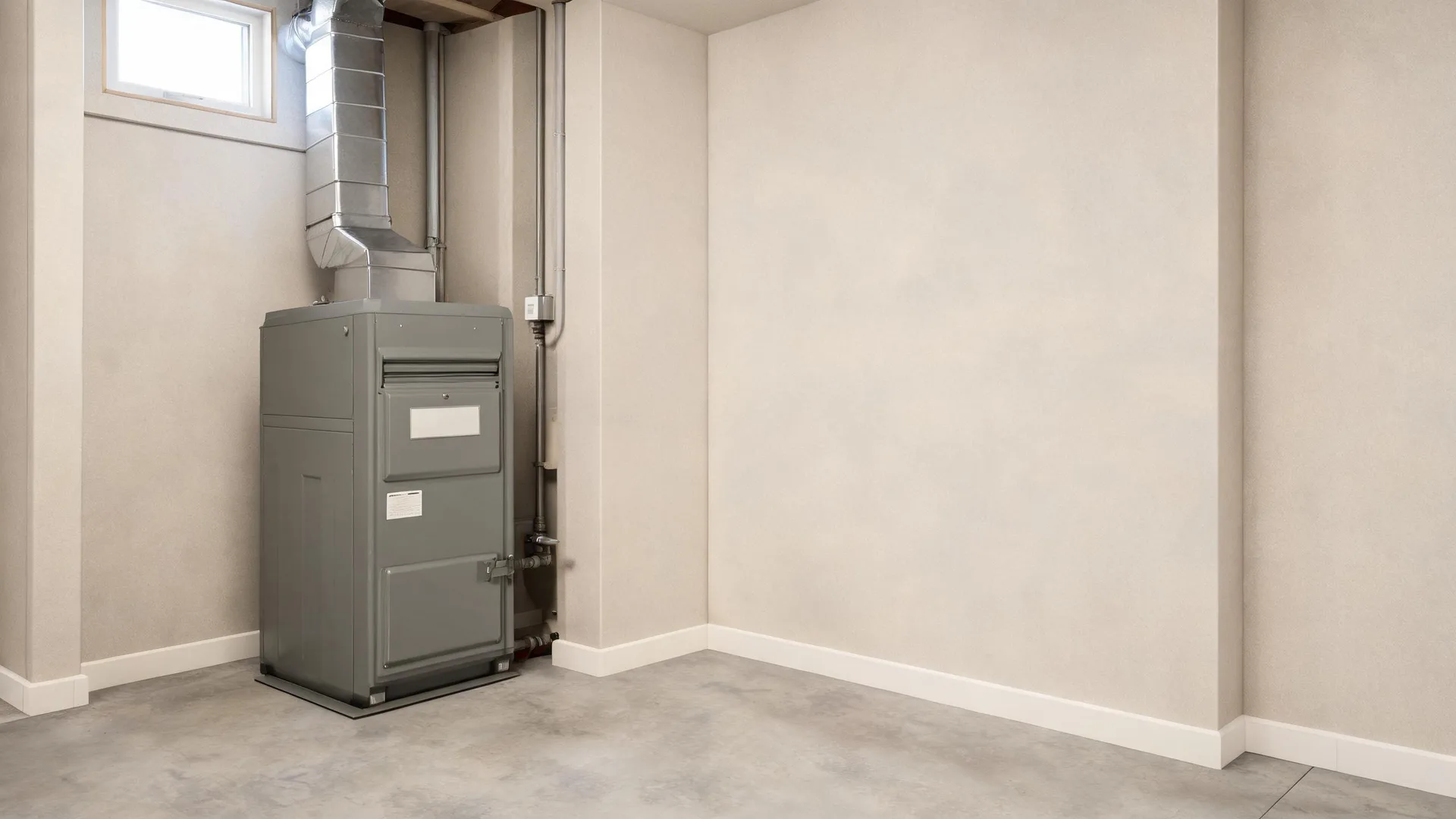
A gray gas furnace with attached ductwork and piping installed in an unfinished concrete basement.

Eight months of work a year, so size it for this house

Eight months of run time a year means sizing matters more here than in places that only heat for a few weeks at a stretch. A furnace that is too big for the house cycles on and off instead of running steady, and that short cycling is what burns out igniters and blower motors early. Ask the contractor for a load calculation on the house, not a quote based on what the old unit was. Price is a bad way to pick between two furnaces that are both sized right. The one that costs less up front may not be the one that costs less to run through eight months of Midland winters.

The percentage is what the furnace keeps, not what it burns

That efficiency number on the label says how much of the gas becomes heat in the house and how much goes out the flue. A furnace near the minimum sends more of what you pay for straight outside. One built higher on the scale keeps more of it, burner after burner, for as long as the unit runs.

The number changes what sits in the basement

A furnace built to the higher end of the scale needs a way to vent that the older, lower-rated style never did, usually a drain for condensation and venting that can run through PVC instead of metal. That changes where the installer can put the unit and what the installation involves. Ask what rating you're buying before you ask what rating you need.

A bare concrete basement containing a gray gas furnace with metal ductwork and a vertical flue pipe, lit by a single hanging bulb.

A high-efficiency gas furnace would save about $130 a year to run in Midland County compared with a gas furnace.

  • A high-efficiency gas furnace$610 a year
  • A gas furnace$740 a year

Estimates for a typical Midland County home, from EIA household energy data, Michigan fuel prices and NOAA climate normals. Your home will differ.

Installation day starts with the old furnace coming out, and that's often the slow part. The installer has to disconnect the gas line, the venting, the electrical and the ductwork before anything new goes in, and sometimes the old unit doesn't want to leave the space it was built into. Once it's out, the ductwork gets checked for how it connects to the new furnace, since a transition that fit the old unit doesn't always fit the new one without some rework. The gas line, venting and electrical get run to match what the new furnace needs, which can differ from what the old one used. Then comes the startup: the installer fires the burners, checks the flame, sets the gas pressure, and runs the blower to confirm the airflow is right for the ductwork it's tied into. Before anyone leaves, the furnace should be cycling on its own, holding a steady flame, and venting the way it's supposed to.