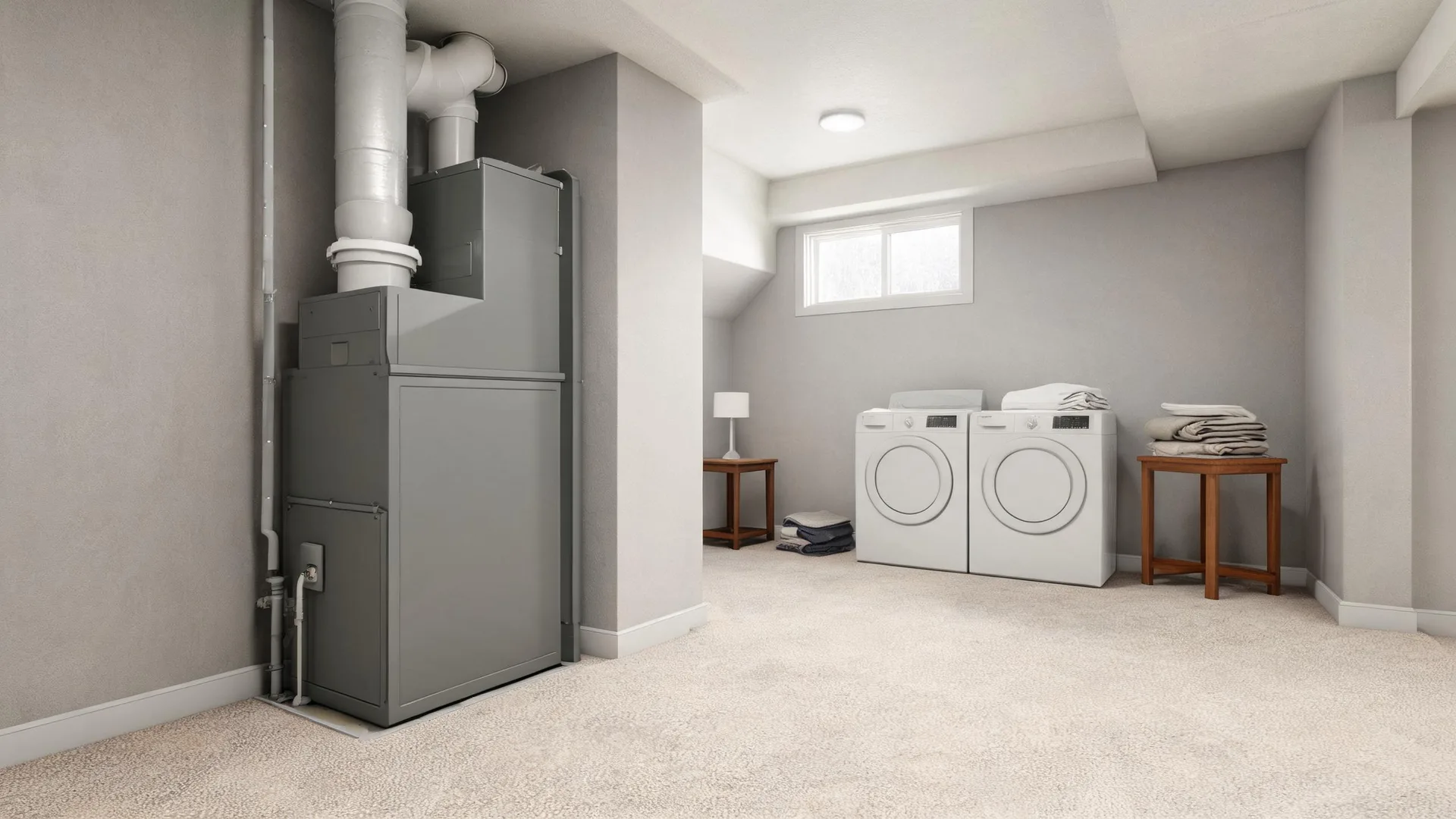
Kalamazoo falls under zone 5A
The 2021 energy code rates Kalamazoo County a cool, humid climate where heating carries the bigger load. Any furnace going into a home here has to be sized and rated with that load in mind, not a milder one.
Takes about a minute. No obligation.
The 2021 energy code rates Kalamazoo County a cool, humid climate where heating carries the bigger load. Any furnace going into a home here has to be sized and rated with that load in mind, not a milder one.
A furnace built on or after November 19, 2015 has to turn at least 80 percent of its gas into heat. That's the minimum allowed. Units built from December 18, 2028 onward have to hit 95 percent, so what's on the market now spans both ends of that range.
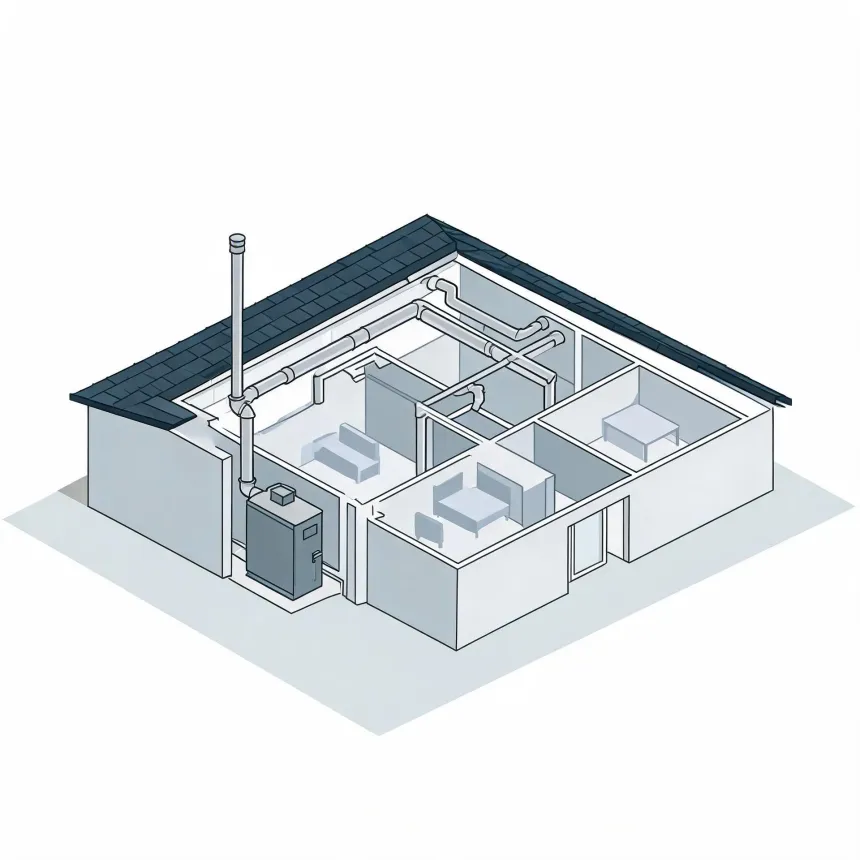
NOAA nClimDiv, 1991–2020 normals
Gas heats 72.9 percent of homes in Kalamazoo County.
A gas furnace is the system most contractors here install and service week in and week out.
Eight months of heat is a long season to ask one furnace to cover. From October through May, this is the machine keeping the house livable, not a backup running a few weeks here and there. That kind of runtime adds up on the parts inside it, the igniter, the blower motor, the heat exchanger, faster than it would somewhere that only needs heat for a few months. A furnace sized for a milder place will run longer and harder here just to keep up, and the strain shows up sooner than the homeowner expects.
A new system here has to meet this region's minimum efficiency, which limits what can go in.
Find a contractorEight months of runtime a year is the number to size around, not the number to shop past. Get a load calculation done for this house instead of matching whatever is already there. A unit sized for a shorter season will cycle more than it should trying to keep up here, and the parts carrying that load are the same ones that fail first. Paying less up front for a furnace that is undersized or poorly matched to the ductwork costs more in the months it has to run.
Disconnecting a furnace means more than unplugging it. The gas line gets capped, the venting gets removed or sealed, and the electrical connections get disconnected at the source, not just at the unit. Any contractor pulling a furnace should leave no open gas line and no vent that dead-ends into the house.
A new furnace often needs different venting, a different gas connection size, or ductwork that doesn't line up with where the old cabinet sat. Taking out the old unit is when a contractor finds out whether the flue, the gas line, and the plenum will work with the new one or need changes before it goes in.
Estimates for a typical Kalamazoo County home, from EIA household energy data, Michigan fuel prices and NOAA climate normals. Your home will differ.
Installation starts with sizing and ends with testing, and the parts in between take most of the day. The old furnace comes out first, then the contractor works through the new venting, the gas line, and the plenum connections the previous section covered. Ductwork gets tied in, the gas line gets pressure tested for leaks before anything is lit, and the electrical and thermostat wiring get run last. Once the furnace fires, the contractor checks the flame, checks the temperature rise across the heat exchanger, and makes sure the blower is moving the right amount of air for the ductwork it's tied into. A furnace that fires but never gets checked against its airflow and temperature rise numbers can run inefficiently or shut itself off on a limit switch within the first season. The work isn't done until the system has been run through a full cycle, start to shutoff, with the contractor watching it the whole time.