





An unfinished basement featuring concrete block walls, exposed floor joists, a bare concrete floor, and a forced-air furnace with a large metal exhaust duct in the corner.

Furnace Installation in Howell, MI

Tell us about the job

Takes about a minute. No obligation.

New system or replacementFurnace or heatingLivingston County, MI
Step 1 of 2

What ZIP code is the job in?

Livingston County recorded 127 severe weather events between 2015 and 2024. Most of that was wind, 88 events in that span, along with 20 hail events and 2 tornadoes. Add in 16 winter storms with heavy snow and ice, and a furnace here is up against more than just the cold. Statewide, 34% of Michigan households lost power for a full day or more in 2024. A new furnace has to hold up through that, not just run on a normal day.

8 months
October through May, your furnace is on duty
18°F
the average winter night it heats against
78%
of homes here heat with gas, so most furnaces here burn gas
80% AFUE
the federal minimum any new unit must meet
Isometric line illustration of a cutaway building interior showing a furnace unit with a flue pipe and ductwork running along the ceiling, plus adjacent rooms with simplified furniture.
Your furnace works hardest from November through March.

NOAA nClimDiv, 1991–2020 normals

Gas heats 77.8% of homes in Livingston County.

A gas furnace replacement here is usually swapping like for like, not rethinking how the house is heated.

Eight months of heat a year leaves little room for a furnace that waits until it fails

Heat runs October through May
Winter nights average 18°F
Climate zone 5A

Howell falls in climate zone 5A, a zone the 2021 energy code rates as cool with heating as the bigger load. Any furnace installed here has to meet the federal minimum for that: at least 80 percent efficiency, turning 80 cents of every dollar of gas into heat over the winter. That floor goes up on December 18, 2028, when new furnaces will have to hit 95 percent. A unit installed today under the current rule can still be installed right up to that date. Higher-efficiency furnaces beyond the minimum may also qualify for a federal tax credit, worth checking against the specific model going in.

Plan the install around the outages, not just the cold

A furnace that only has to run doesn't tell you much. Ask where the installer plans to put the outdoor components, what happens to your heat if the power drops for a day, and whether the setup gives you any way to keep hot water running too. That's part of sizing the job right, not an extra.

Find a contractor
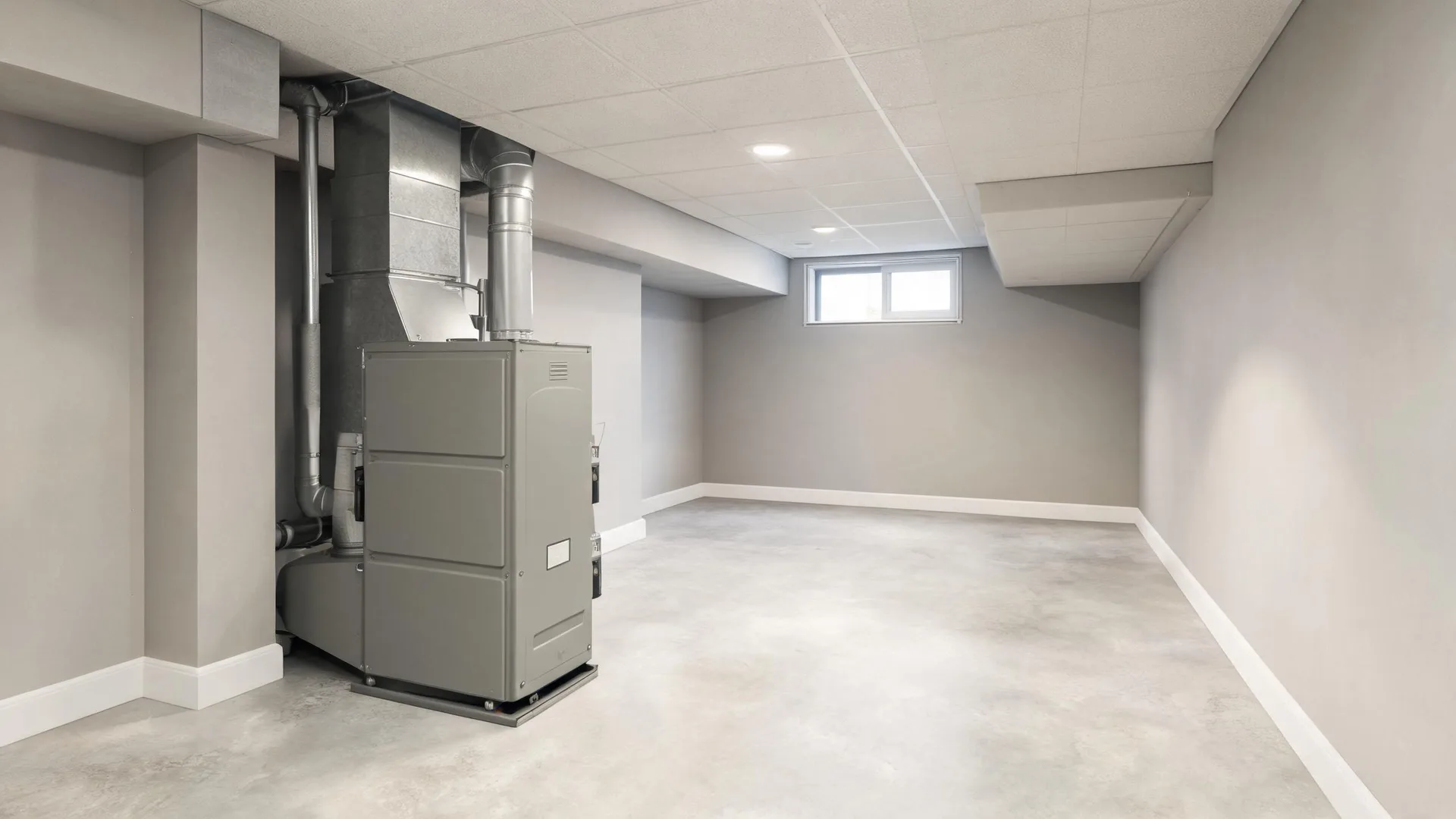
A gray residential gas furnace installed in an unfinished basement, surrounded by ductwork, a metal flue pipe, and a gas supply line.

Eight months a year, this is the system on duty

October through May, the furnace is what stands between the house and the cold outside. That's eight months a year it has to start every time it's asked to, then run until the house catches up to the thermostat. A system that only has to do that for a few weeks somewhere else wears differently than one doing it from fall through spring. Whatever gets installed now is the one carrying that load, every one of those eight months, for as long as it's in the house.

Bigger isn't better, it's wrong

A furnace that's too big for the house turns on, blasts heat fast, and shuts off again before it ever runs a full cycle. That short cycling keeps the heat exchanger from warming up evenly, and the house ends up with temperature swings instead of steady comfort. Too small, and the furnace runs nearly nonstop trying to catch up, pushing wear on the blower motor and the ignition system. Either way, the furnace is working against the house instead of for it.

The size comes from a room by room count, not the old furnace

The right size is worked out with a load calculation that looks at the house itself: square footage, ceiling height, window area, insulation, how many walls face outside. It doesn't come from matching whatever furnace is already in the basement, since that one might have been sized wrong from the start. A contractor doing this right will measure the house, not just read the nameplate on the old unit.

An unfinished basement containing a gray HVAC furnace with ductwork, exposed wooden joists, a concrete floor, and miscellaneous clutter in one corner.

A high-efficiency gas furnace would save about $130 a year to run in Livingston County compared with a gas furnace.

  • A high-efficiency gas furnace$600 a year
  • A gas furnace$730 a year

Estimates for a typical Livingston County home, from EIA household energy data, Michigan fuel prices and NOAA climate normals. Your home will differ.

Installation starts with the old furnace coming out, along with the venting and ductwork connections that fed it. The installer checks the gas line, the electrical disconnect, and the condensate drain to see what can be reused and what has to change for the new unit. A new furnace often isn't the exact size or shape as the old one, so sheet metal transitions sometimes need rebuilding to connect the ducts properly. Once the furnace is set and leveled, the gas line gets connected and pressure tested before anything is fired up. The vent pipe gets run next, sized and sloped the way that furnace requires, since a high-efficiency furnace vents differently than an older style did. Only after all of that is checked does the installer fire the furnace, watch it run through a full cycle, and confirm the temperature rise matches what the manufacturer specifies.