



A nighttime view of a tree-lined residential street with illuminated two-story brick houses and street lamps.

Furnace Installation in Hillsdale, MI

Tell us about the job

Takes about a minute. No obligation.

New system or replacementFurnace or heatingHillsdale County, MI
Step 1 of 2

What ZIP code is the job in?

Hillsdale County saw 77 severe weather events between 2015 and 2024. Damaging wind caused most of them, 52 times in that stretch, with 15 winter storms bringing heavy snow and ice on top of that. Seven hail events and three tornadoes round out the count. Statewide, more than a third of Michigan households lost power for a full day or longer in 2024. A furnace that cuts out partway through a storm is a bigger problem here than somewhere with milder weather and a steadier grid.

8 months
October through May, your furnace is on duty
19°F
the average winter night it heats against
80% AFUE
the federal minimum any new unit must meet
Isometric line illustration of a cutaway house showing interior rooms with furniture and a furnace with ducting and a flue pipe extending through the roof.
Your furnace works hardest from November through March.

NOAA nClimDiv, 1991–2020 normals

A furnace in Hillsdale County runs about eight months a year, October through May.

A new system has to be sized and installed to carry that load, not just handle a cold snap.

Half these houses were built in 1971 or earlier, and the furnace has to work with what's already there

Half the homes here were built by 1971
Climate zone 5A
Heat runs October through May

Hillsdale County falls in climate zone 5A, a cool zone where heating carries most of the load. Any furnace installed here has to meet the federal minimum for that: at least 80 percent of the gas it burns turned into heat over the winter. That floor moves to 95 percent for furnaces built on or after December 18, 2028, so the baseline itself is changing, not just the options above it. A contractor can walk through where a given model lands above that floor, and whether it qualifies for the federal tax credit on efficient equipment.

Plan this furnace around the outages, not just the cold

A furnace installed here is wired into a grid that goes down. When the power cuts out, a standard furnace stops too, even with gas still flowing to it, since the igniter and blower both need electricity. Ask the contractor what backup options fit the install, and where the outdoor equipment will sit so wind and hail don't reach it first.

Find a contractor
A gray gas furnace with attached ductwork and piping installed in an unfinished concrete basement.

Eight months of heat, and one month to get ready for it

October through May, eight months, this furnace is working. September is what you have before that starts. A furnace installed in September runs on its own timeline, with time to size it right and order the parts that fit. Wait until the heat is already needed and the install happens against a cold snap, maybe during one, with whatever is in stock. The outages this page already mentioned don't wait for a good time either. Getting the install done before October means one less thing running on borrowed time when the weather turns.

The old furnace has to come out whole

A furnace isn't pulled out in pieces and left at that. The gas line gets capped off, the flue or vent pipe comes down with it, and the electrical connection gets disconnected at the box. If the old unit shares a flue with a water heater, that connection has to be checked too, since removing the furnace can change how the water heater vents. None of this is optional work tacked onto the new install. It's part of taking the old system out safely.

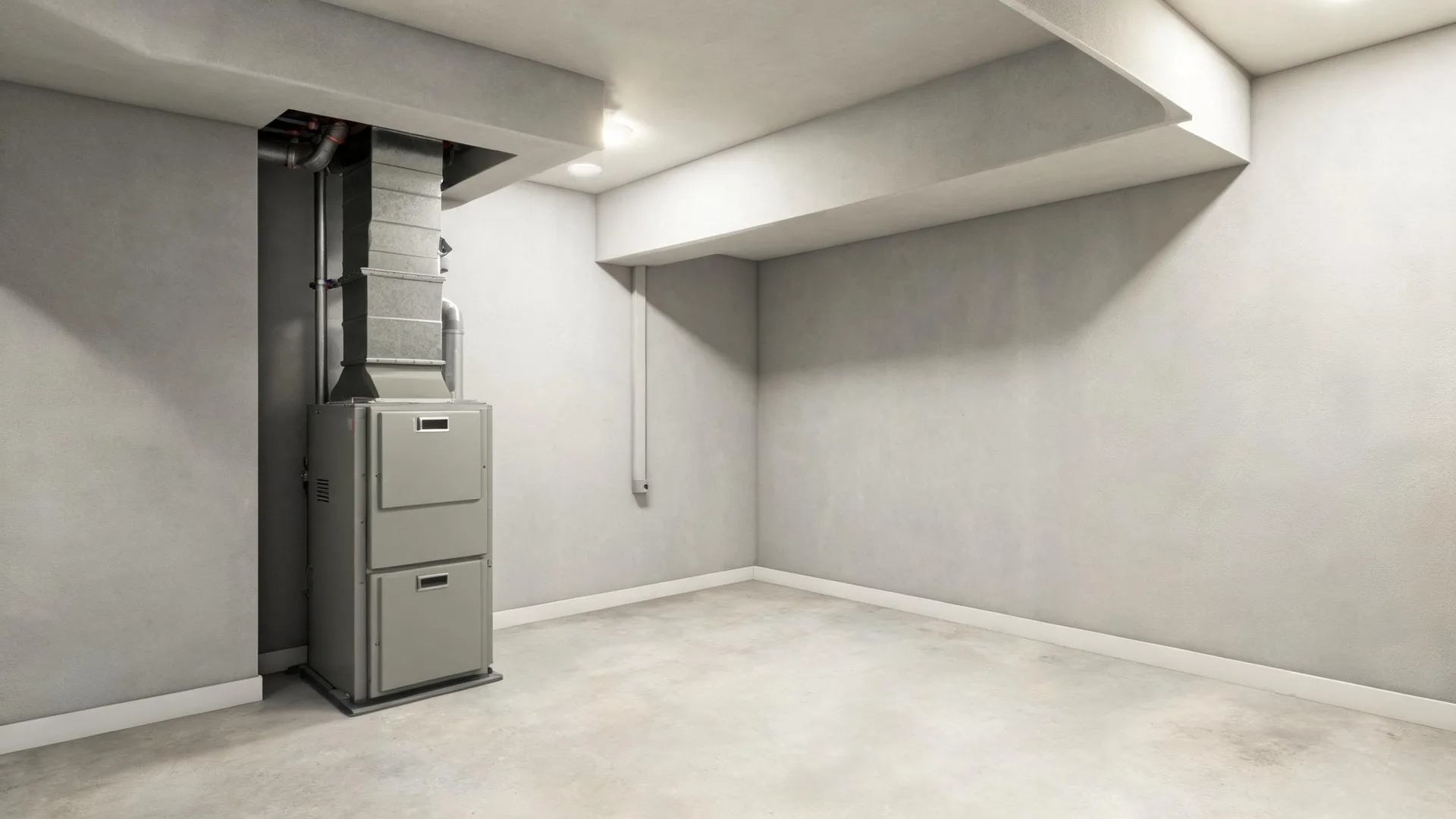
The new unit rarely drops into the same footprint

Furnaces change size and shape across model years and efficiency tiers, so the ductwork, gas line, and vent often need to be adjusted to meet the new cabinet where it sits. A higher efficiency furnace may need a different vent material entirely, since the exhaust runs cooler and condenses. That's work the contractor plans for before the old one ever comes out, not something discovered partway through.

An unfinished basement featuring concrete block walls, exposed floor joists, and a metal forced-air furnace with ductwork near a central pillar.

A high-efficiency gas furnace would save about $120 a year to run in Hillsdale County compared with a gas furnace.

  • A high-efficiency gas furnace$590 a year
  • A gas furnace$710 a year

Estimates for a typical Hillsdale County home, from EIA household energy data, Michigan fuel prices and NOAA climate normals. Your home will differ.

Install day starts with the house still warm, since most of this work happens before the old furnace is disconnected. A contractor checks the new unit against the plans made ahead of time: the duct transitions, the gas line, the vent material, whatever was ordered to match. Once the old furnace is capped, pulled, and out of the way, the new cabinet goes in and gets tied into the ductwork, the gas line, and the electrical. Then comes the vent or flue, sized and run for this specific furnace, not the old one. Before anyone calls it done, the system gets fired up and checked: gas pressure, temperature rise, airflow across the coil, the blower running the way it should. A furnace that passes those checks on install day is one that doesn't get a callback the first cold night it's asked to work.