Dark-sided single-story buildings with gray shingled roofs behind trimmed hedges, a mown lawn, and large leafy trees overhead.

Furnace Installation in Dowagiac, MI

Tell us about the job

Takes about a minute. No obligation.

New system or replacementFurnace or heatingCass County, MI
Step 1 of 2

What ZIP code is the job in?

Cass County sees its share of severe weather

Cass County recorded 86 severe weather events between 2015 and 2024, including 47 damaging wind events, 12 hail events, and 4 tornadoes. Winter storms with heavy snow and ice hit the county 22 times in that same stretch.

Power doesn't always hold through it

More than a third of Michigan households went at least 24 hours without power in 2024. A furnace installation here is also a decision about what happens to your heat when the lines go down.

8 months
October through May, your furnace is on duty
20°F
the average winter night it heats against
51%
of homes here heat with gas, so most furnaces here burn gas
80% AFUE
the federal minimum any new unit must meet
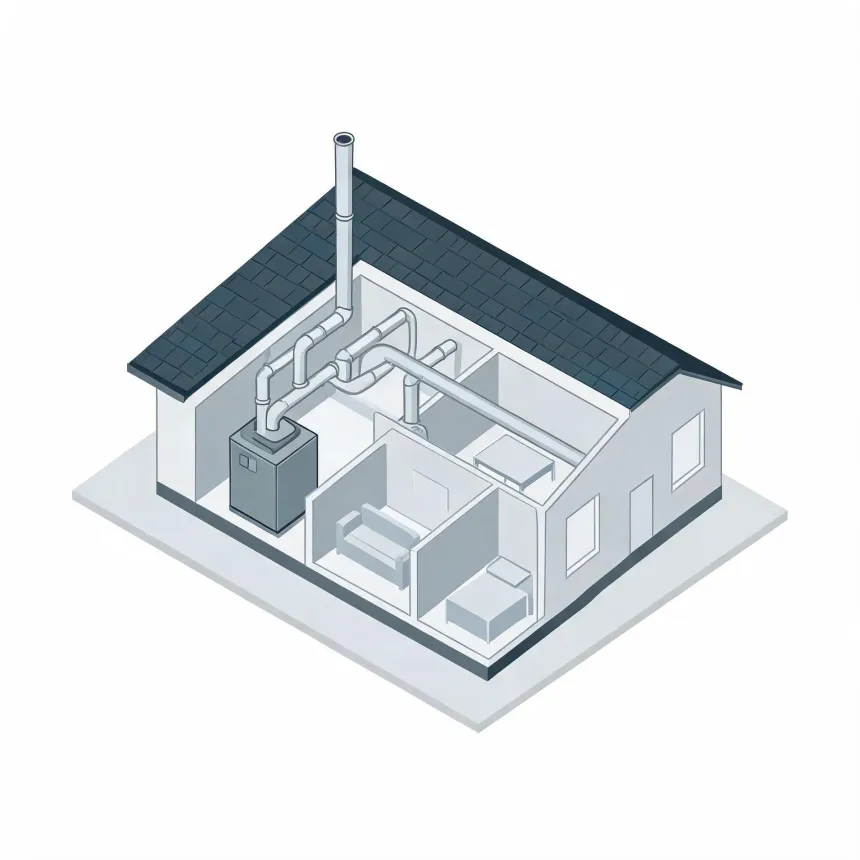
Isometric cutaway illustration of a single-story house showing a gray furnace connected to white ductwork and a flue pipe extending through the shingled roof, with simplified furniture in the interior rooms.
Your furnace works hardest from November through March.

NOAA nClimDiv, 1991–2020 normals

Furnaces here start working in October and run through May.

Get a new one in before September ends, and the install happens on your terms, not a cold snap's.

Eight months of heat and 22 winter storms is a lot to ask of one furnace

Heat runs October through May
Winter nights average 20°F
22 winter storms from 2015 to 2024
A furnace going into an older houseHalf the homes in Cass County were built in 1973 or earlier.

Gas heats half the homes in Cass County, more than any other fuel. A furnace replacement here usually means swapping one gas furnace for another, with the gas line and venting already in place. That keeps the install simpler than switching fuel types. It also means parts and service for gas furnaces are familiar work for contractors in this area, since that's what most of the county runs on. If your home is part of the 26.7% on bottled or LP gas, the install looks similar, but the tank and supplier are yours to sort out separately.

Plan this install around the power going out

A furnace needs electricity to run even when the fuel is gas, so the ignition and blower stop in an outage. Ask about what keeps the furnace working when the lines go down, and have the contractor set the outdoor equipment where wind and hail are less likely to reach it. Worth settling before the install, not after the next storm.

Find a contractor
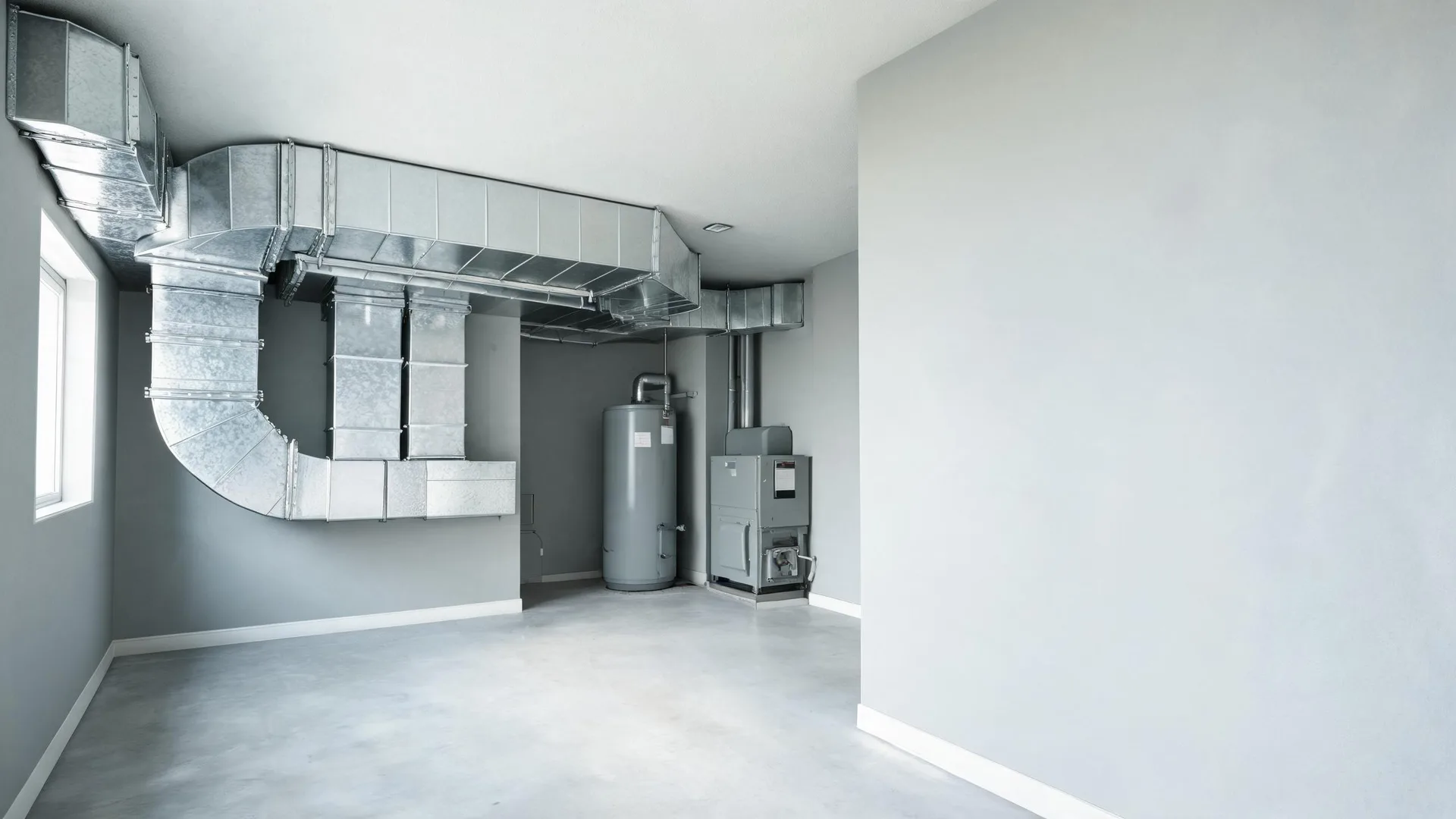
A gray residential gas furnace installed in an unfinished basement, surrounded by ductwork, a metal flue pipe, and a gas supply line.

Eight months a year, this furnace carries the load

Eight months of the year, this furnace is the only thing standing between the house and the cold outside. That's a long stretch of runtime, and it adds up over the life of the unit. When you're sizing a replacement, don't just match the old tonnage out of habit. Have the contractor run a load calculation for your house, not a guess based on square footage. A furnace that's sized right for the place will cycle the way it's supposed to, instead of running long and hard every one of those eight months.

Size and output set the baseline

A bigger furnace costs more to install, and the right size depends on the house, not the one being replaced. The ductwork matters too. Old ducts sized for a smaller unit sometimes need rework to carry the air a new furnace puts out.

What backs it up adds its own cost

A furnace still needs power to run, even on gas. Any battery backup or transfer switch to keep it firing in an outage is a separate piece of equipment, wired in alongside the furnace rather than built into it, and that's its own line on the job.

A gas furnace with sheet-metal ductwork and PVC pipes installed in an unfinished basement.

A high-efficiency gas furnace would save about $120 a year to run in Cass County compared with a gas furnace.

  • A high-efficiency gas furnace$570 a year
  • A gas furnace$690 a year

Estimates for a typical Cass County home, from EIA household energy data, Michigan fuel prices and NOAA climate normals. Your home will differ.

Installation day starts with the old furnace coming out, not the new one going in. The contractor disconnects the gas line, the venting, the ductwork, and the electrical before anything new gets set. That old unit gets hauled out before you see the replacement show up. Once the space is clear, the new furnace gets set in place and leveled, then the gas, venting, ducts, and wiring get tied back in one at a time. Each connection gets checked as it's made, not all at once at the end. Then comes startup: the contractor fires it, watches the ignition sequence, checks the flame, and lets it run a full cycle to see that it heats and shuts off the way it should.