




A gas furnace and sheet-metal air handler unit installed in an unfinished concrete basement.

Furnace Installation in Ann Arbor, MI

Tell us about the job

Takes about a minute. No obligation.

New system or replacementFurnace or heatingWashtenaw County, MI
Step 1 of 2

What ZIP code is the job in?

Washtenaw County saw 166 severe weather events between 2015 and 2024. Most of that was wind, 89 events, with 60 hail events and 16 winter storms mixed in. A new furnace runs on electricity even if it burns gas, for the igniter, the blower and the control board. When the power goes out, the furnace stops with it, no matter how much fuel is behind it. Across Michigan, 34% of households went at least a full day without power in 2024. That's worth knowing before you pick a system or decide where it sits.

8 months
October through May, your furnace is on duty
19°F
the average winter night it heats against
75%
of homes here heat with gas, so most furnaces here burn gas
80% AFUE
the federal minimum any new unit must meet
Isometric cutaway illustration of a single-story house with a dark shingled roof, showing interior rooms with furniture and a furnace connected to ductwork and a flue pipe extending above the roof.
Your furnace works hardest from November through March.

NOAA nClimDiv, 1991–2020 normals

Furnaces here start running in October.

Get the new one in during September and it's ready before the first cold night, not installed in the middle of one.

Eight months of heat a year means this furnace doesn't get much rest

Heat runs October through May
Winter nights average 19°F
Climate zone 5A
What's already in most of these housesThree in four homes in Washtenaw County heat with gas.

Washtenaw County falls in climate zone 5A, a cool zone where the furnace carries more of the year's work than the air conditioner does. Any furnace installed here has to clear a federal efficiency floor. Units built from November 2015 on have to turn at least 80 percent of the gas they burn into heat over the winter. That floor rises to 95 percent for furnaces built from December 2028 on. A contractor can walk you through which models clear the current minimum and which are built to the tighter one coming.

Plan the install around the outages, not just the cold

A furnace that depends on the power grid is only as reliable as the grid is. Ask where the contractor plans to put the unit and how it will hold up if the power drops for a day. Some homeowners pair the install with a transfer switch or backup power for exactly that reason.

Find a contractor
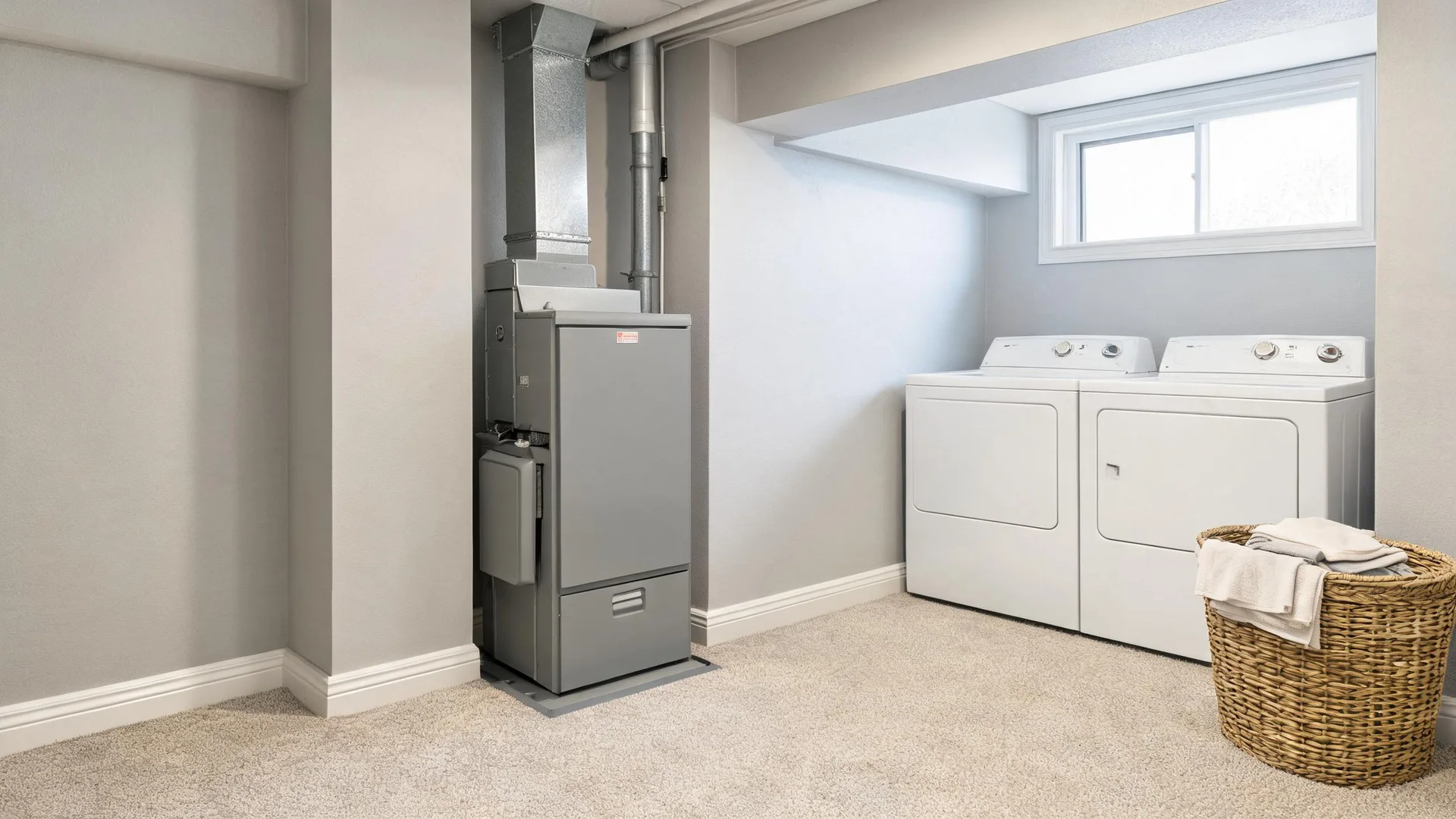
A gray high-efficiency gas furnace installed in an unfinished basement, surrounded by gas lines, a condensate drain, and sheet-metal ductwork.

This furnace will run most months of the year, so get the size right

Eight months is close to the whole year. Once this one is in, it will cycle on and off most days from fall through spring, and the parts that fail first, the igniter, the blower motor, the control board, are the ones doing something every single cycle. A unit sized right for this house will spread that load evenly. One that's oversized will short cycle, switching on and off more than it needs to, and that wears the same parts faster. Ask what size the contractor is proposing and why, not just what brand.

The percentage tells you where the heat goes

That number on the label is how much of the gas burned turns into heat in the house. The rest goes out the flue. A furnace rated higher keeps more of what it burns, cycle after cycle, for as long as the unit lasts. It's not a one time saving. It's how the machine behaves every single time it fires.

A higher rating changes what the installer has to run

Furnaces built to the higher efficiency tier pull extra heat out of the exhaust before it leaves the house, which means that exhaust comes out cool instead of hot. Cool exhaust can't go up an old metal flue, it has to vent through PVC pipe, and that pipe needs a clear path to the outside wall. Ask the contractor where that line will run before the install starts, not after.

An unfinished basement featuring a grey forced-air furnace with metal ductwork, concrete block walls, exposed wooden joists, and a single hanging bare bulb.

A high-efficiency gas furnace would save about $120 a year to run in Washtenaw County compared with a gas furnace.

  • A high-efficiency gas furnace$590 a year
  • A gas furnace$710 a year

Estimates for a typical Washtenaw County home, from EIA household energy data, Michigan fuel prices and NOAA climate normals. Your home will differ.

Installation day starts with the old furnace coming out, and that's often the slowest part if the vent pipe or ductwork around it has to shift for the new unit. The installer sets the new cabinet, connects the gas line, and runs the vent pipe to wherever it exits the house. Every joint gets sealed and tested before anything is fired up. The ductwork gets connected next, and this is where a lot of the real work happens, because the supply and return have to match what the new furnace needs to breathe. Once it's wired in and the gas is on, the installer runs the system through a full cycle, checking the flame, the airflow, and the exhaust before calling it done. A straightforward swap can wrap up in a day. Anything involving new ductwork, a moved vent line, or electrical work takes longer, and a contractor should walk through that difference before the crew shows up.