A nighttime view of a tree-lined residential street with illuminated two-story brick houses and street lamps.

Furnace Installation in Allegan, MI

Tell us about the job

Takes about a minute. No obligation.

New system or replacementFurnace or heatingAllegan County, MI
Step 1 of 2

What ZIP code is the job in?

Allegan County sees real storm activity

Allegan County recorded 62 severe weather events between 2015 and 2024. That includes 31 damaging wind events, 9 hail events, 5 tornadoes and 17 winter storms with heavy snow and ice. This is not a place where severe weather is rare.

Outages here aren't short

Across Michigan, 34% of households went at least 24 hours without power in 2024. A furnace with no power won't run no matter how new it is. Anyone installing a system here needs to think past the furnace itself to what happens when the lights go out.

8 months
October through May, your furnace is on duty
20°F
the average winter night it heats against
63%
of homes here heat with gas, so most furnaces here burn gas
80% AFUE
the federal minimum any new unit must meet
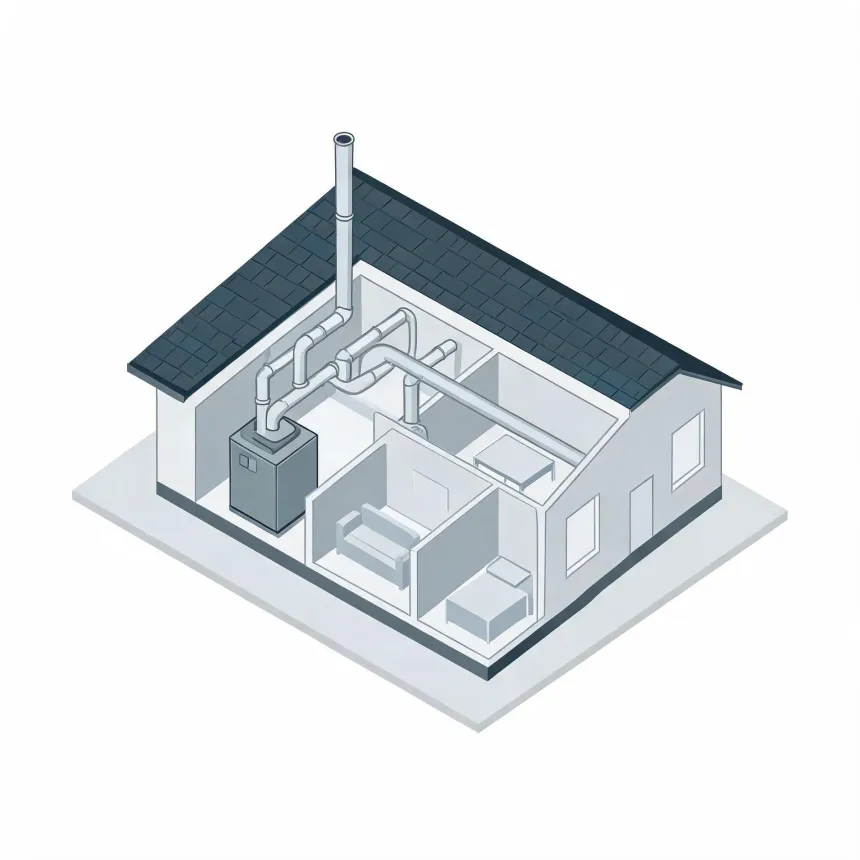
Isometric cutaway illustration of a single-story house showing a gray furnace connected to white ductwork and a flue pipe extending through the shingled roof, with simplified furniture in the interior rooms.
Your furnace works hardest from November through March.

NOAA nClimDiv, 1991–2020 normals

Furnaces here run eight months out of the year, October through May.

A new system has to carry that load every winter, so sizing it right matters more than finding the lowest price.

Most homes here already run on gas, and that makes the next furnace an easy call

62.5% of homes heat with gas
Climate zone 5A
Heat runs October through May
Get it done before OctoberFurnaces here start running in October. September is the month to have the new one in.

Ask what happens to the furnace when the power cuts out. A gas furnace still needs electricity to run the control board, the igniter and the blower, so without it the burners won't fire even with gas flowing to the house. Some contractors can wire in a transfer switch or set the system up to run on a portable or standby generator, and that's worth asking about directly rather than assuming it's covered. Ask about the ignition type too. A hot surface igniter lights the burners without a standing flame, and it's what most newer furnaces use. Ask how the system is staged, since a single stage furnace runs at full output every time it fires, while a two stage or modulating furnace can run lower and steadier, which matters more over a long heating season than it does on a mild day.

Plan for the outage now, while the install is already being decided

A furnace that cuts out with the power leaves a house with no heat right when a storm just knocked a tree into a line. If you're installing new anyway, this is the time to ask about a transfer switch or generator setup, and where the outdoor equipment sits so wind and hail don't reach it. Get that settled before the install, not after the first outage.

Find a contractor
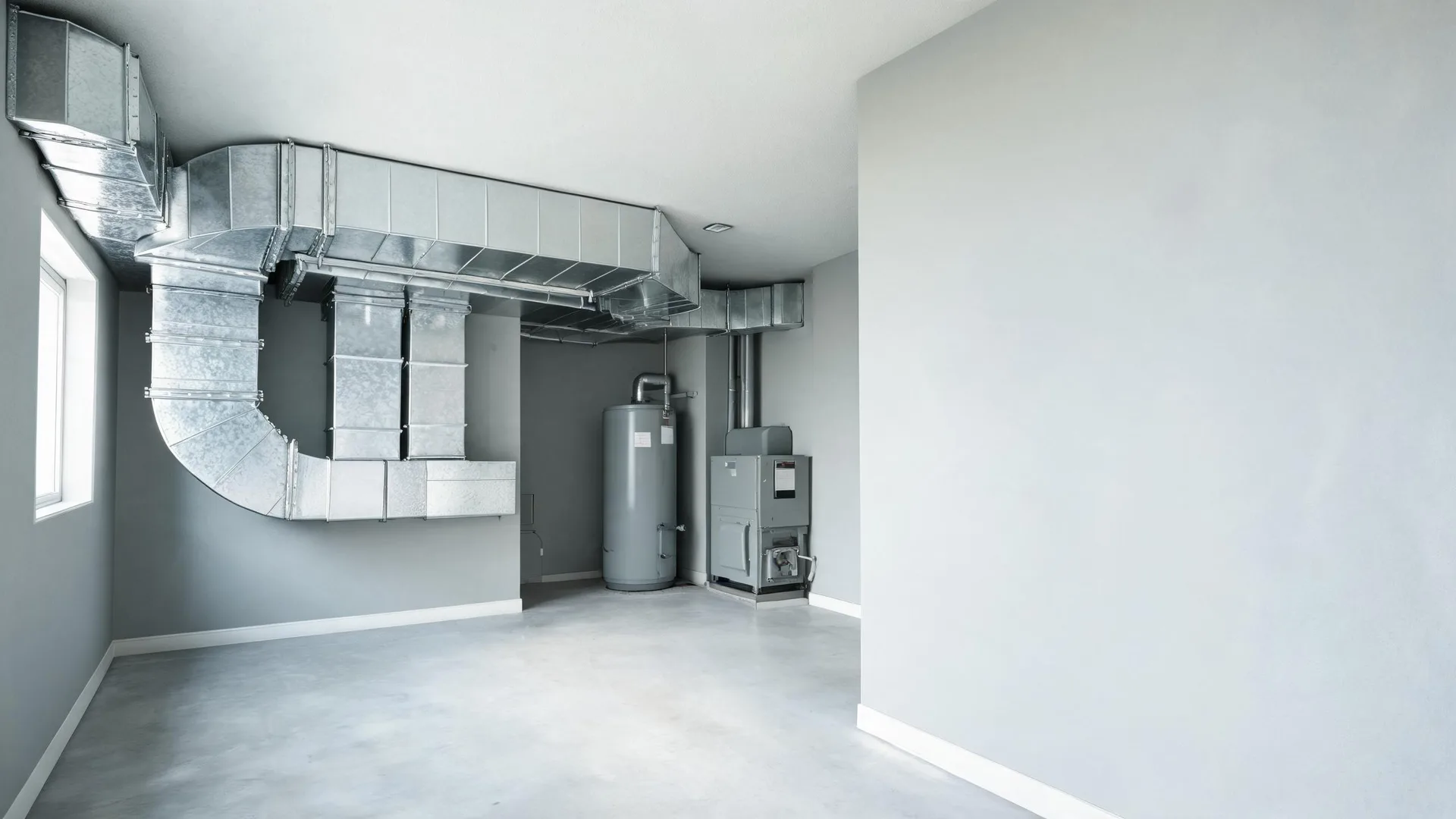
A gray residential gas furnace installed in an unfinished basement, surrounded by ductwork, a metal flue pipe, and a gas supply line.

Eight months of runtime a year

Eight months a year, the burners cycle on and off and the blower logs hours a system in a milder state never would. That kind of runtime is why getting the size right matters more here than it does somewhere heat only runs a few weeks. An oversized furnace short cycles under that kind of demand. An undersized one runs flat out trying to keep up and still falls behind. Either way, parts wear sooner than they should. Get the sizing right at install and the system settles into a load it can actually carry, October through May, year after year.

The load calculation sets the price before anything else does

A contractor has to work out how much heat the house actually loses before quoting a furnace, by looking at square footage, ceiling height, window count and how the place is insulated. That calculation points to a size. A bigger house or one with poor insulation needs a bigger furnace, and a bigger furnace costs more. Skipping this step and just matching the old unit's size can lock in the wrong price in either direction.

Ductwork decides how much of the job is hidden

If the existing ducts are the right size and in good shape, a crew can connect the new furnace and move on. If the ducts are undersized, leaky, or routed in a way that can't handle the new unit's airflow, that work gets added to the job. Venting matters too. A furnace with a different ignition type or efficiency rating than the old one may need a different vent pipe or a new termination point, and that changes what the install involves before the furnace itself is even considered.

A gas furnace with sheet-metal ductwork and PVC pipes installed in an unfinished basement.

A high-efficiency gas furnace would save about $120 a year to run in Allegan County compared with a gas furnace.

  • A high-efficiency gas furnace$570 a year
  • A gas furnace$690 a year

Estimates for a typical Allegan County home, from EIA household energy data, Michigan fuel prices and NOAA climate normals. Your home will differ.

Installation starts with the old furnace coming out, and that's often the slowest part if the ductwork or venting has to change to fit the new unit. The new furnace gets set in place, connected to the supply and return plenums, and tied into the gas line and vent pipe. The electrical and control wiring gets run next, linking the thermostat to the control board. Once it's buttoned up, the crew checks the gas pressure, confirms the igniter lights the burners properly, and watches the heat exchanger and flue for a clean burn. Airflow gets checked at the registers before anyone calls it done. A furnace that's installed but never tested under a full heat cycle can hide a problem that only shows up on the first cold night.