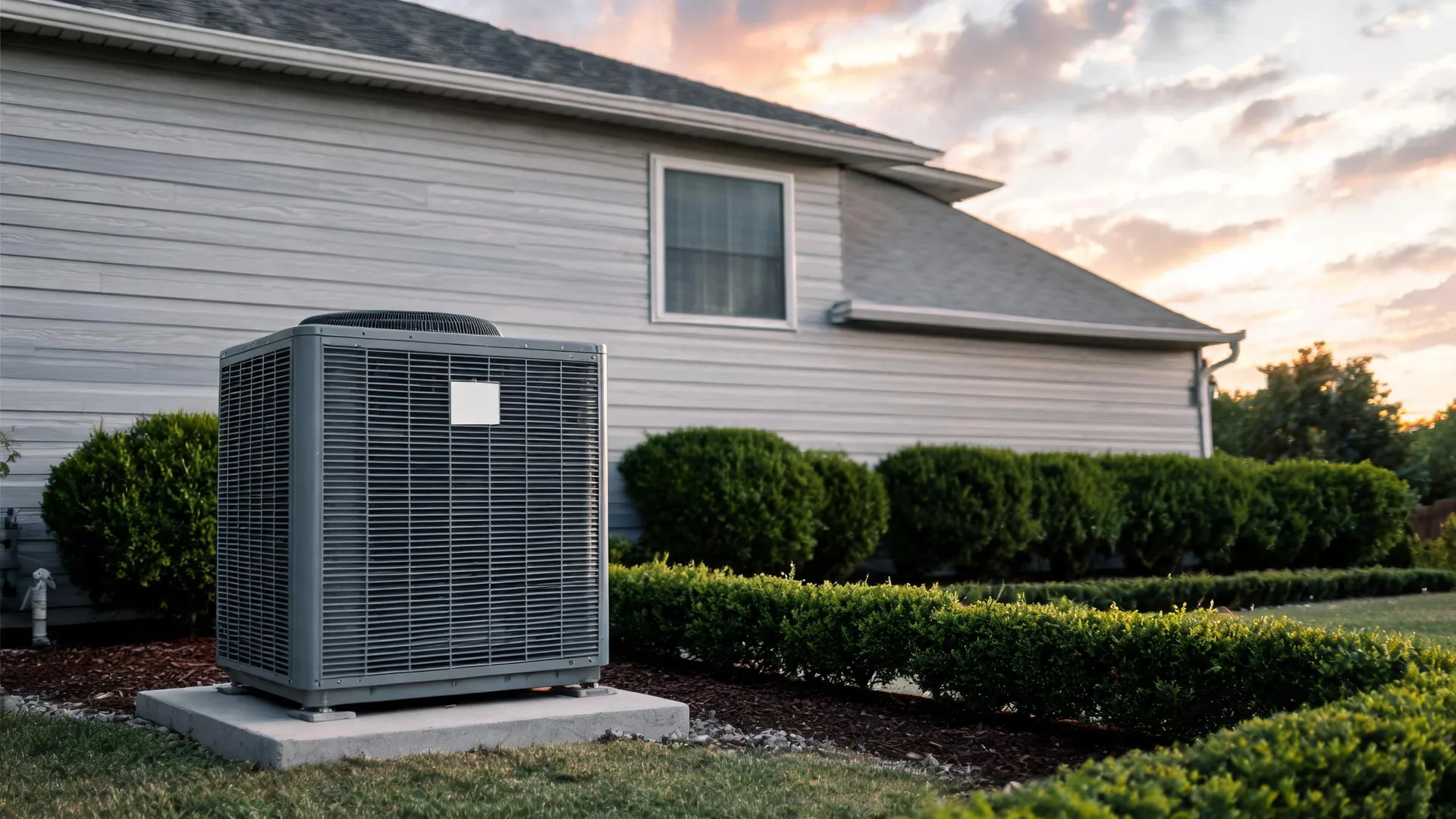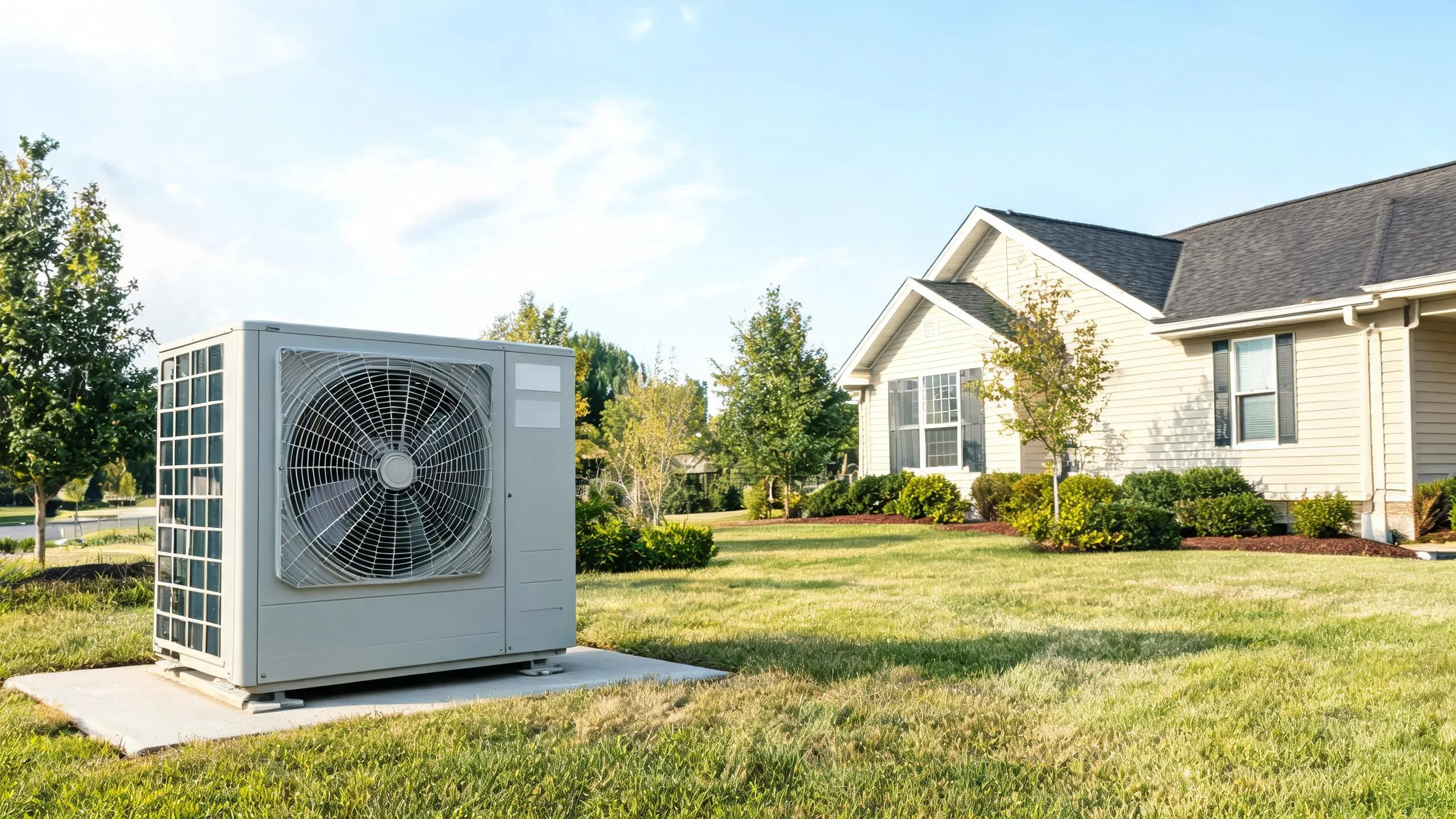
A grey heat pump outdoor unit mounted on a concrete pad in a suburban backyard, with a single-storey house visible behind it.

Heat Pump Repair in Sturgis, MI

Tell us about the job

Takes about a minute. No obligation.

RepairHeat PumpSt. Joseph County, MI
Step 1 of 2

What ZIP code is the job in?

Check the thermostat and the breaker first

Make sure the thermostat is set to heat or cool and the setpoint is actually past room temperature. Then check the breaker panel for the outdoor unit and the air handler. A tripped breaker or a thermostat bumped into the wrong mode causes a surprising number of no-heat and no-cool calls.


What you find changes what the fix looks like

If the outdoor unit is caked in ice outside of a normal defrost cycle, or the indoor coil is frosted, that points to airflow or refrigerant trouble a contractor needs to diagnose. If everything looks normal but the air coming out is cold when it should be warm, the reversing valve may be stuck, which is also not a homeowner fix. Either way, knowing what you saw before the tech arrives gets the diagnosis moving faster.

8 months
October through May, your system heats
3 months
June through August, it cools
20°F
the average winter night it heats against
81°F
the average summer afternoon it cools against
Isometric line illustration of a cutaway house showing interior rooms with furniture, a furnace or air handler with overhead ductwork, and an outdoor condenser unit connected by lines outside the wall.
Your system heats October through May and cools June through August.

NOAA nClimDiv, 1991–2020 normals

Heat pumps here run cooling from June through August, then switch over for heat in October.

A part that barely made it through summer can give out once the heat pump leans on it again in October.

Half the homes here were built in 1970 or earlier, and a heat pump that old is on borrowed time

Half the homes here were built by 1970
88 damaging wind events from 2015 to 2024
14 hail events from 2015 to 2024
Running this costs more in SturgisMichigan electricity ran 19.30 cents per kilowatt-hour in 2024, and a struggling heat pump burns through it faster.

St. Joseph County sits in zone 5A, a cool climate where heating does more of the work than cooling. Overnight lows average 20°F across December, January and February, which is cold enough to keep a heat pump busy, but summers here never ask as much of the compressor. That gap between a demanding winter and a mild summer adds up to less total wear on the parts that fail first, the compressor and the reversing valve. A heat pump sized for this area is built to handle that winter load without strain. So if one here is acting up, age or a worn part is the more likely cause, not a system run into the ground. That usually means repair is worth it.

Get it looked at early

Problems tend to show up in the first weeks of the season, when the load hits a part that was already weak.

Find a contractor
A gray heat pump condenser unit mounted on a concrete pad against the gray lap-siding exterior wall of a house.

Less wear means repair is usually the right call

A worn part here usually failed on its own, not from years of hard running. That makes a repair call worth making instead of jumping straight to replacement. Tell the tech what the system was doing before it acted up. That, plus its age, is usually enough to know whether it is worth fixing.

Short cycling wears parts fast

A heat pump that shuts off a few minutes after starting, then kicks back on soon after, is struggling to satisfy the thermostat. The cause might be a dirty filter choking airflow, a failing capacitor, or low refrigerant. Each start puts a hard jolt through the compressor, and the more it short cycles, the closer it gets to failing outright.

Strange sounds mean something specific

A clicking at startup is normal. A grinding, screeching, or banging is not. Grinding often points to a motor bearing going bad. A loud bang when the system kicks into defrost can mean a worn reversing valve. Squealing usually means a belt or motor issue in the blower. Each sound points a tech toward a different part before they even open the cabinet.

A heat pump that's struggling doesn't fail quietly. Low refrigerant makes the compressor work harder to move the same heat, and that extra strain turns into extra wear every hour it runs. A failing capacitor forces the motor to pull more current trying to start, which shortens its life further with each cycle. Ice on the outdoor coil blocks airflow, so the system runs longer to do the same job, and that long runtime feeds back into more ice. None of these get better on their own. A problem that starts small and mechanical usually ends up taking the compressor down with it if the system keeps running on it.

A tech starts by hooking up gauges to check refrigerant pressure on the high side and the low side. That reading rules a lot of things in or out before the cabinet even comes off. From there it's amp draw on the compressor, voltage at the contactor, a resistance check on the capacitor. The reversing valve gets tested too, to see if it actually shifts when it's told to. Airflow matters just as much as refrigerant, so static pressure across the coil gets checked, since a system can be fully charged and still run poorly if air isn't moving through it. Each reading either matches what it should or it doesn't, and the one that's off is usually where the problem lives.