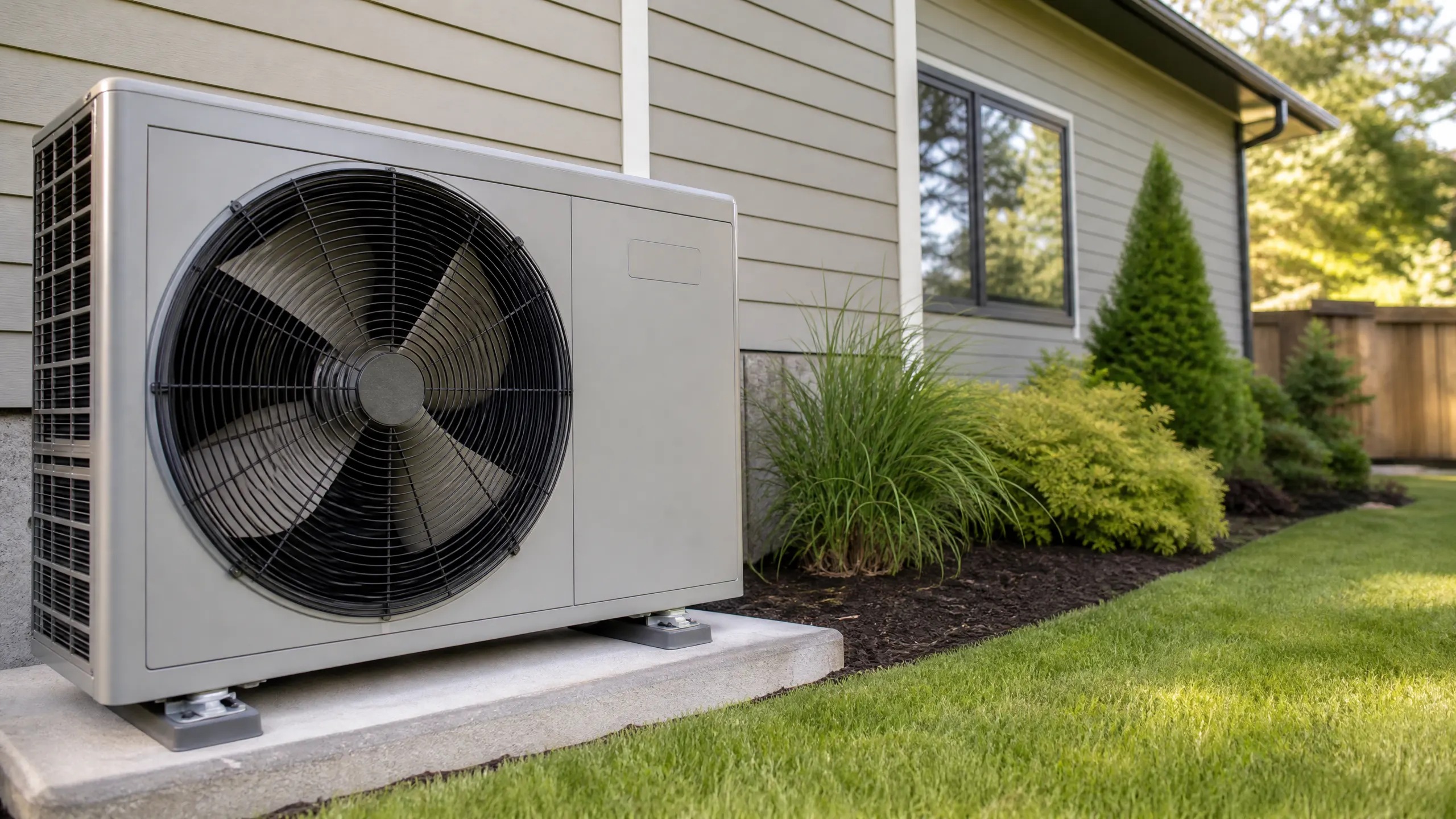





An outdoor heat pump unit mounted on a concrete pad beside a house with beige siding and a landscaped garden bed.

Heat Pump Repair in South Haven, MI

Tell us about the job

Takes about a minute. No obligation.

RepairHeat PumpVan Buren County, MI
Step 1 of 2

What ZIP code is the job in?

Van Buren County saw 59 severe weather events between 2015 and 2024. Damaging wind came through 33 times in that span, and hail hit 9 times. A heat pump's outdoor unit sits outside through all of it, with coil fins and a fan exposed to whatever blows through. Hail can dent the cabinet or bend the fins, and wind-driven debris does the same. A unit can keep running after that and still have a bent coil or a damaged fan blade pulling it down. If a storm has come through your property, that's worth having a contractor look at even if the heat pump seems fine.

8 months
October through May, your system heats
3 months
June through August, it cools
20°F
the average winter night it heats against
81°F
the average summer afternoon it cools against
Isometric cutaway illustration of a single-story house showing interior ductwork, an indoor air handler, and an outdoor condenser unit connected by lines along the exterior wall.
Your system heats October through May and cools June through August.

NOAA nClimDiv, 1991–2020 normals

Electricity here runs 18.52 cents a kilowatt-hour, above what most US counties pay.

A heat pump that's struggling pulls more power to do the same job, and that shows up on every bill until it's fixed.

Your heat pump doesn't work hard to keep this house comfortable

33 damaging wind events from 2015 to 2024
9 hail events from 2015 to 2024
17 winter storms from 2015 to 2024

Heat pumps here run heat from October through May, so September is when a weak part gets found the hard way. A heat pump that limped through spring on a failing component gets asked for real heat output the first cold night, and that's when it quits. The same happens going into summer. June is the first month of cooling, and a unit that was already short on refrigerant or running a tired capacitor often won't make it through the first hot stretch. Getting a heat pump checked in May or September, before the load hits it, catches a weak part while it's still just weak. Once the overnight temperature is averaging 20°F, as it does here in January, that's not when you want to find out the heat strip or the compressor can't keep up.

After a storm, have the outdoor unit checked

If hail or wind has come through your property, get the outdoor unit looked at even if it's still running. A dented cabinet or a bent fan blade doesn't always stop a heat pump right away, but it keeps it from working the way it should, and that's a harder thing to catch on your own than a unit that won't start at all.

Find a contractor
A dark gray heat pump unit mounted on a concrete pad next to a house with gray siding and a stone veneer wall.

This heat pump has had an easier run than most

This county sits in zone 5A, a cool, humid climate where heating carries the bigger share of the work and summer never asks as much of the compressor. A heat pump built for this isn't fighting extreme heat most of the year, so parts last. If yours is heating and cooling fine but something seems off, a weak capacitor or a low refrigerant charge is usually something worth fixing rather than a sign the unit is done. Given what it's been through outside, a system still running after years of wind and winter storms is one worth putting a repair into.

What a struggling heat pump sounds and feels like

A heat pump that needs attention usually tells you before it quits outright. Air coming from the vents that's warm in heating mode but not as warm as it used to be. A unit that runs long stretches without shutting off, trying to hit the setpoint and never quite getting there. Ice building up on the outdoor coil that doesn't clear during the defrost cycle. A clanking or grinding from the outdoor unit when the fan or compressor kicks on. Short cycling, where it starts, stops, and starts again within a few minutes. None of this means the unit is worn out. It usually means one part is failing while the rest of the system is fine.

Why catching it early matters

A heat pump rarely fails all at once. A weak capacitor makes the compressor or fan motor strain every time it starts, even though the system as a whole isn't being asked to do much. A slow refrigerant leak means the system moves less heat for the same run time, so it leans on backup heat more than it should. Left alone, a small problem tends to take a bigger part down with it, usually the compressor, which is the most expensive part in the unit. Getting a contractor out when you first notice something off usually means fixing one part instead of several.

A few things are worth checking before you pick up the phone. Look at the thermostat first. Make sure it's set to heat or cool as needed and the setpoint actually calls for what you want, since a setting bumped by accident looks exactly like a broken system. Check the outdoor unit for anything blocking it: leaves, snow piled against the cabinet, a trash can pushed too close. Airflow in and out of that unit matters, and anything crowding it makes the whole system work harder. Go to the air handler or indoor unit and check the filter. A filter clogged with dust chokes airflow and can cause the exact symptoms that get mistaken for a failing compressor. Check your breaker panel too. A heat pump pulls on more than one circuit, and a tripped breaker on just one of them can leave the outdoor unit silent while the indoor fan still runs. None of this takes special tools, and if everything checks out and the problem's still there, you've already ruled out the easy answers before a contractor shows up.

Age alone doesn't tell you whether to fix a heat pump or replace it. A unit with one failing part, like a capacitor or a contactor, is usually worth repairing no matter how long it's been running, because the rest of the system is still sound. What changes the math is the compressor. That's the part that moves refrigerant through the whole system, and when it fails, the cost of replacing it rivals putting in a new unit, since everything else in the cabinet is built around it. A heat pump that's needed a few different repairs over a couple of years, each one a different part, is telling you something the single breakdown doesn't. That pattern means the system as a whole is wearing out, not just the piece that happened to fail first. A contractor can look at the compressor, the coil condition, and the refrigerant system together and tell you which kind of problem you're looking at.