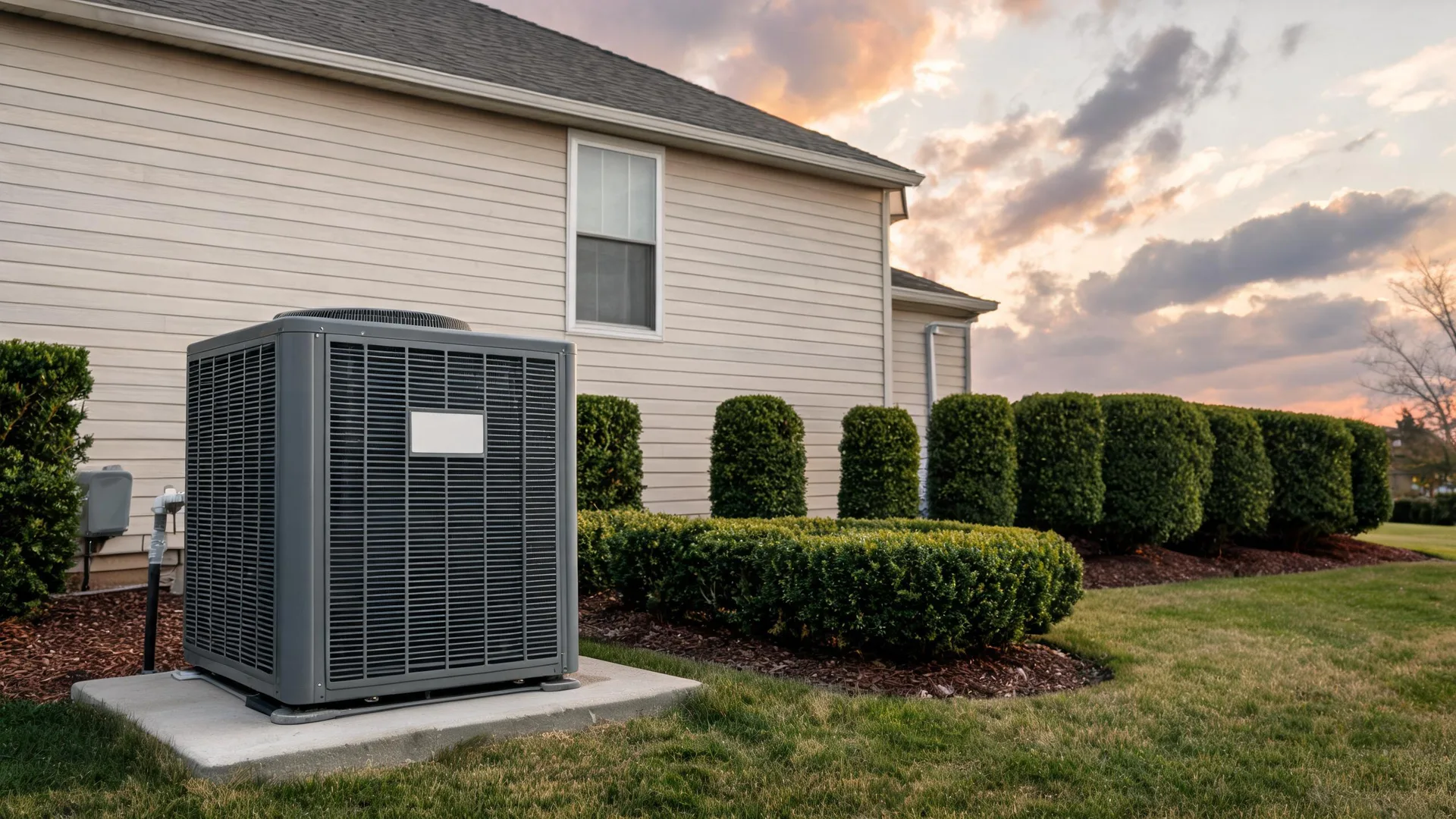
An outdoor HVAC condensing unit on a concrete pad next to a beige single-story house with a dark shingle roof.

Heat Pump Repair in Sandusky, MI

Tell us about the job

Takes about a minute. No obligation.

RepairHeat PumpSanilac County, MI
Step 1 of 2

What ZIP code is the job in?

The tech checks the whole system, not just the symptom

A heat pump that's not heating might actually be a problem in the outdoor unit, the reversing valve, or the refrigerant charge, not just the thermostat or the indoor coil. The technician will check refrigerant pressures, inspect the outdoor coil for ice or dirt, test the reversing valve, and look at electrical connections before deciding what's wrong. That's why a diagnostic takes real time even when the symptom seems simple.


What the visit tells you

By the end, the technician can tell you what part failed, why it failed, and whether it's worth repairing or replacing. A cracked heat exchanger or a compressor on its way out changes that math. A bad capacitor or a stuck contactor usually doesn't. Either way, you get a straight answer about what the unit needs before any work starts.

8 months
October through May, your system heats
2 months
July through August, it cools
19°F
the average winter night it heats against
79°F
the average summer afternoon it cools against
Isometric cutaway illustration of a single-story house showing interior ductwork, an indoor air handler and furnace unit, and an outdoor condenser connected by a line, on a white background.
Your system heats October through May and cools July through August.

NOAA nClimDiv, 1991–2020 normals

Half the homes in Sanilac County were built in 1971 or earlier.

If your heat pump has been there as long as the house, ask what it's got left before you put money into it.

At 19.3 cents a kilowatt-hour, a heat pump running wrong is a bill you'll feel

Power costs 19.3 cents a kWh statewide
40 damaging wind events from 2015 to 2024
6 hail events from 2015 to 2024
Get it looked at before OctoberHeat here starts in October. Homes running it eight months a year need the trouble caught now, not in the first cold week.

Your heat pump spends most of the year heating, not cooling, since winters here run long and summers don't push the outdoor unit hard. Overnight lows average 19°F across December through February, which is cold but not the kind of extreme that wears out a compressor fast. The bigger risk to the unit isn't the cold itself, it's what comes with it. Winter storms and damaging wind both hit this county often enough to matter, and either one can mean a hard freeze-thaw cycle on the outdoor coil or a power blink that trips something inside. A heat pump that's seen that kind of weather but still runs is usually sound at its core, so if something's off now, it's more likely one failed part than a unit on its way out.

Ask how much life it has left

If your system came with an older house, it may be near the end of its life. Ask how much life it has left before paying for a big repair.

Find a contractor
A person in a dark long-sleeve shirt and tan work pants, seen from behind, carries a canvas tool bag while stepping up porch stairs toward a dark blue front door.
A gray heat pump outdoor unit mounted on a concrete pad next to a residential house with lap siding and stone accents.

Every cycle wears something

Every heat pump runs on a duty cycle built around starts and stops, not steady running. The compressor draws the heaviest current at the moment it kicks on, more than it ever draws once it's up and moving. A unit that short cycles, starting and stopping over and over instead of running a full cycle, puts that heavy startup draw on the compressor far more often than it was built for. Years of that wear the start components first, the capacitor and the contactor, and once those go marginal the compressor itself starts absorbing the strain. Outdoor coils add a second kind of wear, since they sit exposed and collect dirt and debris that a filter never touches, and a coil that stays restricted makes the whole system work harder on every single cycle it runs.

A frozen coil doesn't fix itself

If the outdoor coil is icing up, running the unit longer just builds more ice on top of ice. That blocks airflow across the coil, so the system works harder to pull any heat out of the air at all. Left alone, a frozen coil can push the compressor to run hot, and a hot compressor is a different kind of repair than a coil that just needed attention.

A small electrical fault spreads

A failing capacitor or a contactor with pitted contacts makes the compressor draw more current every time it starts. Each start under that strain heats the windings a little more than the last. Keep running it that way and a part that was simple to replace can take the compressor down with it.

A heat pump that needs attention usually tells you before it quits outright. The unit runs but the air coming out doesn't feel warm, or it runs constantly without ever satisfying the thermostat. You might hear it cycling on and off faster than it used to, which points to a control board or a sensor giving it bad information. Ice building up on the outdoor unit when it's not supposed to be there is another one, especially if the defrost cycle isn't kicking in to clear it. A hissing or bubbling sound near the lines can mean the refrigerant charge is off. Any grinding or screeching from the outdoor unit means a motor bearing is going, and that won't improve on its own.

A repair decision usually comes down to what broke and what else is close behind it. A failed capacitor, a bad contactor, a sensor feeding the board bad readings, those parts fail on their own schedule and don't say anything about the rest of the unit. Replace the part and the heat pump goes back to being a sound heat pump. A compressor is different. It rarely fails on its own, it fails because something else ran it hard over time, a low charge, a restricted coil, electrical strain it wasn't built to handle. So when a compressor goes, the question isn't just the cost of replacing it. It's whether whatever killed it is still there, because the same thing will happen to a new one too. A technician who checks the whole system before naming the problem can tell you which kind of repair this is, and that matters more than the part name alone.