






A nighttime view of a tree-lined residential street with illuminated two-story brick houses and street lamps.

Heat Pump Repair in Niles, MI

Tell us about the job

Takes about a minute. No obligation.

RepairHeat PumpBerrien County, MI
Step 1 of 2

What ZIP code is the job in?

Before you call anyone, check a few things yourself. Look at the thermostat first. Make sure it's set to heat and the temperature is actually above room temperature, because a setting bumped by accident looks exactly like a breakdown. Go outside and look at the outdoor unit. If the coil is caked in ice or buried under snow and debris, clear what you safely can, since blocked airflow there will stop the system cold. Check your circuit breaker panel too. A tripped breaker is a quick fix you can do yourself, and it rules out the simplest cause before anyone comes out. Last, check your air filter. A filter clogged with dust chokes airflow and can make a working unit act like a broken one.

8 months
October through May, your system heats
3 months
June through August, it cools
21°F
the average winter night it heats against
81°F
the average summer afternoon it cools against
Isometric cutaway illustration of a single-story house showing interior ductwork, an air handler and rooms, with an outdoor condenser unit connected by refrigerant lines on a plain white background.
Your system heats October through May and cools June through August.

NOAA nClimDiv, 1991–2020 normals

Michigan electricity ran 19.30 cents per kilowatthour in 2024.

A heat pump that's struggling pulls more power to do less heating, and that shows up on your bill every month it runs that way.

Half the homes in Niles are old enough that their heat pump isn't the first one

Half the homes here were built by 1966
81 damaging wind events from 2015 to 2024
29 hail events from 2015 to 2024

Niles winters are cold, but they're not brutal, and that matters for how hard your heat pump has had to work. The overnight low here averages 21°F across December, January and February, which is well above the single digits that really punish a compressor. Zone 5A calls for heating more than cooling, so the system has spent most of its life warming the house rather than fighting summer humidity. That's a steadier, more predictable job than what a heat pump handles further north or further south. So when something goes wrong, it's rarely because the machine's been pushed past what it's built for. More often it's a part that's simply worn out or a system that missed a service call somewhere along the way. That makes most repairs a sound bet rather than a stopgap before a replacement.

A heat pump acting up before October is telling you something

Heat here runs October through May, so September is when a weak part tends to show itself, right as the system starts working again after months off. If yours is already acting up, that's usually what's going on.

Find a contractor
A man in a gray polo shirt and tan work pants carries a worn canvas tool bag up porch steps toward a closed gray front door, with a potted shrub beside the entry.
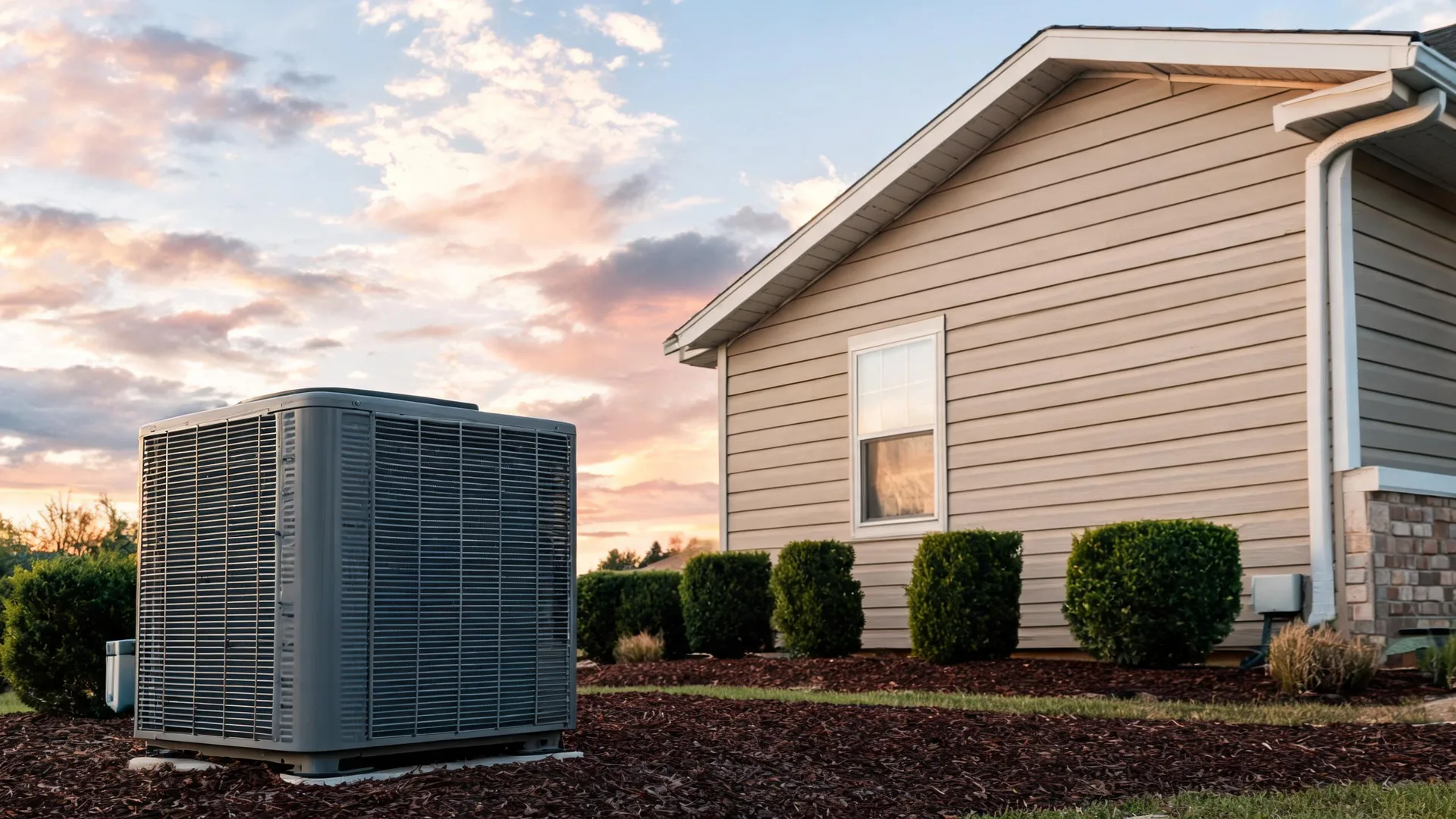
A residential heat pump outdoor unit mounted on a concrete pad next to a house with gray vinyl siding.

Ask what's left in it before you fix it

If the heat pump outside is the one the house came with, ask the contractor straight out how many years are left in it before agreeing to a big repair. A service call can tell you the age off the nameplate and the condition of the compressor, and that's worth knowing before you spend money on a part for a unit that's on its way out anyway.

A struggling compressor keeps straining

A compressor low on refrigerant or working against a dirty coil doesn't do a weaker job and stop there. It runs harder to make up the difference. That extra strain wears the bearings and windings faster than normal operation would, and the compressor is the one part that can't be patched once it fails.
Ice does not stay put

A little frost on the outdoor coil during a defrost cycle is normal. Ice that stays and builds means airflow is already restricted. Left alone, it spreads across the coil, blocks it fully, and can back refrigerant up into the compressor itself. A coil problem left running turns into a compressor problem.

A heat pump in trouble rarely just stops. It tells you first. Warm air that isn't as warm as it used to be, running longer to get the house to temperature, or cycling on and off more than it used to are all signs the system is working harder for less result. Listen for it too. A grinding or squealing from the outdoor unit points to a motor bearing giving out. A hissing or bubbling sound can mean refrigerant escaping where it shouldn't. Watch the outdoor unit itself. It should blow warm air while it's in heating mode, and if it's blowing cold or barely moving air at all, something downstream of the fan has failed. A system that switches into defrost and never switches back, or one that trips its breaker more than once, isn't having a bad day. It's telling you a part has already failed.

A diagnostic visit starts with questions, not tools. A tech wants to know what the system is doing, when it started, and whether it's constant or it comes and goes. That narrows down where to look before a single panel comes off. Next is the thermostat and the electrical side. The tech checks that the call for heat is actually reaching the outdoor unit, and that the breaker and disconnect are supplying full power. Gauges go on the refrigerant lines to check the charge. A clamp meter goes on the compressor and fan motor to see what they're actually drawing against what they should draw. A low reading or a high one both point somewhere specific. The coils get checked too, indoor and outdoor. A coil caked in dirt or blocked with ice makes a healthy system perform like a failing one. By the end, the tech isn't guessing which part is weak. There's one reading that doesn't match what a working system looks like, and that's the answer.