







A low-angle view across a mown lawn and trimmed hedge toward a dark two-story house with a covered porch, framed by large leafy trees under an overcast sky.

Heat Pump Repair in Greenville, MI

Tell us about the job

Takes about a minute. No obligation.

RepairHeat PumpMontcalm County, MI
Step 1 of 2

What ZIP code is the job in?

Winters here are cold, with overnight lows averaging 17°F through December, January and February. Your heat pump leans on its backup heat more than it would in a milder state, and that's just the normal rhythm of the job, not something that wears it down early. Montcalm County doesn't get much hail, and the snow and ice it sees most winters is the ordinary kind, not the kind that cuts a system's life short. So when a heat pump here is acting up, the cause is usually something plain. A worn part. A refrigerant leak. A thermostat that's lost touch with the system. That's worth fixing, not a sign the unit is done.

9 months
September through May, your system heats
3 months
June through August, it cools
17°F
the average winter night it heats against
80°F
the average summer afternoon it cools against
Isometric grayscale illustration of a cutaway house showing interior rooms, ductwork and an indoor air handler connected by lines to an outdoor condenser unit on the ground outside.
Your system heats September through May and cools June through August.

NOAA nClimDiv, 1991–2020 normals

A weak capacitor still lets the compressor limp along, so the heat pump keeps running instead of shutting down and telling you something's wrong.

A compressor forced to start on a failing capacitor runs hotter than it should, and a compressor is the one part worth protecting.

Electricity here runs 19.3 cents a kilowatt-hour, so a heat pump working harder than it should shows up fast on the bill

Power costs 19.3 cents a kWh statewide
8 hail events from 2015 to 2024
10 winter storms from 2015 to 2024
When the power blinks, your heat pump needs to come back on its own18 damaging wind events hit Montcalm County between 2015 and 2024, and the power grid feels it.

Half the homes in Montcalm County were built in 1977 or earlier, plenty of them with the original ductwork and wiring still in place. That's not a strike against your heat pump. An outdoor unit on an older house fails for the same reasons as one on a newer house. A contactor burns out. A capacitor goes weak. A reversing valve sticks. Mobile homes make up a real share of the housing here too, and those systems wear out the same way, not faster. If your heat pump is acting up, the age of the house isn't the clue. The part that failed is.

Worth fixing, not replacing

A heat pump that hasn't been fighting the climate here is usually sound underneath whatever's acting up now. Get the actual cause checked instead of guessing at it.

Find a contractor
A man in a gray t-shirt, tan work pants and brown boots, seen from behind, climbs steps toward a dark front door while carrying a canvas tool bag holding a tape measure and screwdrivers, with a potted flowering shrub beside the entry.
A gray outdoor HVAC unit mounted on a concrete pad beside a house with gray lap siding and a stone foundation.

What a heat pump tells you before it quits

A heat pump runs in both directions, so it gives you more ways to notice trouble than a furnace alone would. In heating mode, warm air that feels barely warm at all usually means the reversing valve isn't switching fully or the system is low on refrigerant. Ice building up on the outdoor coil is normal in small amounts, but a coil that stays caked over means the defrost cycle isn't kicking in when it should. Listen for the unit cycling on and off more than it used to, or running long stretches without ever seeming to catch up. A contactor that's pitted or burned will sometimes make the outdoor unit hum without starting at all. If the air coming from the vents switches from warm to cool and back for no reason, the reversing valve solenoid is a likely culprit. None of these mean the system is finished. They mean a specific part is asking for attention, and a tech can usually point to exactly which one once they're standing in front of it.

Check the thermostat first

Make sure it's set to heat and the set point is actually above room temperature. If it has batteries, swap them. A thermostat that lost its schedule or dropped its connection to the system can look exactly like a dead heat pump.
Look at the outdoor unit

Clear away leaves, mulch or snow piled against the cabinet, and make sure the fan on top isn't jammed. A heat pump needs open air flow on both sides to move heat at all, and something blocking it can mimic a real mechanical failure.

Most heat pump failures trace back to the outdoor unit, since that's the part exposed to weather and running almost constantly. The capacitor is a common one. It gives the compressor and fan motor the jolt they need to start, and it weakens gradually until one day the start doesn't happen. A contactor wears the same way, pitting a little more each cycle until the connection won't hold. The reversing valve is the part unique to a heat pump, and when its solenoid sticks, the system keeps running but stops switching between heating and cooling like it should. Refrigerant leaks show up slowly too, usually at a fitting or coil seam, and the system loses capacity long before it quits outright. None of these fail because a unit is old. They fail because they're mechanical, and mechanical things wear.

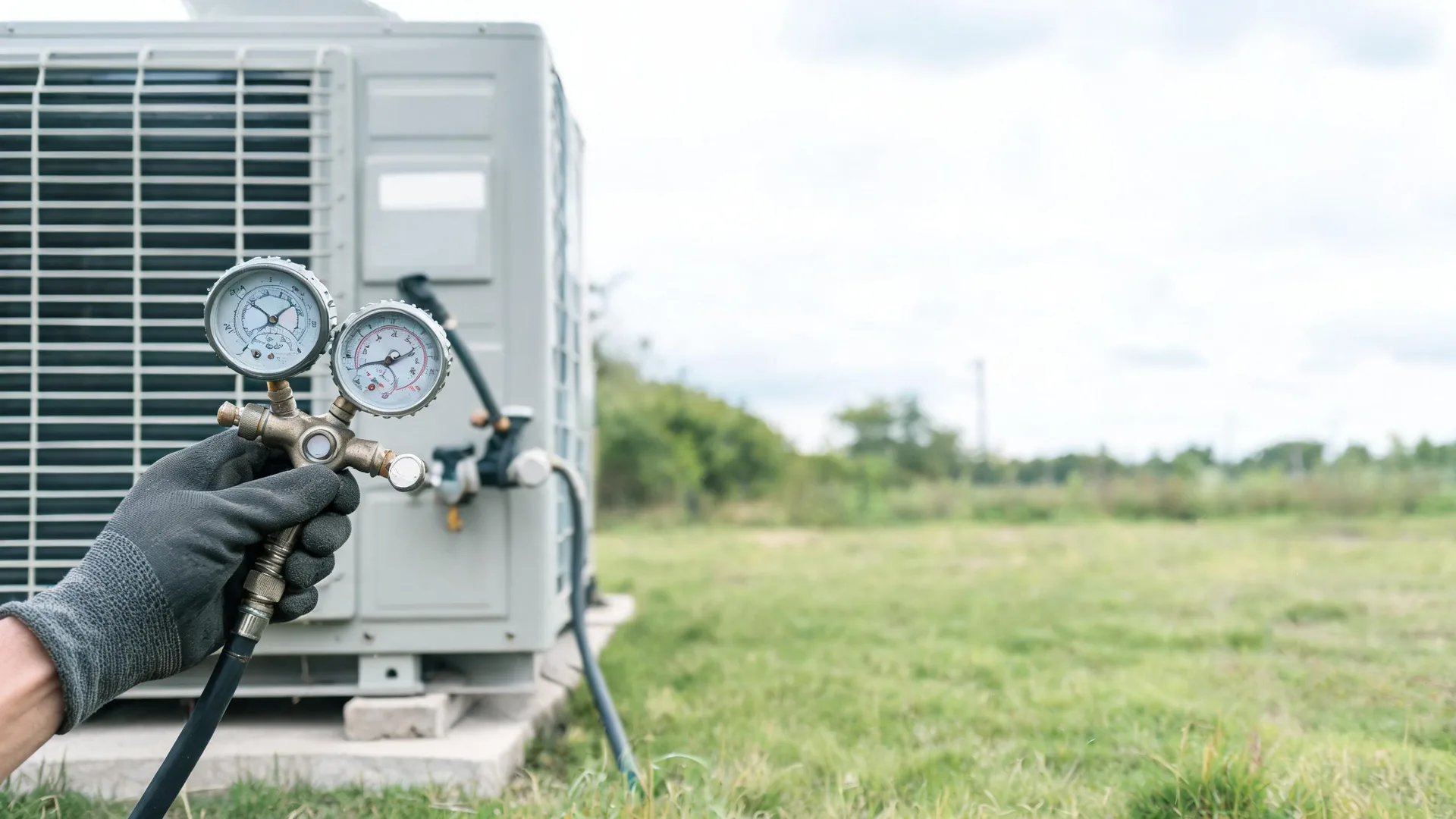
A diagnostic visit starts outside, with the cabinet open and the unit running if it can run at all. A tech checks the capacitor and contactor first since those fail the most and are quick to test. Refrigerant pressure gets checked next, with gauges on the lines, because a system that's low will show a specific pressure pattern that points straight to a leak. Indoors, the tech looks at the air handler and the thermostat wiring, since a signal that isn't reaching the reversing valve can look identical to the valve itself failing. Temperature readings get taken at the supply vents and compared to what the system should be putting out in heating mode. By the end, the tech isn't guessing between possibilities anymore. They can point to the one part causing the problem and tell you what replacing or repairing it involves.