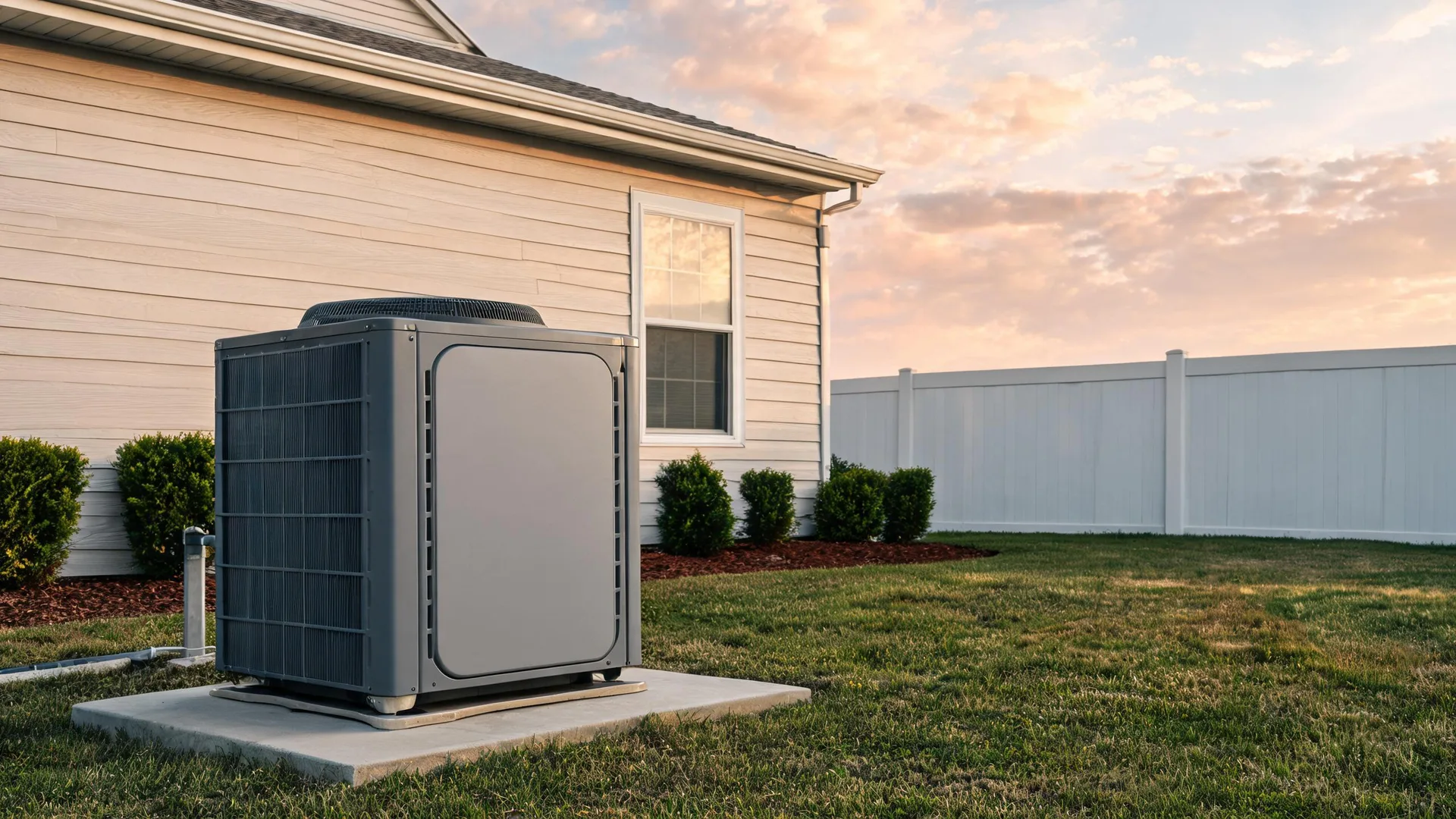
Electricity here runs 20.26 cents a kilowatt-hour
Oakland County pays more for power than most US counties. A heat pump runs on electricity, so that rate applies to every hour it works, not just the hours it works hardest.
Takes about a minute. No obligation.
Oakland County pays more for power than most US counties. A heat pump runs on electricity, so that rate applies to every hour it works, not just the hours it works hardest.
When the rate per kilowatt-hour is already high, the gap between a heat pump that runs efficiently and one that does not shows up on every bill it generates.

NOAA nClimDiv, 1991–2020 normals
Gas heats 85.9% of homes in Oakland County.
A heat pump installed here usually pairs with the furnace already in place, not a gas line ripped out.




Oakland County falls under zone 5A in the 2021 energy code, a cool, humid climate where heating carries the bigger load over the year. Any split-system heat pump installed here has to meet the federal minimum for that climate: at least 14.3 Btu of heat moved per watt-hour over the summer, and at least 7.5 Btu per watt-hour over the winter. That standard applies to every unit built from January 1, 2023 onward, so it is not something a contractor can quote around. It narrows the field before cost or brand ever enters the conversation.
The rate per kilowatt-hour here is already set. The one thing left to control is how much of it this unit actually needs to run. A heat pump sized and installed right will hit its efficiency rating on your power bill. One sized wrong or installed loose won't, no matter what the sheet says.
Find a contractorThe rating on the label is measured under set conditions in a lab, with the right charge and the right airflow across the coil. That number only holds up in the field if the install matches those conditions. A line set charged correctly, a coil that gets full airflow, ductwork sized for what the system moves. Skip any of those and the unit still runs, but it works harder to move the same heat, and it keeps working harder for as long as it's in the ground or on the pad. A heat pump logs more hours than almost anything else in the house, since it runs in both directions, heating and cooling. Every one of those hours either lines up with the rating on the label or falls short of it, and the gap compounds because the system never really stops. It cycles on, runs its hours, cycles off, year after year. A unit installed right keeps closing that gap in the homeowner's favor the whole time it's running. One installed wrong opens it wider with every season, and nothing on the label will tell you which one you've got until the bills do.
A contractor has to run a load calculation on the house before pricing anything, looking at square footage, window placement, insulation and ceiling height. That work decides what size unit goes in, and size drives the price of the equipment itself along with what ductwork or line set changes come with it. Skip the calculation and the quote is a guess, not a number.
Setting the refrigerant charge to the right weight, pulling a proper vacuum on the line set, and getting full airflow across the indoor coil all take time on site, and that time is part of what gets billed. A heat pump also needs a spot outside with clearance on all sides and a pad or bracket to sit on, so site prep is part of the job too. None of that shows up on the unit's price tag, but all of it shows up in what the install costs.
A heat pump stops moving heat the moment the power drops, same as the blower on a gas furnace. With over a third of Michigan households losing power for a day or more last year, that is worth planning around before the system goes in, not after. Where the outdoor unit sits matters too. A spot away from where branches or hail tend to land in a storm is easier to pick now than to fix once the unit is set on its pad. Worth asking the contractor what backup heat options pair with this install, so a long outage does not mean a cold house.
Installation day starts with the old equipment coming out, if there is any, and the new line set and electrical whip going in before the outdoor unit ever gets set on its pad. The indoor coil goes in next, paired to the furnace or air handler already there, and the refrigerant lines get connected and pulled down to a vacuum to clear out moisture and air before any refrigerant moves through them. A gauge gets left on during that vacuum, because the number has to hold steady to prove the lines are sealed. Once that passes, the system gets charged to the weight the manufacturer specifies, not by feel. Airflow across the indoor coil gets checked against what the system calls for, and the outdoor unit gets leveled on its pad so the compressor inside it wears evenly. Before anyone leaves, the system should run in both directions, so it actually moves heat out and moves heat in, and the readings at the vents should match what the equipment is rated to do.