




A tall trimmed hedge in the foreground borders a mown lawn beside a row of dark single-story houses with shingled roofs, surrounded by large leafy trees under an overcast sky.

Heat Pump Installation in Saginaw, MI

Tell us about the job

Takes about a minute. No obligation.

New system or replacementHeat PumpSaginaw County, MI
Step 1 of 2

What ZIP code is the job in?

Electricity in Michigan ran 19.30 cents per kilowatt-hour in 2024. A heat pump moves heat instead of burning gas to make it, so it gets more out of every kilowatt-hour than a furnace gets out of a therm, but it still runs on the grid price. At that rate, how efficiently the unit is rated to run matters on every bill, not just the first one. Saginaw winters ask a heat pump to work hard for months at a stretch. A unit sized and rated for this cold holds its efficiency when it matters most, instead of leaning on backup heat to get through the coldest stretches.

8 months
October through May, your system heats
3 months
June through August, it cools
19°F
the average winter night it heats against
81°F
the average summer afternoon it cools against
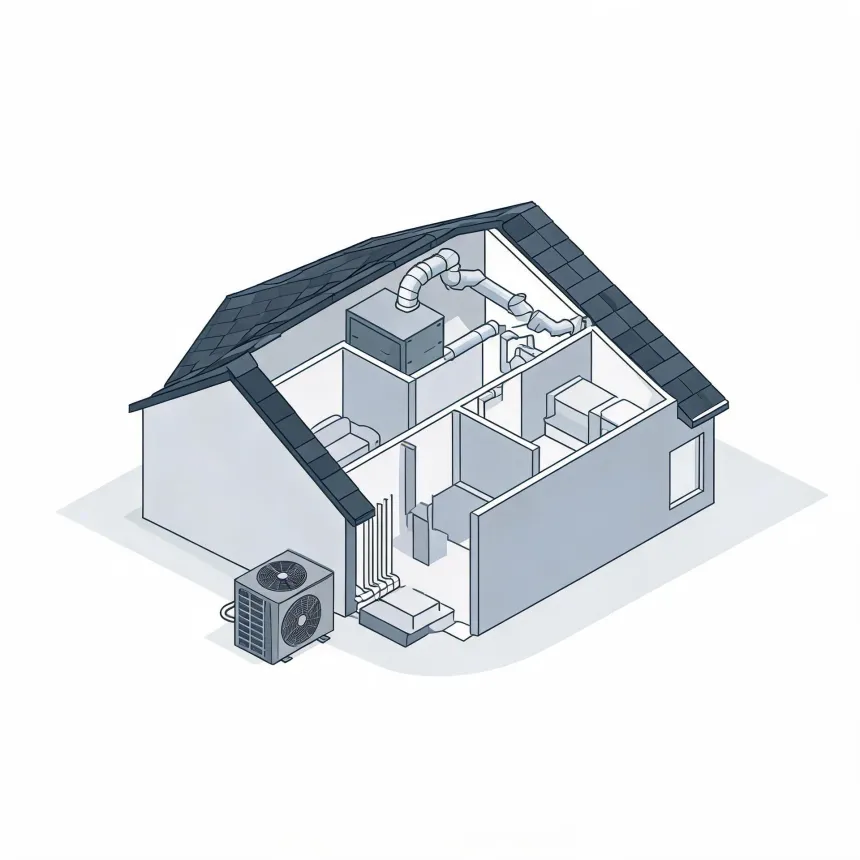
Isometric line illustration of a cutaway house showing interior rooms, an air handler with ductwork in the attic space, and an outdoor condenser unit beside the exterior wall.
Your system heats October through May and cools June through August.

NOAA nClimDiv, 1991–2020 normals

Half the homes in Saginaw County were built in 1968 or earlier.

A heat pump going into a house that old has to be sized for the walls and ductwork already there, not for a spec sheet.

Most of Saginaw heats with gas, and that changes the heat pump conversation

73.5% of homes heat with gas
79 damaging wind events from 2015 to 2024
17 hail events from 2015 to 2024
A furnace here works harder than it will ever work againWinter nights in Saginaw average 19°F, and the heat pump has to keep up.

Heat runs here from October through May. September is the last easy month to get a heat pump installed before that stretch starts. Do it then and the contractor can take the time to size it right for your house and set it up without rushing. Wait until the first cold snap and you're choosing from whatever's in stock, installed by whoever has a slot open that week. Cooling works the same way on the other end, with June right behind May. Either way, the work goes better before the system is the only thing standing between you and the weather.

Efficiency pays here

Power costs more here, so an efficient system pays you back on every bill.

Find a contractor
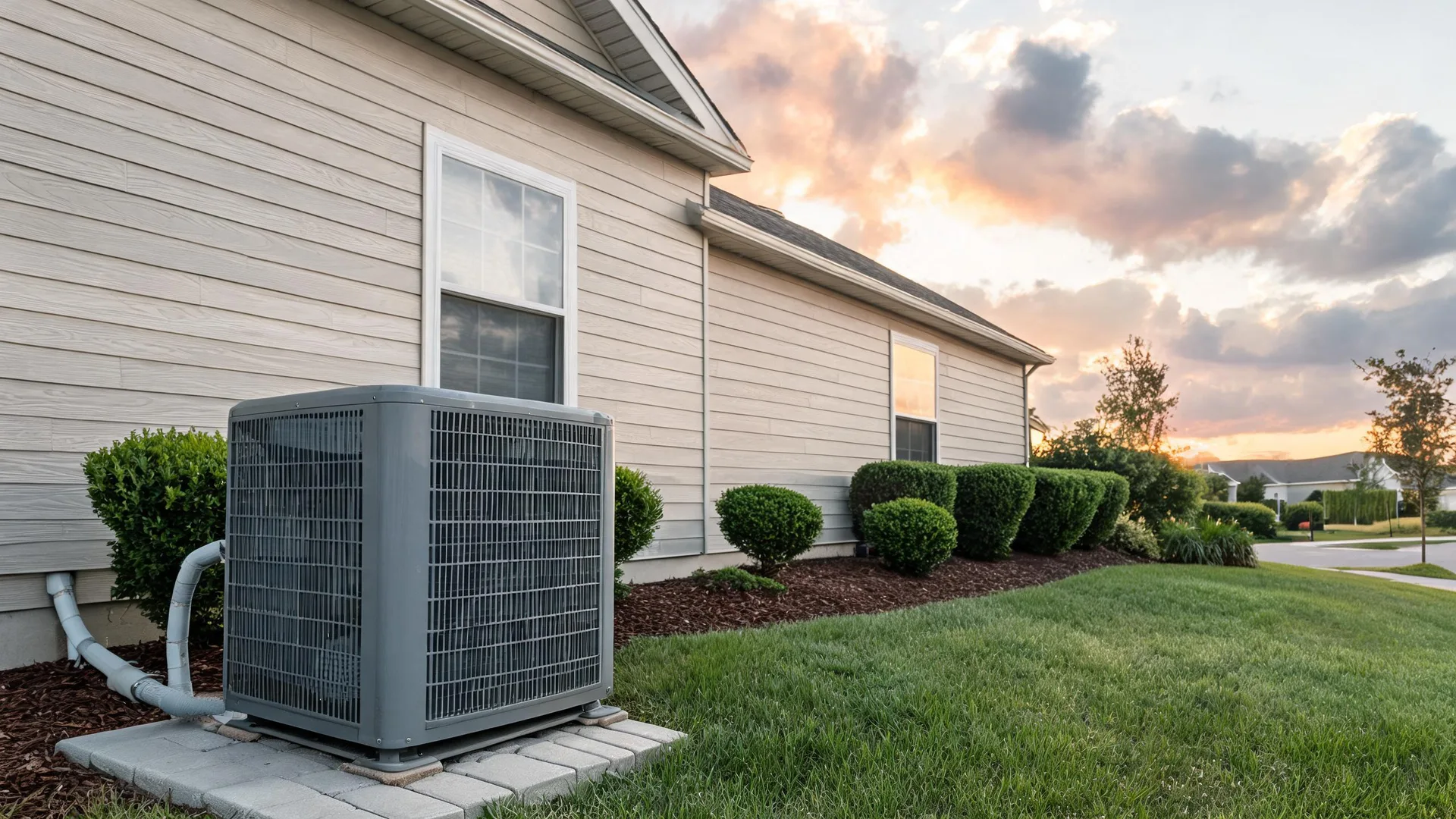
A gray heat pump outdoor unit mounted on a concrete pad next to the stone-accented exterior wall of a house.

Sized right, it runs steady. Sized wrong, it runs hard

A heat pump that's too big cycles on, satisfies the thermostat fast, and shuts off again before it's settled into steady airflow. One that's too small never gets ahead of the load, so it leans on backup heat more than it should and runs almost constantly in the cold without quite catching up. Either mistake shows up as wear, because a compressor that short cycles sees more starts and stops over its life, and one that runs flat out logs more hours than it would if it were matched to the house. Getting the size right means working out how fast the house loses heat, not just how many square feet it has. Houses the same size can lose heat at very different rates depending on the windows, the insulation, and how tight the place is sealed up. That's why a load calculation looks at the walls and glass and ductwork instead of reading off a chart. The compressor itself is built to modulate within a range, so sizing isn't about hitting one perfect number. It's about landing inside the range where the unit can idle down on mild days and still stretch to cover the cold ones without the backup heat doing most of the work.

Sizing the job comes before pricing it

A contractor has to work out how much heat your house loses before quoting anything. That means walking the place, checking the ductwork if you have it, looking at the windows and insulation. A unit sized off a load calculation costs more to spec correctly than one picked off a chart by square footage, but it's the difference between a system that keeps up and one that runs constantly without getting there.
The outdoor unit and the backup heat both add to the number

A heat pump built to hold its output in deep cold costs more than one that starts losing capacity partway down. And in a cold climate most heat pumps still need backup heat for the coldest stretches, whether that's strip heat added to the air handler or tying into a furnace that's already there. Reusing existing ductwork keeps the job simpler. Replacing or modifying it adds work before the heat pump itself goes in.

Ask for the capacity rating at low outdoor temperature, not just the rating at mild conditions, because that number tells you what the unit still delivers when it's working hardest. Ask where the balance point sits, the outdoor temperature where backup heat has to start picking up the slack, and ask what that backup heat actually is. Ask how the contractor arrived at the size, a room by room load calculation or a rule of thumb based on square footage, since those can land on different answers for the same house. Ask what the warranty covers on the compressor versus the rest of the unit, since that part costs the most to replace. And ask what happens to the existing ductwork, whether it gets reused as is or needs changes to move the air this system is built to move.

Install day starts outside, setting the new unit on its pad and running the line set and wiring to where the indoor coil or air handler goes. Brazing the refrigerant lines takes patience. A bad joint there turns into a slow leak months down the road. Once the lines are connected, the system gets evacuated with a vacuum pump to pull out moisture and air, because either one left behind ruins the refrigerant's ability to do its job. Only after that does the refrigerant charge go in, weighed against the line length rather than filled to a gauge reading. Electrical work runs alongside this, tying the outdoor unit and any backup heat into the panel on its own circuit. The last hours go to startup, checking refrigerant pressures, airflow across the coil, and the temperature split between the air going in and the air coming out. That split tells the contractor the system is actually moving heat the way it should.