Electricity here runs 19.30 cents a kilowatt-hour
Michigan households paid that rate in 2024. A heat pump runs on electricity for both heating and cooling, so that rate applies to every month you use it, not just summer.
Takes about a minute. No obligation.
Michigan households paid that rate in 2024. A heat pump runs on electricity for both heating and cooling, so that rate applies to every month you use it, not just summer.
At this rate, how many kilowatt-hours the heat pump uses to heat or cool your home matters more than it would somewhere with cheap power. Two systems that look similar on the showroom floor can land very differently on your bill once Owosso electric rates are the ones paying for them.

NOAA nClimDiv, 1991–2020 normals
Gas heats 60.2% of homes in Shiawassee County, more than any other fuel.
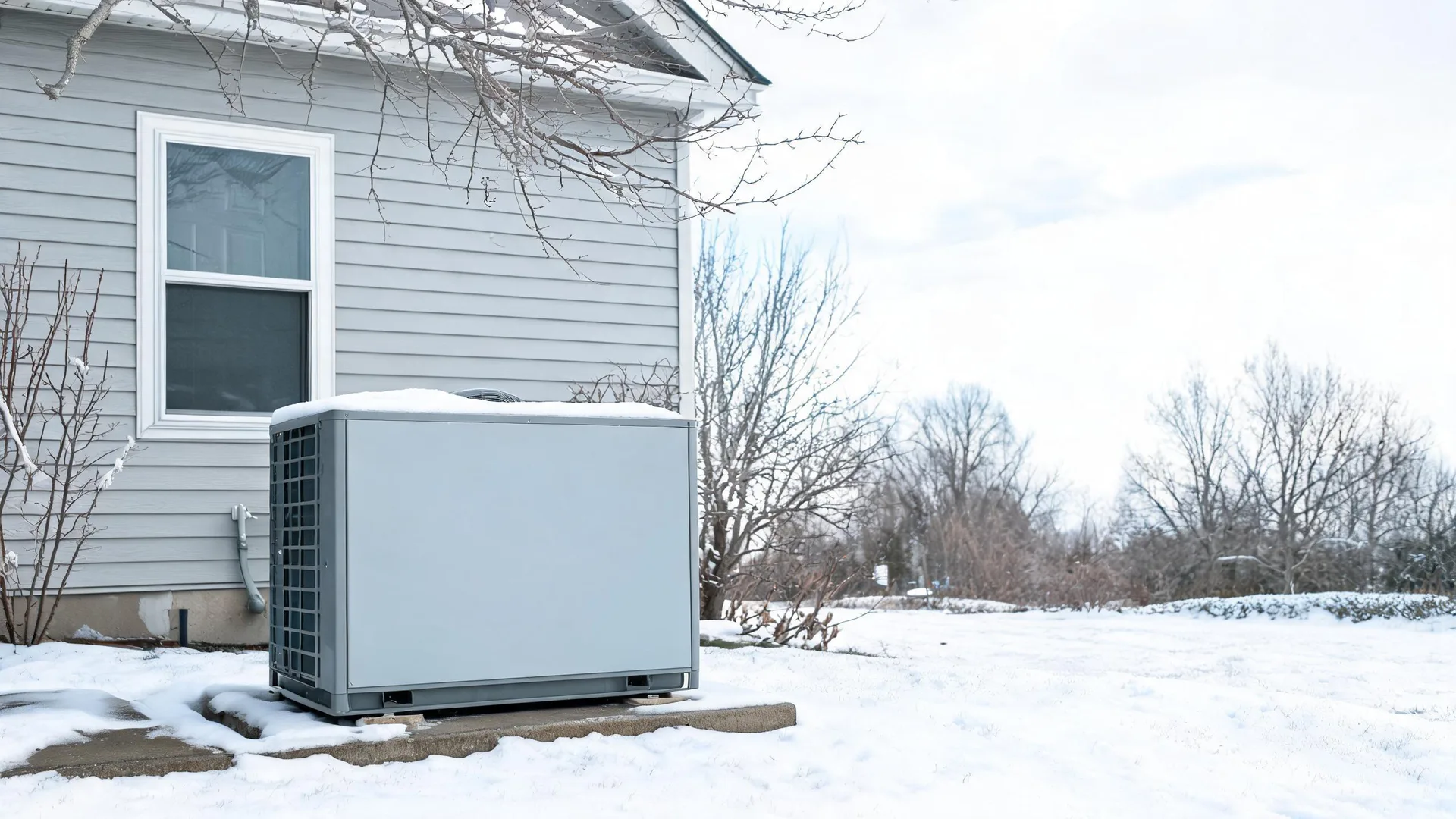
A heat pump replaces that furnace with one machine that heats and cools, running on electricity instead.



Heat runs here from October through May, about eight months of the year. September is the month before that starts, and it's the better time to put in a heat pump. A contractor sizing the system has room to do it right instead of rushing a quote during the first cold week. You also get to run it through a full stretch of cool nights before the coldest part of winter shows up, so if something needs adjusting, it gets adjusted while the stakes are low. Wait until October or later and you're choosing a system while you actually need the heat, which is a worse position to install from.
Shiawassee County falls in climate zone 5A, where heating carries the bigger load. Any split-system heat pump installed here has to clear federal minimums of 14.3 SEER2 and 7.5 HSPF2. That floor rules out the weaker units and narrows what a contractor can quote you.
Find a contractor
Half the homes in Shiawassee County were built in 1969 or earlier. A heat pump installed now isn't going into a new build with ductwork sized for it from day one. Whatever's moving air through that house was likely laid out for a furnace, and a contractor sizing your system needs to check that it still matches what a heat pump can push through it. If your system came with the house or was added later, that's worth knowing before you get a quote, not after.
An oversized heat pump satisfies the thermostat fast and shuts off again. It never runs long enough to warm the house evenly or pull real moisture out of the air in summer. The short cycling also wears the compressor harder over the years. A unit sized right runs longer, steadier stretches, and that's what actually keeps a house comfortable.
Sizing starts with a load calculation. A contractor goes room by room, checking window area, insulation, ceiling height, air leaks, which walls face which direction. That tells them how much heating and cooling capacity the house actually needs. Sizing off the old furnace's rating instead is a common shortcut, but furnaces and heat pumps aren't rated the same way, and that shortcut can land you with the wrong equipment entirely.
Equipment cost is only part of what you're quoted. A big piece of the price is what it takes to get refrigerant lines and power where they need to go, and that depends on what's already at the house. If there's no existing line set, one has to be run between the outdoor unit and the indoor coil. Going through a wall is a different job than running it up through an attic. The outdoor unit also needs its own electrical circuit, and an older panel sometimes doesn't have room for one without an upgrade. Ductwork plays into it too. If what's there is leaky or undersized for a heat pump's airflow, sealing or modifying it adds to the job before the new system ever turns on. None of this shows up on a spec sheet, which is why similar houses with the same unit can end up with very different quotes.
Installation day starts with the old equipment coming out, furnace or air handler and the coil with it. If the ductwork needs sealing or modifying, that happens before the new coil goes in, not after. The outdoor unit gets set on a pad, far enough off the wall to pull air freely. Refrigerant lines run between that unit and the indoor coil, and a contractor pressure tests those lines before any refrigerant goes in. A leak found after the charge is in means pulling it all back out and starting over, so that test happens first. The outdoor unit ties into its own electrical circuit, separate from the rest of the house. Once everything's connected, a contractor runs the system through both a heating cycle and a cooling cycle, checking refrigerant charge and airflow at the vents before calling the job finished.