Electricity here runs 19.30 cents a kilowatt-hour
Michigan power costs more than in most states, and a heat pump runs on electricity for every degree it moves. That rate applies to every hour the compressor runs, all year.
Takes about a minute. No obligation.
Michigan power costs more than in most states, and a heat pump runs on electricity for every degree it moves. That rate applies to every hour the compressor runs, all year.
Two heat pumps can heat the same house and cost very different amounts to run. With power priced the way it is here, the difference between a good match for this house and an oversized or poorly matched one shows up on every bill, not just the first one.
NOAA nClimDiv, 1991–2020 normals
The same model heat pump carries different ratings at different outdoor temperatures.
Ask for the capacity at the coldest temperature this area sees, not just the rating on the label.



Winter here is the main job a heat pump does, with lows averaging 20°F across December, January and February. That's real work, but it's steady work, not punishing work. A heat pump sized right for zone 5A doesn't spend the winter straining against something more extreme. Wind and hail show up in the weather history here too, but neither one touches how hard the compressor runs day to day. The system that fits this county is one built to handle cold, humid winters reliably, not one chasing the highest efficiency number on the shelf.
Heat here starts in October. September is when a heat pump goes in without a rush, before the first cold mornings arrive and before any installer's schedule fills up with people whose systems just quit on them.
Find a contractorWhatever is getting replaced doesn't just vanish from the yard. A contractor has to reclaim the refrigerant from the old system before touching the lines, because it can't be vented to the air. That takes time on the job, not just lifting equipment. If the old system is a furnace paired with an air conditioner, the ductwork usually carries over, and the installer checks it against what the heat pump needs, since a heat pump moves air differently than a furnace does. The electrical panel gets a look too. A heat pump often draws differently than whatever heated the house before it, and the disconnect and breaker have to match the new equipment, not the old one. None of this is a reason to delay replacing a system that's already struggling. It's just the part of the job that happens before the new unit ever turns on.
The right size comes from a room by room load calculation that accounts for insulation, window area, ceiling height and air leakage, not a rule of thumb based on the home's size. Houses of the same size can need different capacity depending on how they're built. A contractor who sizes off square footage alone is guessing.
A heat pump that's too big cools the house fast, shuts off, and starts again before it's pulled moisture out of the air, leaving rooms feeling damp even at the right temperature. One that's too small runs constantly during the coldest stretches and leans harder on backup heat. The right size runs long, steady cycles that actually finish the job.
The rating on the label tells you how much heat a system moves for the electricity it uses. It doesn't tell you how big a unit is or how warm it can keep a house. A higher rated unit can still be the wrong size for the rooms it's heating, and a correctly sized unit at a lower rating can outperform it once it's actually running. That rating also comes from lab conditions, not from the coldest morning the unit will ever face, so it won't tell you what it does when the temperature drops hard. What it's good for is comparing similar units against each other, not predicting what a bill will look like or how comfortable a room will feel.
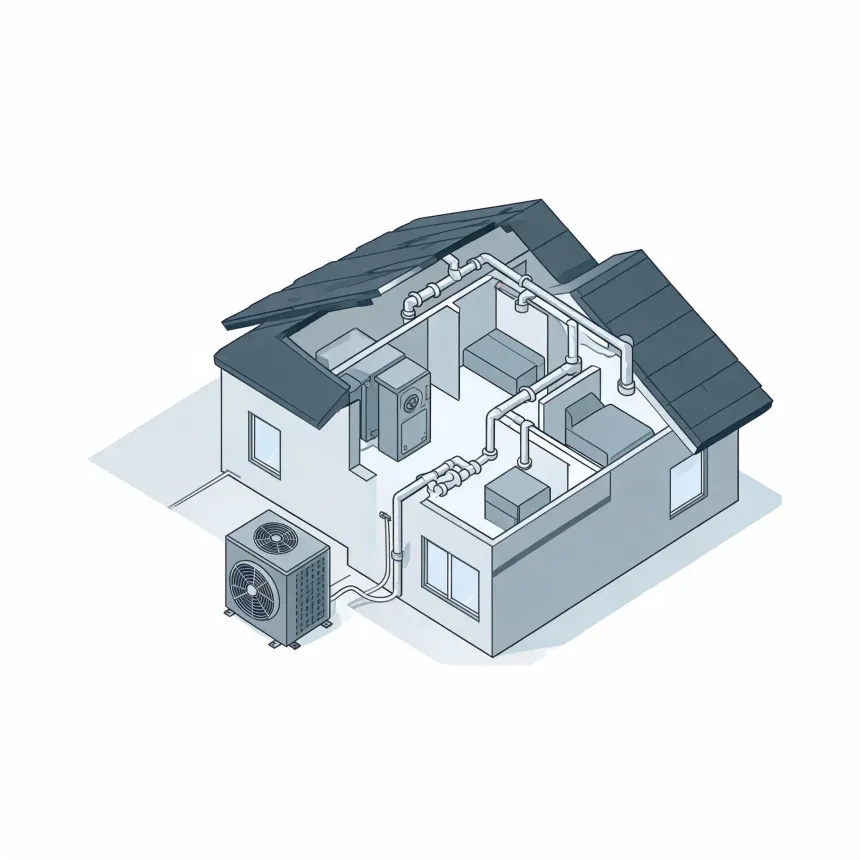
Installation day starts with the old equipment coming out. The new unit goes where the old one sat, or close to it, if the lines and wiring allow for it. The indoor coil and outdoor unit get set, the line set gets connected, and the whole system gets pressure tested before anyone adds refrigerant. That test matters because a leak found after charging means pulling it all back out and starting over. Once it holds pressure, the refrigerant goes in to the exact charge the manufacturer specifies, not by feel. Low voltage wiring gets run to the thermostat, and the disconnect and breaker get checked against what the new unit actually draws. Then comes startup, checking refrigerant pressure, airflow across the coil, and the temperature difference between the air going in and the air coming out. A system that passes all that is doing what it's supposed to. The last step is usually a walkthrough of the thermostat and whatever backup heat the system has, since that's the part the homeowner actually touches.