







A lit residential street at dusk featuring large two-story brick houses with glowing windows, mature trees, and a street lamp.

Heat Pump Installation in Mount Pleasant, MI

Tell us about the job

Takes about a minute. No obligation.

New system or replacementHeat PumpIsabella County, MI
Step 1 of 2

What ZIP code is the job in?

Electricity in Isabella County averaged 20.46 cents per kilowatt-hour in 2025. Most counties in the country pay less than that. A heat pump runs on electricity for both heating and cooling, so that rate applies every time it cycles on. When power costs this much, the difference between an efficient unit and a weak one shows up on the bill every month, not just in a brochure. A system sized and installed right for this house earns back that attention here more than it would somewhere with cheaper power.

9 months
September through May, your system heats
3 months
June through August, it cools
17°F
the average winter night it heats against
80°F
the average summer afternoon it cools against
Isometric cutaway illustration of a small house showing interior rooms with furniture, an indoor air handler with ductwork, and lines running to an outdoor condenser unit beside the building.
Your system heats September through May and cools June through August.

NOAA nClimDiv, 1991–2020 normals

Just over half the homes in Isabella County heat with gas.

A heat pump here usually means pairing it with the furnace, not replacing it.

A heat pump here isn't fighting the climate as hard as you'd think

10 winter storms from 2015 to 2024
Winter nights average 17°F
Power here costs 20.46 cents per kilowatt-hour
Get it installed before SeptemberHeat runs here from September through May, nine months out of the year

Isabella County falls under zone 6A in the 2021 energy code, a cold climate with a long heating season. Any split-system heat pump installed here has to meet the federal minimum for that kind of equipment: at least 14.3 Btu of cooling for every watt-hour it draws over the summer, and at least 7.5 Btu of heat for every watt-hour over the winter. That's not a target. It's the floor. Units built since January 2023 are rated against it before they ever reach a showroom, so the question for your house isn't whether a system clears that bar but how far above it you want to go, and what that costs to get there.

Get the installation right and the rate works for you

Electricity here runs well above what most of the country pays, and a heat pump draws on it for both heating and cooling. That makes the installation itself part of what you're paying for every month after. Getting the unit sized right and set up right is what puts that rate to work for you instead of against you.

Find a contractor
A man in a cap, dark work shirt and brown trousers walks up stone steps toward a dark blue panelled door, carrying a canvas tool bag filled with hand tools, beside a potted shrub.
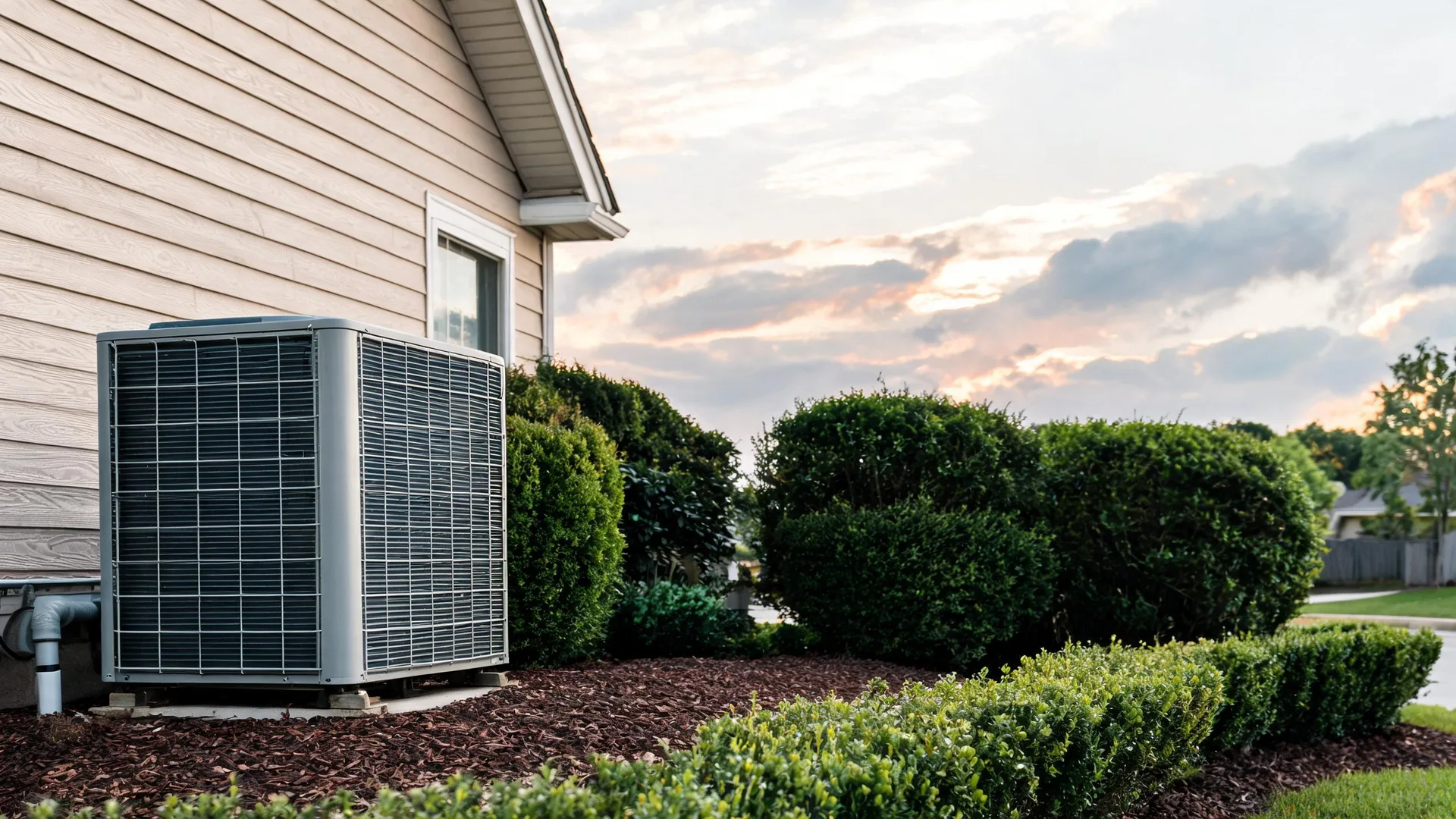
A dark gray heat pump unit mounted on a concrete pad next to a house with gray siding and a stone veneer wall.

The box is the small part of the bill

An installation has two costs: the equipment and the labor to put it in right, and the second one is where jobs start to differ. The unit itself comes in a few sizes and a few tiers of hardware, inverter-driven compressors and variable-speed blowers cost more than single-stage ones. But the bigger swing is usually what it takes to get it running the way it's supposed to. If the ductwork is undersized or leaky, it has to be reworked or the new system will never move the air it's rated for. If the electrical panel doesn't have the capacity, that's its own job before the heat pump goes in at all. Running new refrigerant lines, setting the outdoor pad, tying in a backup heat source, all of that is labor on top of the box itself. A load calculation done properly takes time too, and skipping it is how a house ends up with a unit that's the wrong size for what it actually needs. None of this shows up on a price tag at a store. It shows up in the estimate once someone has actually looked at the house.

The rating is two numbers, not one

A heat pump carries a cooling rating and a separate heating rating, and they measure different things. One tells you what it costs to run the air conditioning side, the other what it costs to run the heat. A unit can be strong on one and average on the other, so look at both, not whichever one is printed bigger on the sticker.
The rating is measured new

That number comes from a lab test on a new unit moving the right amount of refrigerant through clean coils. It assumes the ductwork moving the air is sized right and sealed, and that the system was charged correctly on install. A unit with a strong rating that's installed poorly will run worse than a plainer unit put in right.

Two systems with the same rating on paper can run very differently once they're in a house, so the rating alone isn't a fair comparison. Ask what size unit is being proposed and how they arrived at that number. Sizing should come from a load calculation on this house, not a guess based on the old equipment or a flat rule of square footage per ton. Ask what happens at the coldest point in winter, since every heat pump loses capacity as the temperature drops, and ask what's supplying heat when it can't keep up on its own. Ask how the refrigerant lines and ductwork will be handled, because a unit charged wrong or pushing air through leaky ducts won't hit the numbers on its sticker. And ask what the warranty actually covers, parts or labor or both, since a compressor covered under warranty doesn't help much if the labor to replace it isn't.

Isabella County has logged 31 severe weather events in the last ten years. Damaging wind caused 18 of those, winter storms another 10, and hail hit 3 times. Across Michigan, over a third of households went at least a day without power in 2024. For a heat pump, that cuts two ways. The outdoor unit sits outside year round, so where it goes matters: clear of where ice or a falling branch can reach it, and up on a stand if snow piles up where you live. And since this machine is your heat and, depending on setup, your hot water too, an outage means neither works until the power does. Ask the contractor what backup makes sense for this house, whether that's a generator hookup or keeping the furnace ready to carry the load on its own.