





A nighttime street view of several illuminated two-story red brick homes with front porches, flanked by a large tree.

Heat Pump Installation in Monroe, MI

Tell us about the job

Takes about a minute. No obligation.

New system or replacementHeat PumpMonroe County, MI
Step 1 of 2

What ZIP code is the job in?

Monroe County saw 130 severe weather events between 2015 and 2024. Most of that was wind, 95 events, with 17 hail events and 7 tornadoes mixed in. An outdoor heat pump unit sits outside through all of it, so where it goes and what's around it matters more here than it would somewhere calmer. Statewide, 34% of Michigan households lost power for a day or more in 2024. A heat pump needs electricity to run, for heat and for air conditioning both, so a long outage reaches further into the house than it would with some other setups.

8 months
October through May, your system heats
3 months
June through August, it cools
21°F
the average winter night it heats against
82°F
the average summer afternoon it cools against
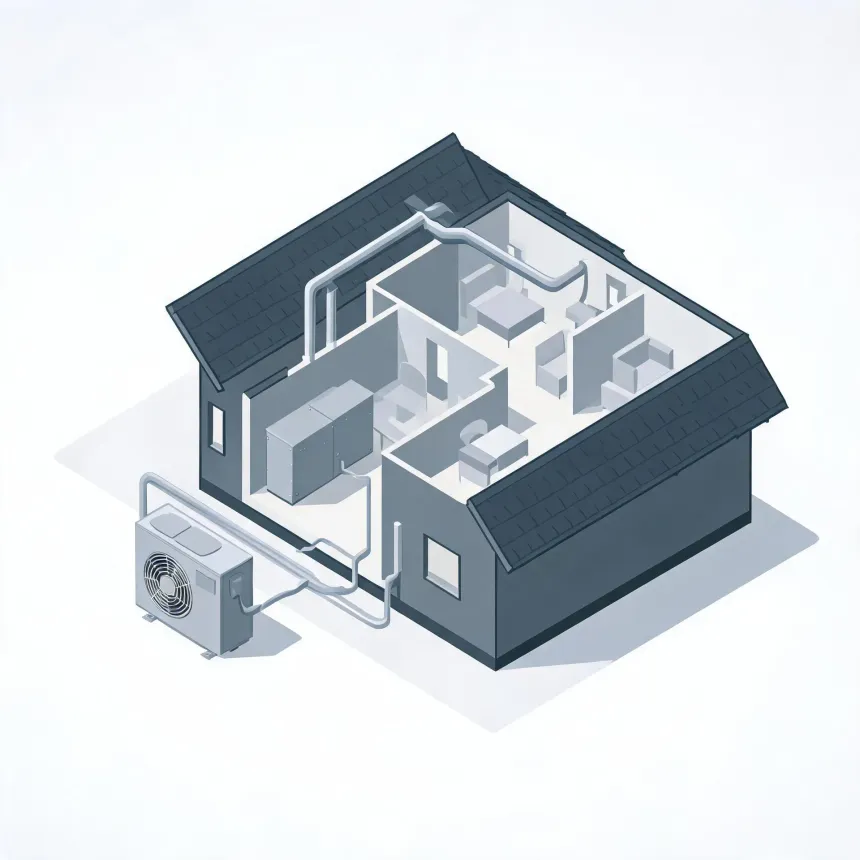
Isometric grayscale illustration of a cutaway house showing interior rooms, ductwork and an indoor air handler connected by lines to an outdoor condenser unit on the ground outside.
Your system heats October through May and cools June through August.

NOAA nClimDiv, 1991–2020 normals

A new heat pump installed in October competes with the cold snap already underway.

September is the month to get it in, before the heat has to run.

This heat pump won't work hard here. Pick one that's built to survive what the weather throws at it.

95 damaging wind events from 2015 to 2024
17 hail events from 2015 to 2024
Winter nights average 21°F

Monroe County falls in climate zone 5A, a cool zone where the heating load matters more than the cooling load. Any split-system heat pump installed here now has to meet the federal minimum going back to January 2023: at least 14.3 Btu of cooling delivered for every watt-hour it draws, and at least 7.5 Btu of heat for every watt-hour in the winter. That rules out some of the older, cheaper equipment still sitting in warehouses or on sale. It doesn't mean every unit on the market today is built the same past that floor. Two systems can both clear the minimum and still pull very different amounts of power on the coldest night of the year.

Plan for the outdoor unit and the outage before either one happens

Ask the installer where the outdoor unit will sit and what's around it. A spot clear of fences and low branches gives wind and hail less to throw at it. Ask what happens to heat and hot water if the power goes down for a day, and what backup options exist for this system.

Find a contractor
A man in a gray t-shirt, tan work pants and brown boots, seen from behind, climbs steps toward a dark front door while carrying a canvas tool bag holding a tape measure and screwdrivers, with a potted flowering shrub beside the entry.
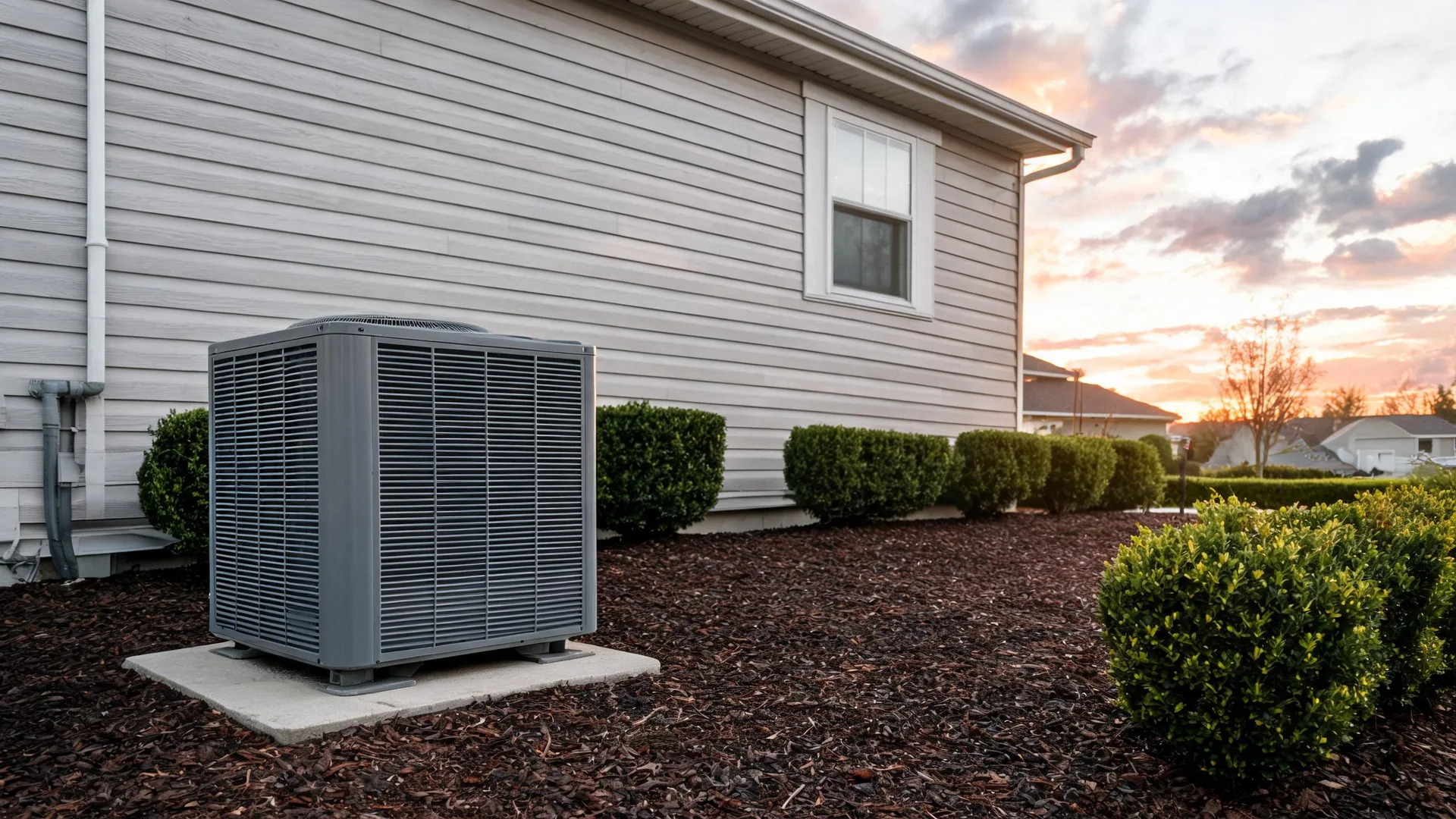
A gray outdoor HVAC unit mounted on a concrete pad beside a house with gray lap siding and a stone foundation.

The old equipment comes out, it doesn't stay as a spare

The old system doesn't get reused somewhere else or left in place as a backup. Once the new heat pump is in, the indoor coil, the outdoor unit, the line set and usually the air handler all come out. If a furnace is staying in place for backup heat, the installer disconnects it from the old outdoor unit and ties it into the new system instead. Refrigerant left in the old lines has to be recovered, not vented, so a tech will pull it out with a recovery machine before anything gets cut apart or hauled off. If the old unit used a refrigerant that's been phased out, that recovery step matters even more, since that refrigerant can't just be replaced or topped off anymore. Copper line set, the old condenser, the coil, most of it gets scrapped or recycled rather than thrown out whole. Whatever gets left behind, old mounting pads, abandoned electrical whips, a thermostat wire that no longer connects to anything, is worth asking about before the crew leaves, since cleanup isn't always assumed to be part of the job.

Sizing the system is what sizing the price

A contractor has to work out how much heat the house loses in winter and how much it gains in summer before quoting anything. That means measuring the place, not guessing off square footage. A unit sized too big short cycles and wears out early. One sized too small runs constantly and still can't keep up on the hardest days. Getting this step right costs time up front, but it's what everything else is priced against.
The install is more than the outdoor unit

A heat pump needs a line set running between the outdoor unit and the indoor coil, proper electrical circuits sized for the compressor, and in a lot of homes, modifications to the ductwork or the air handler so it moves enough air. If the home has electric baseboard or a furnace being replaced, that changeover is its own piece of work. None of it is optional, and none of it is the same from one house to the next.

The efficiency rating on the label, the one with the Btu-per-watt-hour numbers, is measured under set lab conditions, not in your backyard on the coldest night of the year. Two units can carry close ratings and still behave differently once the temperature drops, because that number is an average over a season, not a promise about any single hour. A higher rating generally means lower power draw for the same heat or cooling delivered, but only if the system is sized and installed right. An oversized unit with a great rating still short cycles and wastes power doing it. An undersized one with the same rating runs constantly and still falls behind. The rating tells you something about the equipment. It doesn't tell you whether it's the right equipment for this house, and it doesn't replace the load calculation that figures out what the house actually needs.

Electricity in Monroe County runs 20.39 cents per kilowatt-hour on average, more than most counties in the country pay. A heat pump draws power every time it runs, for heat in the winter and for cooling in the summer, so that rate shows up on the bill year round, not just a few months. A unit that pulls less power to deliver the same heat or cooling costs less to run at that rate than one that doesn't, and the gap is bigger here than somewhere paying less for power to begin with. That's separate from the purchase price. Sizing still comes first, since an oversized or undersized system wastes power no matter what the label says, but once it's sized right, the efficiency of the equipment you pick decides what every bill after that looks like.