A nighttime view of a tree-lined residential street with illuminated two-story brick houses and street lamps.

Heat Pump Installation in Kalamazoo, MI

Tell us about the job

Takes about a minute. No obligation.

New system or replacementHeat PumpKalamazoo County, MI
Step 1 of 2

What ZIP code is the job in?

The old equipment comes out

A contractor disconnects the refrigerant lines, the electrical whip and the ductwork or air handler connections, then removes the old furnace, air conditioner or heat pump completely. If the old system used refrigerant, that gets recovered properly rather than vented, since it's against the law to release it into the air.


What stays and what changes

Ductwork usually stays if it's sized right and in good shape, since a heat pump can run through the same supply and return lines a furnace used. The line set connecting the outdoor unit to the indoor coil is often replaced rather than reused, because the old one may not be rated for the new refrigerant or the right diameter for the new system.

8 months
October through May, your system heats
3 months
June through August, it cools
19°F
the average winter night it heats against
81°F
the average summer afternoon it cools against
Isometric line illustration of a cutaway single-story house showing interior rooms, ceiling ductwork, an indoor air handler unit, and an outdoor condenser connected by a line set.
Your system heats October through May and cools June through August.

NOAA nClimDiv, 1991–2020 normals

Kalamazoo winters put more demand on a heat pump than its summers ever will.

A system sized for that load doesn't need to be pushed hard the rest of the year.

Power here costs more, so efficiency is what pays you back

Power here costs 19.89 cents per kilowatt-hour
34 damaging wind events from 2015 to 2024
10 hail events from 2015 to 2024

Kalamazoo County falls in climate zone 5A, a cool zone where heating carries more of the year's work than cooling does. That rating sets the floor for what a contractor can install here. Any split-system heat pump built from 2023 onward has to deliver at least 7.5 Btu of heat for every watt-hour it uses over the winter, and at least 14.3 Btu of cooling for every watt-hour over the summer. Those are federal minimums, not local upgrades, so they apply before a contractor even opens a catalog. A system installed here also needs to qualify under those same federal terms to earn the federal tax credit, so meeting the floor and qualifying for the credit are usually the same thing.

Pick reliable, not top of the line

It won't be worked hard here, so pick a reliable system that fits. You don't need the top efficiency model.

Find a contractor
A man seen from behind in a dark shirt and tan work pants carries a canvas tool bag up stone steps toward a gray panelled front door of a shingled house, with a potted shrub beside the entry.
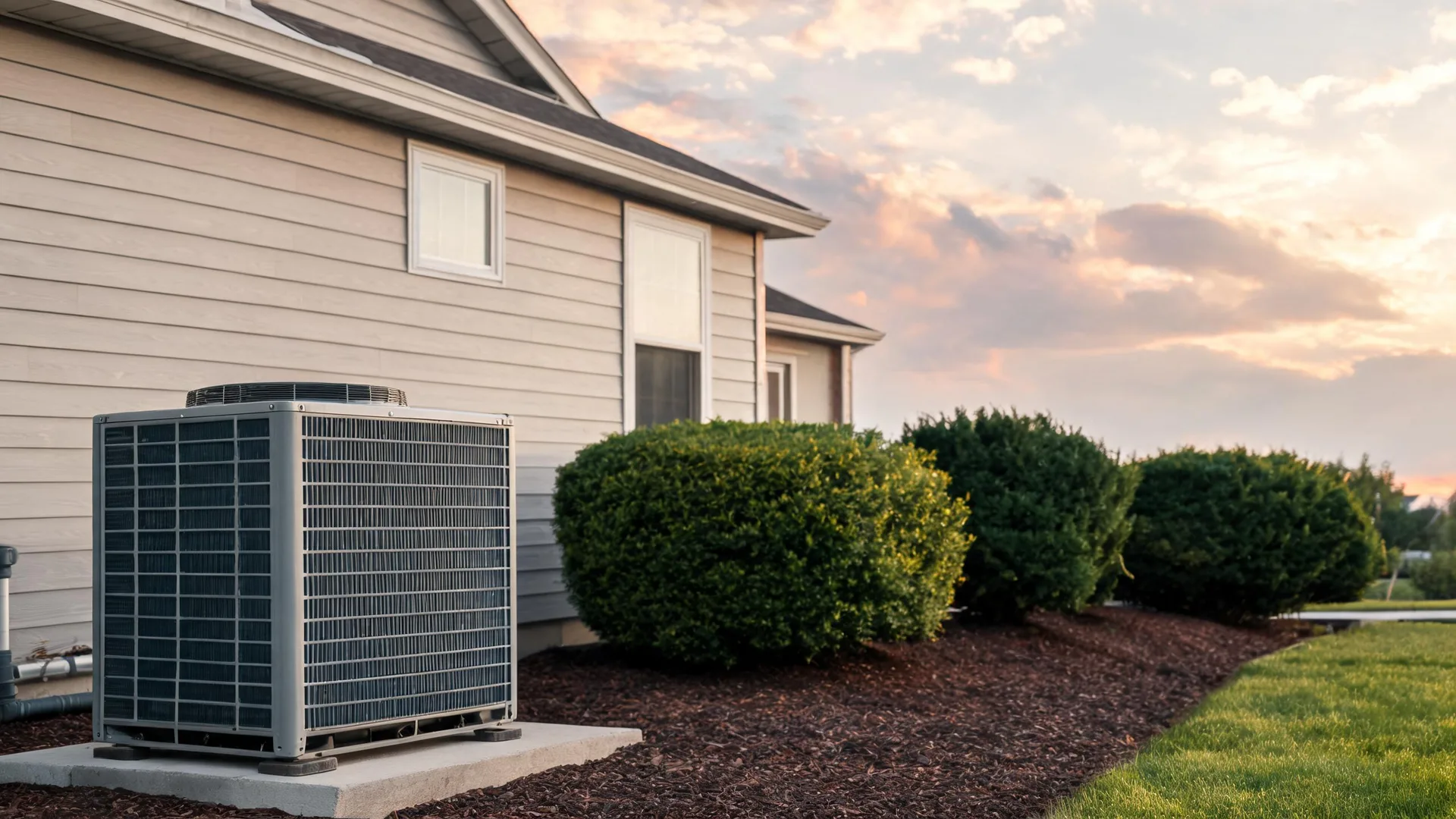
A gray heat pump outdoor unit mounted on a concrete pad next to the stone-accented exterior wall of a house.

Get it in before October, not after

Heat here runs October through May, about eight months of the year. That's most of the heating a new system will ever do, and it's worth having done before the first cold night rather than after it. September is when a contractor can still take time over the work. Once the weather turns, you're waiting on whoever can get to you fastest, and you take what's available instead of what fits.

Ask what happens below freezing

A heat pump loses capacity as the outdoor temperature drops, and every model handles that differently. Ask for the capacity rating at a low outdoor temperature, not just the rating at mild conditions, and ask what the backup heat source is and when it switches on. A unit that looks identical to another on the showroom floor can fall off hard once it gets cold out.

Ask who sized it and how

The right size comes from a load calculation on the actual house, not a guess based on square footage or whatever the old equipment was. Ask the contractor to show the calculation, not just state a number. A system that's oversized will short cycle and wear out its parts faster, and one that's undersized will run constantly and still fall short on the coldest days.

Sizing a heat pump starts with heat loss, not floor space. A contractor measures the walls, the windows, the insulation and the ceiling height, then works out how fast the house loses heat on the coldest day it sees. That number drives everything else. Two houses the same size can need different sized systems if one has more glass or thinner walls. Get the number wrong on the low side and the unit runs flat out without catching up. Get it wrong on the high side and it blasts the house to temperature, shuts off, then starts again a few minutes later, which wears on the compressor more than running steady ever would.

A heat pump here spends most of its life doing light work, and that changes what to look for on the spec sheet. Reliability counts for more than squeezing out another point of efficiency, because the thing most likely to take a system down isn't a long summer, it's the weather. Kalamazoo County has had 34 damaging wind events and 15 winter storms with heavy snow or ice over the past ten years, plus 10 hail events. Those are what knock out power and batter outdoor units. A simpler, well-built heat pump that starts back up on its own after an outage is worth more here than one with slightly better numbers that's never been tested by a Michigan winter.