




A lit residential street at dusk featuring large two-story brick houses with glowing windows, mature trees, and a street lamp.

Heat Pump Installation in Howell, MI

Tell us about the job

Takes about a minute. No obligation.

New system or replacementHeat PumpLivingston County, MI
Step 1 of 2

What ZIP code is the job in?

Electricity here runs 20.43 cents per kilowatt-hour on average, higher than most of the country. A heat pump moves heat instead of burning fuel, but it still runs on electricity, and every degree of lift costs something on the meter. In a county paying this much per kilowatt-hour, the difference between a unit that holds its efficiency rating and one that doesn't shows up fast. That gap doesn't stay small over a Michigan winter. The system you choose carries that rate every time it cycles on.

8 months
October through May, your system heats
3 months
June through August, it cools
18°F
the average winter night it heats against
80°F
the average summer afternoon it cools against
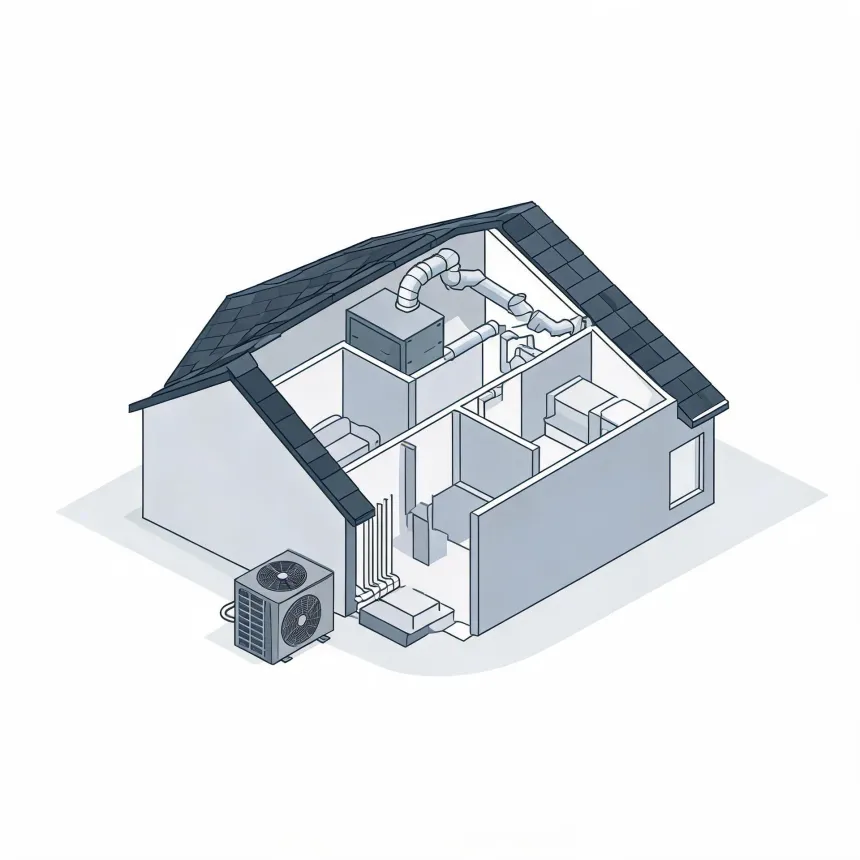
Isometric line illustration of a cutaway house showing interior rooms, an air handler with ductwork in the attic space, and an outdoor condenser unit beside the exterior wall.
Your system heats October through May and cools June through August.

NOAA nClimDiv, 1991–2020 normals

Heat pumps in Howell go into service before October, when homes here switch over to heat.

Get a new system in by September and it's running on your schedule, not during the first cold snap.

A county that gets hit with storms needs an outdoor unit that can take it, and a plan for when the power goes out

127 severe weather events from 2015 to 2024
34% of homes statewide lost power a day or more in 2024
88 damaging wind events from 2015 to 2024

Livingston County falls under zone 5A in the federal energy code, a zone built for cold winters, and that classification sets the floor for what can be installed here. Any split-system heat pump made from 2023 onward has to deliver at least 7.5 Btu of heat for every watt-hour it uses over the winter, and at least 14.3 Btu of cooling for every watt-hour over the summer. Those are federal minimums, not local extras, so every unit on the market already clears them. The question for a Howell homeowner isn't whether a system meets the standard. It's how far above that floor it sits, since zone 5A's heating load is the one your winter bill will actually test.

Pick the system before the rate picks your bill for you

Get the installation scheduled and that question gets answered by someone who can look at the options side by side. The rate per kilowatt-hour doesn't change. What you install against it does.

Find a contractor
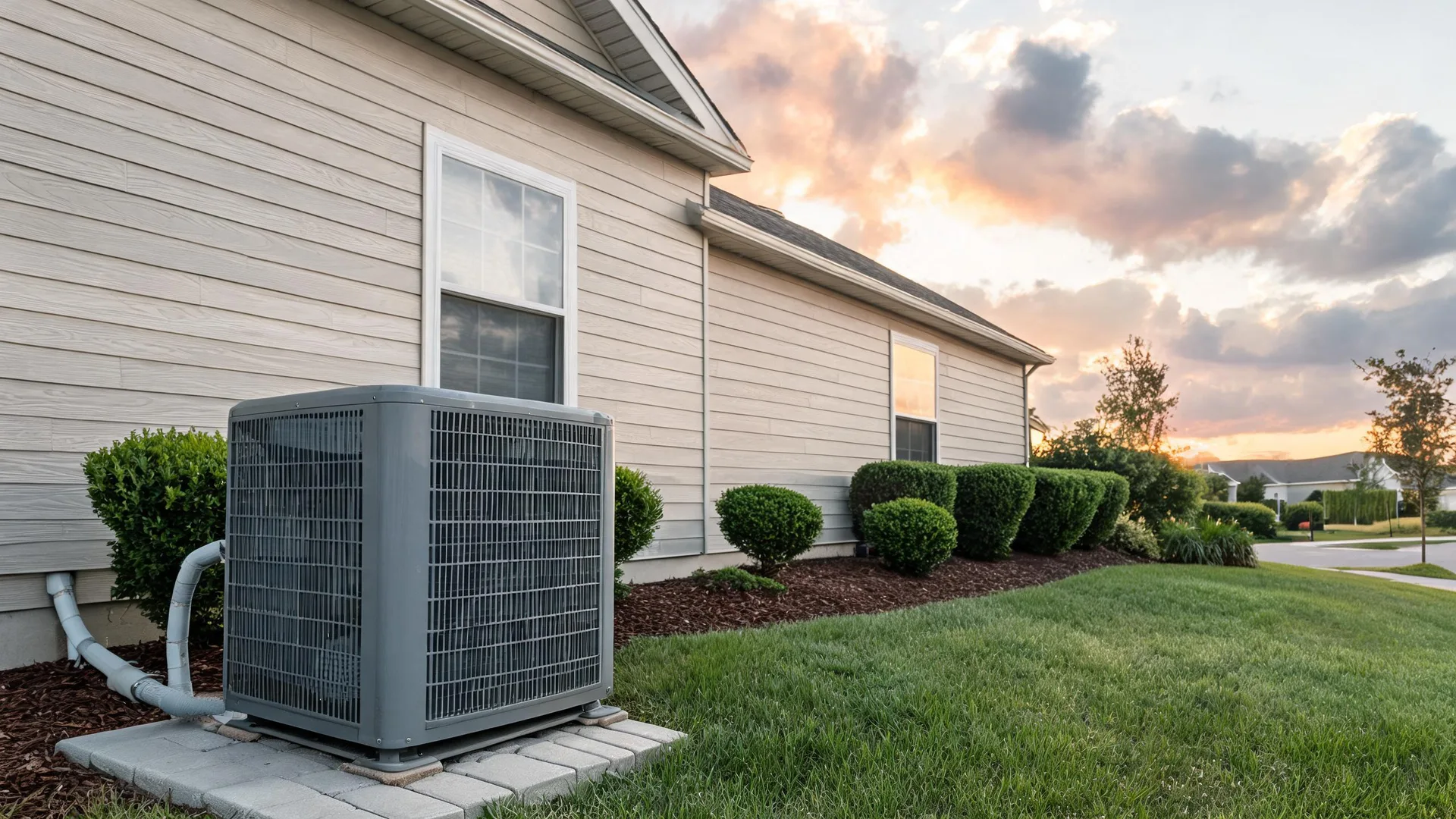
A gray heat pump outdoor unit mounted on a concrete pad next to the stone-accented exterior wall of a house.

An easier climate than the dew point number suggests

A heat pump in Howell runs through a hard winter and a sticky summer, but the air itself is easier on the equipment than the dew point number suggests. Average dew point here sits at 60°F across June, July and August, lower than most of the country sees. Lower dew point means the system pulls less moisture out of the air to keep a house comfortable, so the compressor isn't working as hard on the cooling side as it would further south. That doesn't make this an easy climate. Zone 5A still means a long heating stretch where the unit carries most of the load. But a system here isn't fighting heavy, humid air for months on end, and that matters when you're deciding what to install. A well-built unit that holds up over time is worth more here than one that chases the highest efficiency number on the sheet. When something does go wrong, it's more likely to be a part that's aged or a system that got skipped on maintenance than a compressor burned out from nonstop strain.

Ask for the heating output at low temperature, not just the rating on the sticker

A heat pump's efficiency rating is measured under mild conditions, and most of them lose heating capacity as the outside air gets colder. Two systems with the same rating on paper can perform very differently once the temperature drops. Ask for the manufacturer's performance data at a low outdoor temperature, not just the headline number, so you know what the unit can actually deliver when it has to work hardest.
Ask how the system handles the gap between what it can do and what the house needs

Every heat pump has a point where it can no longer keep up with heat loss on the coldest days, and the system needs a way to cover that gap. Some pair with a backup heat strip, some tie into an existing furnace as a second stage. Ask which approach a given system uses, how the switchover is controlled, and what happens to comfort and the bill when it kicks in.

Installation cost follows the size and complexity of the job more than the equipment itself. A straight swap, same spot, same line sets, same electrical service, is the simplest version of this job. Add a bigger electrical circuit, a new disconnect, or a pad in a spot that needs grading and the labor stacks up before the unit ever gets mounted. Ductwork matters just as much. A heat pump moves a different volume of air than what the ducts might have been sized for, and undersized or leaky ducts can mean rework that has nothing to do with the outdoor unit's price tag. Line set length and how the indoor and outdoor units line up with each other also factor in, since longer runs and awkward routing take more time and more material. The brand and tier of equipment matter less to the final number than whether the house needs new electrical, new ductwork, or a new pad to make that equipment work.

Gas heats 77.8% of homes in Livingston County, more than electricity, propane and fuel oil combined. Most of those houses already have a furnace and ductwork in place, and that changes what a heat pump installation looks like here. Rather than replacing the furnace outright, many homeowners pair a heat pump with the gas furnace they already have, letting the heat pump carry the load most of the year and the furnace take over on the coldest days. That setup uses the gas line and ducts that are already run, instead of asking the house to switch over to electric heat entirely. It's worth asking whether a dual fuel system makes sense for your furnace before deciding what to install.