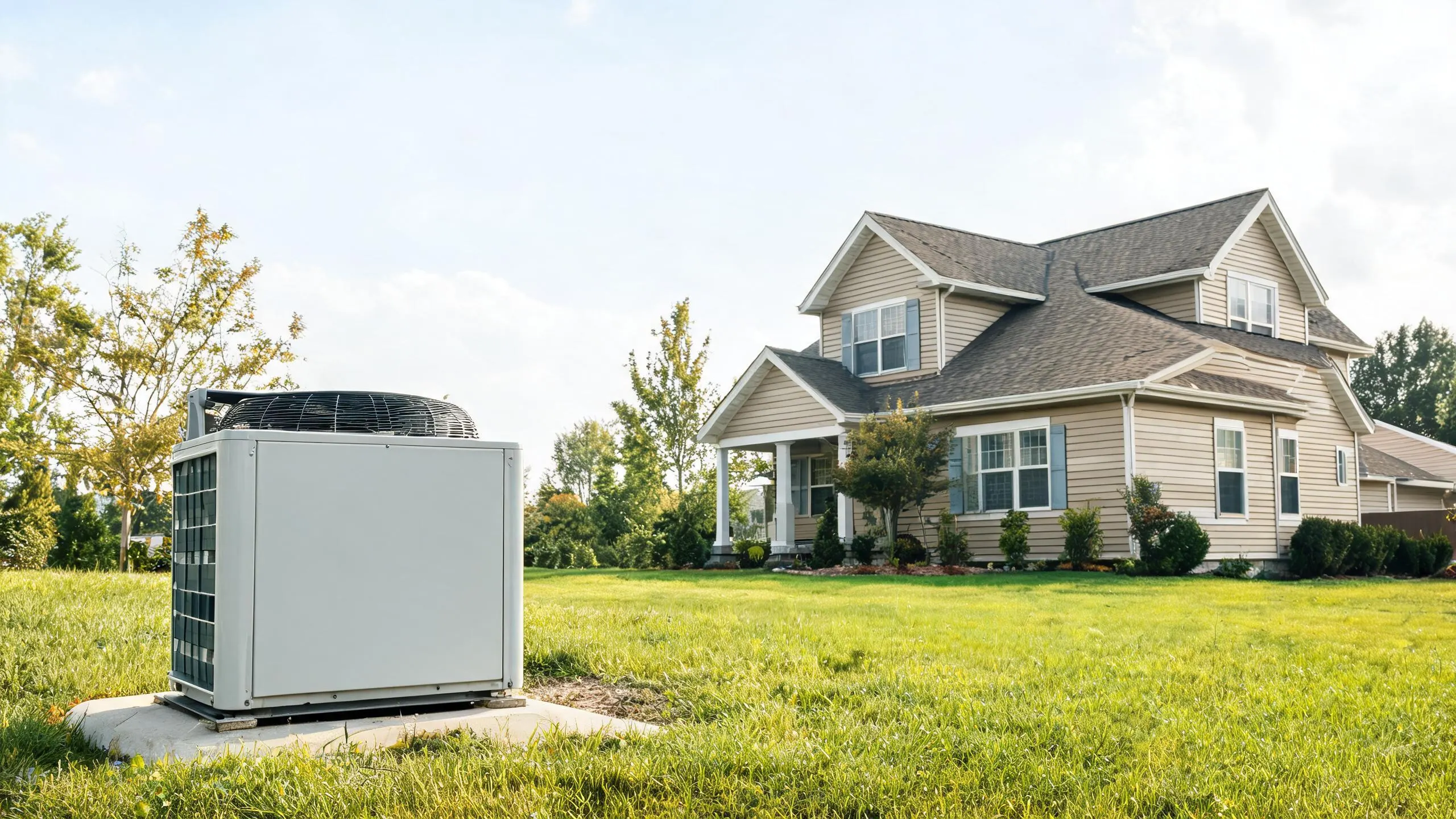





An outdoor HVAC condenser unit on a concrete pad in front of a two-story suburban house.

Heat Pump Installation in Flint, MI

Tell us about the job

Takes about a minute. No obligation.

New system or replacementHeat PumpGenesee County, MI
Step 1 of 2

What ZIP code is the job in?

Michigan households paid 19.30 cents per kilowatthour in 2024, well above what a lot of the country pays. A heat pump moves heat instead of burning fuel to make it, which is what makes it worth looking at here. But not every heat pump runs the same for the same job. Its efficiency rating determines how many kilowatthours it draws to heat or cool your home, so at this rate, the difference between a low-efficiency unit and a high-efficiency one shows up on every bill it sends you. Ask whatever contractor you're comparing to walk you through the rating on the specific unit they're quoting, not just the brand name.

8 months
October through May, your system heats
3 months
June through August, it cools
19°F
the average winter night it heats against
81°F
the average summer afternoon it cools against
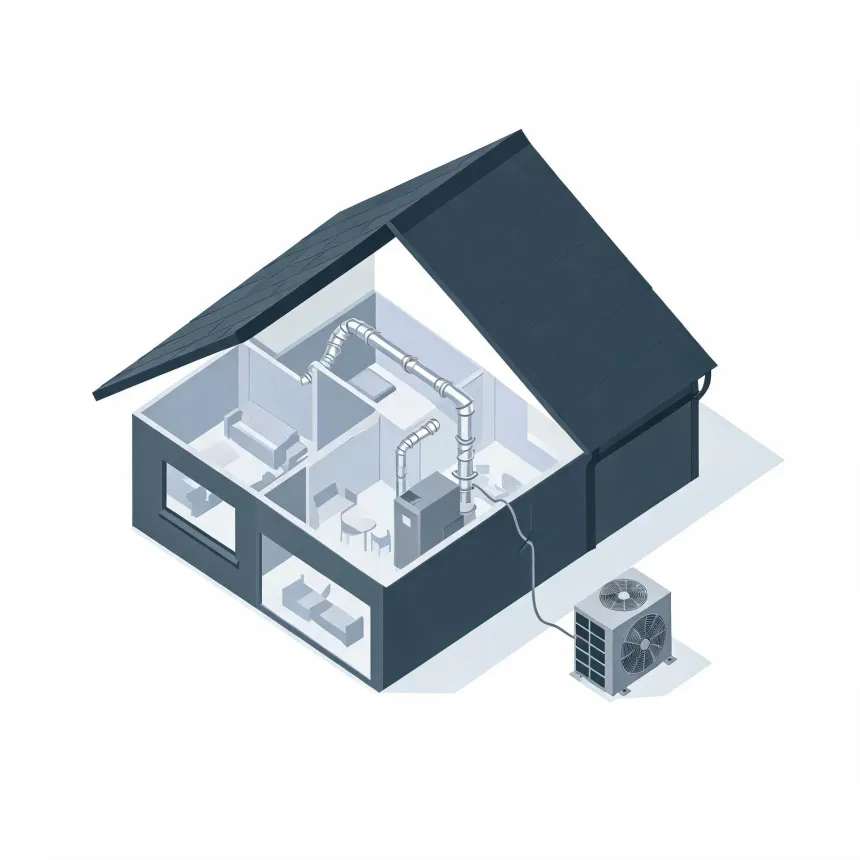
Isometric illustration of a cutaway house showing interior rooms with furniture, a furnace and ductwork, connected by a line to an outdoor condenser unit on the ground outside.
Your system heats October through May and cools June through August.

NOAA nClimDiv, 1991–2020 normals

Genesee County logged 71 damaging wind events and 17 hail events in the last ten years.

The outdoor unit needs a spot that keeps it clear of falling branches and direct hail, not just one that looks convenient.

Flint winters work a heat pump harder than Flint summers do, but neither pushes it hard

71 damaging wind events from 2015 to 2024
17 hail events from 2015 to 2024
16 winter storms from 2015 to 2024
Most homes here heat with gas. A heat pump runs on electricity instead.Utility gas heats 81.3% of homes in Genesee County

Heat here runs October through May, about eight months of the year. Cooling only runs three, June through August. That split matters when you're installing new, because the unit you put in now is the one working through next winter almost right away. September is the month before heat starts, and it's the better time to get a system in than waiting until the cold arrives and everyone in the county is calling at once. Installing before the season gives the contractor time to size the system to your house and get the refrigerant charge right, instead of rushing a job so you're not without heat.

Any heat pump installed here has to clear 14.3 SEER2 and 7.5 HSPF2

Genesee County falls in climate zone 5A, where heating is the bigger job for the system to do. Federal rules set the floor at 14.3 SEER2 for cooling and 7.5 HSPF2 for heating on split-system heat pumps built from 2023 on, so that's the baseline for anything going in new. A federal tax credit is available on top of that for qualifying equipment.

Find a contractor
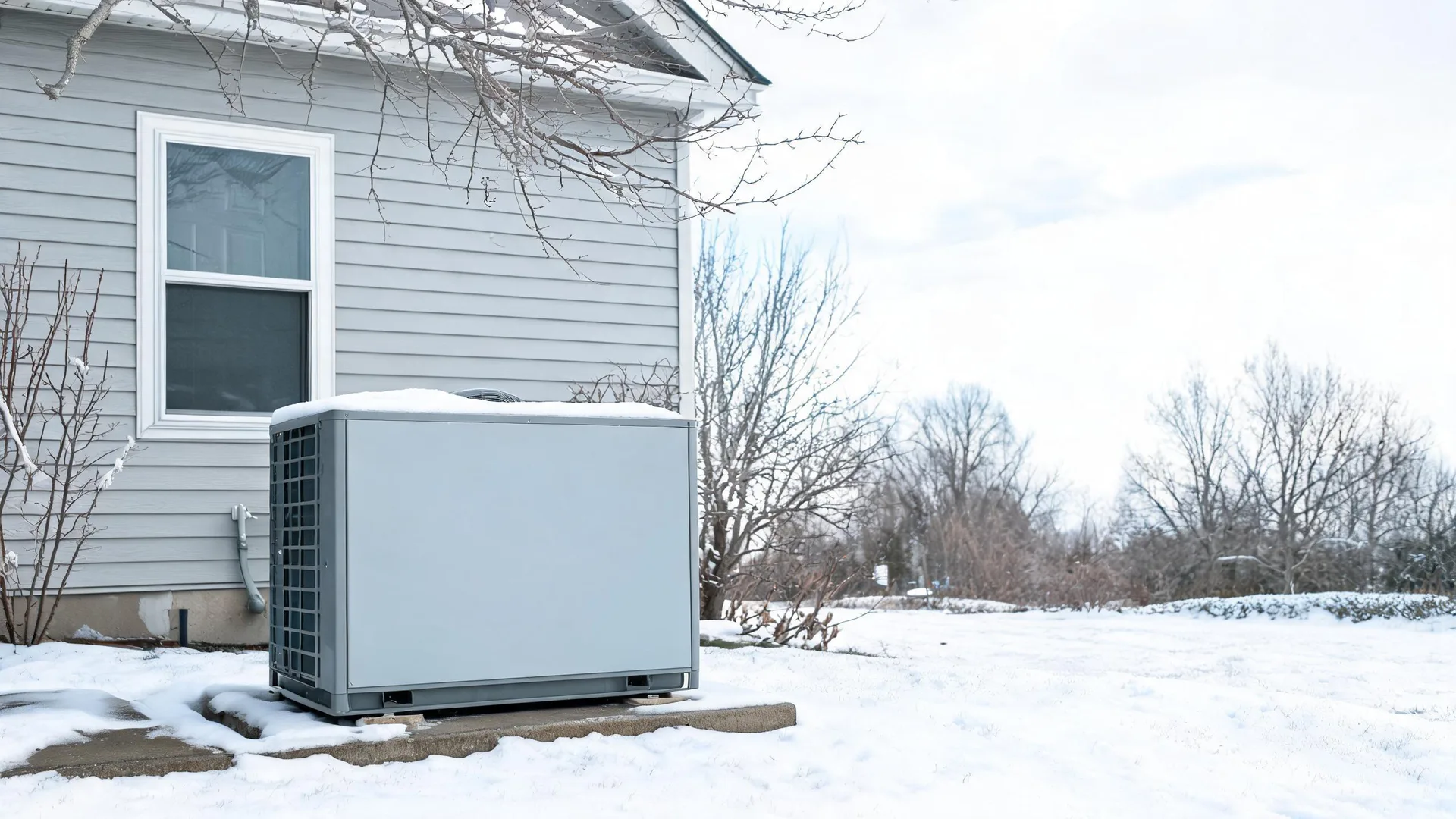
A gray outdoor HVAC unit mounted on a concrete pad beside a house with gray lap siding and a stone foundation.

half these homes predate the heat pump entirely

Half the homes in Genesee County were built in 1969 or earlier. A house that old wasn't built with a heat pump in mind, and whatever ductwork or electrical is already in place now has to carry this system instead of whatever heated the house before. A contractor needs to see that wiring and ductwork in person to size the unit right, not guess at it from the truck. Ask for that walkthrough before the install date gets set, not on the day the crew shows up.

Ask for the manual J, not a guess

The size of the unit should come from a room-by-room load calculation, not a rule of thumb based on your old system or square footage alone. A unit sized too big short cycles, meaning it shuts off before it finishes a full heating or cooling run, and that wears the compressor and leaves rooms uneven. A unit sized too small runs constantly in the coldest weeks and can't keep up. Ask whoever quotes the job to show you the calculation, not just tell you the tonnage.
Ask how it heats below freezing

Every heat pump loses capacity as the outdoor air gets colder, and each model handles that differently. Some hold their output further down before backup heat has to kick in, some fall off sooner. Ask for the manufacturer's performance data at low outdoor temperatures, not just the rating at mild conditions, and ask what kind of backup heat the system pairs with and when it switches over. That's the number that tells you how the system actually behaves on the coldest night of the year, not the warmest.

Taking out the old system is its own job, separate from putting in the new one. If the old equipment used refrigerant, that refrigerant has to be recovered into a tank, not vented, and that's a legal requirement, not a courtesy. If the house is moving from a furnace to a heat pump, the gas line feeding that furnace needs to be capped off by someone qualified to do it, and the old venting or chimney connection has to be dealt with too, not just left open. Any ductwork that's being reused should get checked for leaks before the new system ever turns on, since a heat pump moving air through a leaky duct run is losing capacity before it ever reaches a room. The electrical panel is worth a look as well. A heat pump often draws differently than whatever it's replacing, and the breaker and wiring feeding the outdoor unit need to match what the new equipment actually calls for, not what the old one needed.

Sizing comes before anything else gets decided, because every other choice on the job follows from it. A load calculation looks at the walls, the windows, the ceiling height, and works out how much heat the house actually loses on a cold day and gains on a hot one. That number, not the size of the old furnace, is what the new equipment gets matched to. Too big and the system satisfies the thermostat fast, shuts off, and starts again a few minutes later, which keeps the house swinging between too warm and too cool and never lets the unit settle into a steady run. Too small and it runs flat out on the coldest and hottest days without ever catching up. Either way shows up as uneven rooms and a compressor that wears out faster than it should.