






A lit residential street at dusk featuring large two-story brick houses with glowing windows, mature trees, and a street lamp.

Heat Pump Installation in Escanaba, MI

Tell us about the job

Takes about a minute. No obligation.

New system or replacementHeat PumpDelta County, MI
Step 1 of 2

What ZIP code is the job in?

Electricity in Delta County runs 18.43 cents per kilowatt-hour on average, higher than most counties in the country pay. A heat pump runs on electricity to both heat and cool the house, so every degree it moves comes out of that rate. Where power costs less, a few points of efficiency barely show up on the bill. Here, they do. The difference between a unit that struggles and one that holds its output shows up every month it runs.

9 months
September through May, your system heats
1 months
July through July, it cools
12°F
the average winter night it heats against
76°F
the average summer afternoon it cools against
Isometric line illustration of a cutaway house showing interior rooms with furniture, ceiling ductwork, and an outdoor condenser unit connected by lines along the exterior wall.
Your system heats September through May and cools July through July.

NOAA nClimDiv, 1991–2020 normals

Summer here never pushes a heat pump hard, since the air stays dry and the dew point sits low.

A straightforward system can handle Delta County's summers without the top efficiency tier.

Nine months of heat, one month of cooling: install before September

Cooling runs July through July
Heat runs September through May
Climate zone 6A
Built for storms, not just weatherDelta County had 91 severe weather events between 2015 and 2024, and outages are common across Michigan

Most homes in Delta County heat with gas, 61.1 percent by the county's own count. Electricity alone heats less than one in ten. A heat pump replacing a gas furnace isn't a straight swap the way a new gas furnace would be. It takes an air handler or a retrofit to existing ductwork, and someone has to check whether that ductwork was sized to move the amount of air a heat pump needs. Plenty of installs here end up keeping the gas furnace as backup for the coldest stretches, running the heat pump the rest of the year. That split system works, but it's a different job than installing a heat pump alone, and it's worth asking any contractor how they plan to handle the gas line and furnace that are already there.

Here, the efficient model earns its keep every month

Power here costs more than most places pay, so the efficiency rating on the unit you install is worth asking about before you decide on a model, not after it's in. Get a quote and have the contractor walk through what each option costs to run.

Find a contractor
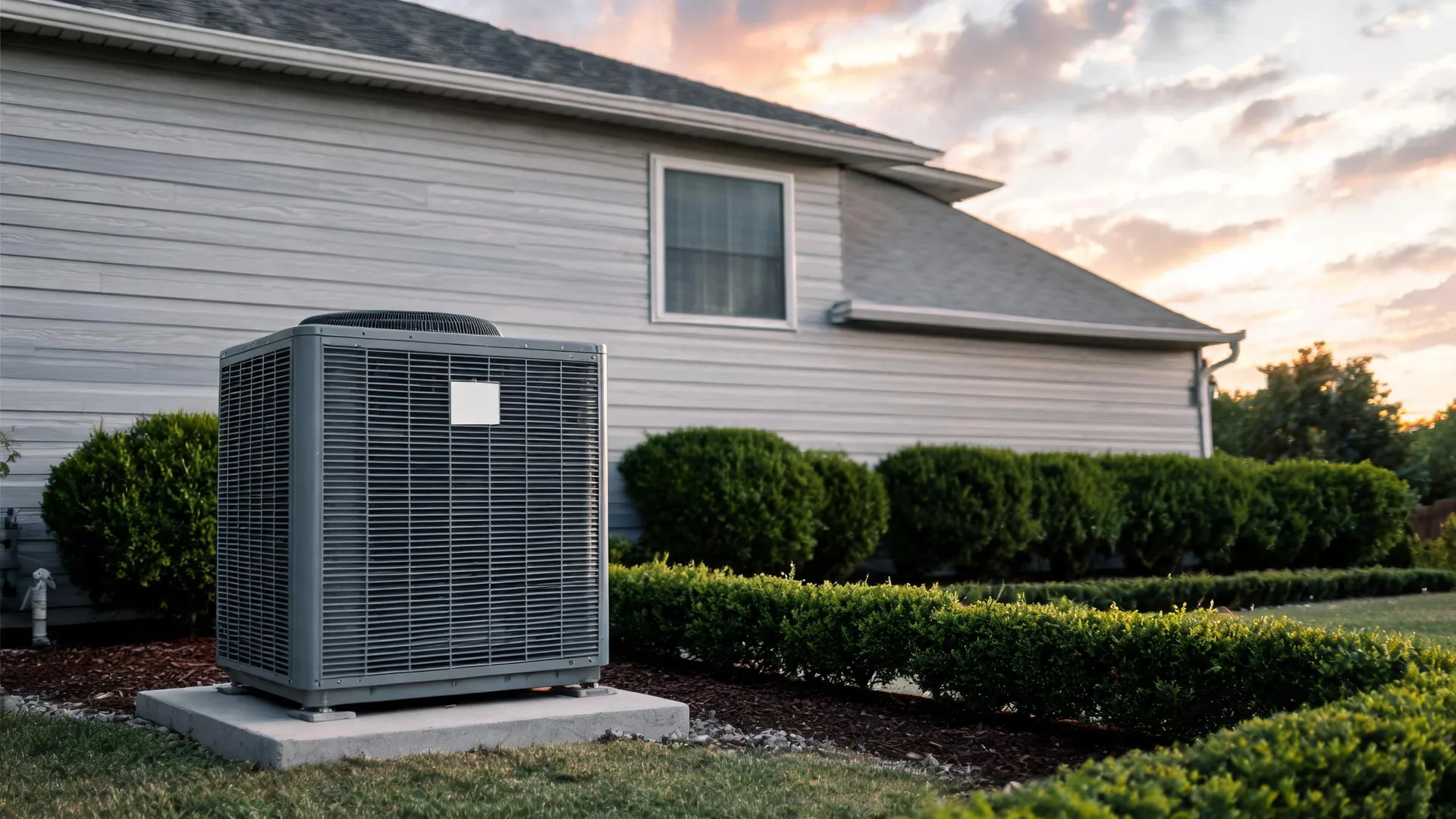
A gray heat pump condenser unit mounted on a concrete pad against the gray lap-siding exterior wall of a house.

This machine is going into an older house

Half the homes in Delta County were built in 1970 or earlier. A heat pump going into a house that age isn't going into a blank slate. The ductwork, if there is ductwork, was likely sized for whatever heated the place before, and a heat pump needs enough airflow to move the volume of heat it produces. That's worth having checked before the install, not after. None of this means an older home can't take a heat pump well. It means the sizing and the ductwork are part of the job, not an afterthought to it.

Ask for the low-temperature rating, not just the efficiency number

Every heat pump has a point where it stops pulling enough heat from outside air to keep up with the house, and that point is different for every model. A contractor comparing systems should be able to tell you the capacity each unit holds as the temperature drops, not just the rating it carries at mild conditions. Two systems with the same sticker efficiency can behave very differently once it gets cold enough to matter.
Ask who sizes the system, and how

Sizing a heat pump means working out the heat loss of the house itself, room by room or close to it, not matching the size of whatever unit is already there. A contractor who quotes a number before looking at the ductwork, the insulation and the windows is guessing. Ask what they measured and what they based the size on. An oversized system cycles on and off too often and wears out early. An undersized one runs constantly and still can't keep the house where you want it.

A heat pump has to be sized against heat loss, the rate a house gives up warmth once it's cold outside, and that number comes from the walls, windows, insulation and square footage together, not from the size of the equipment being replaced. A furnace that was oversized to start with gives you the wrong baseline if someone just matches it. Get the sizing wrong on the low side and the system runs constantly, straining to keep up on the coldest days and never quite getting there. Get it wrong on the high side and it short cycles, kicking on, satisfying the thermostat fast, and shutting off again before it's run long enough to dehumidify or to run efficiently. Either way the equipment wears out faster than it should. A proper sizing calculation takes the house room by room, or close to it, and the contractor doing it should be able to walk through what they measured and why they landed on the unit they're recommending.

Delta County falls under zone 6A, a cold climate zone with a long heating season. Any heat pump installed here has to meet the federal minimum for that climate, which is set separately for cooling and heating because the two put different demands on the equipment. For units built from 2023 on, that floor is 14.3 for cooling and 7.5 for heating, measured in Btu of heat moved per watt-hour used. Those numbers set the floor, not the ceiling, and a contractor can quote above them. A federal tax credit is available on qualifying equipment, worth asking about when comparing models.