





An outdoor HVAC condensing unit on a concrete pad next to a beige single-story house with a dark shingle roof.

Heat Pump Installation in Caro, MI

Tell us about the job

Takes about a minute. No obligation.

New system or replacementHeat PumpTuscola County, MI
Step 1 of 2

What ZIP code is the job in?

Electricity in Michigan ran 19.30 cents per kilowatthour in 2024, and a heat pump leans on electricity for every degree it moves. That makes the efficiency rating on the unit worth reading closely before you buy. A heat pump with a stronger HSPF rating uses less power to pull the same heat out of the cold air, and that difference shows up on every bill through a Caro winter. Installers size and rate these systems differently, so ask what the rated output means for a house like yours.

8 months
October through May, your system heats
3 months
June through August, it cools
18°F
the average winter night it heats against
80°F
the average summer afternoon it cools against
Isometric line illustration of a cutaway single-story house showing interior rooms with furniture and ceiling ductwork, connected to an outdoor condenser unit on the ground outside the left wall.
Your system heats October through May and cools June through August.

NOAA nClimDiv, 1991–2020 normals

Tuscola County logged 87 severe weather events between 2015 and 2024, most of them damaging wind.

The outdoor unit needs a spot with some shelter from wind-blown debris, and a plan for what warms the house when the power drops.

Caro winters work a heat pump harder than the weather does

59 damaging wind events from 2015 to 2024
8 hail events from 2015 to 2024
14 winter storms from 2015 to 2024

Utility gas heats 45.2% of homes in Tuscola County, more than any other fuel. Bottled or LP gas heats another 35.1%. Most houses here already have a gas line and a furnace built around it, which is the piece a heat pump doesn't replace on its own. Many homeowners in gas-heated homes pair a heat pump with the furnace rather than tear it out, letting the furnace take over on the coldest days and the heat pump handle the rest. That split only works if the two systems are matched to talk to each other, so ask whoever sizes the job how it handles that handoff in your house.

Get a heat pump installed before October, not during it

Heat here runs October through May, eight months out of the year. September is the last quiet month before that starts. Installing before then means the system is sized, matched to your furnace, and running correctly before the first cold morning asks something of it.

Find a contractor
A gray heat pump condenser unit mounted on a concrete pad against the gray lap-siding exterior wall of a house.

Your house is older than the equipment

Half the homes in Tuscola County were built in 1971 or earlier. A house that age wasn't built with a heat pump in mind, and whatever ductwork or electrical setup it has was sized for something else. Fitting a heat pump in means checking that the ducts can move the air a heat pump puts out, and that the panel can carry the load. None of that shows up until someone looks at your house in particular.

The furnace usually stays

When a heat pump goes in alongside an existing furnace, the furnace doesn't come out. It gets wired to work with the new system instead of against it, stepping in on the coldest days while the heat pump handles the rest. Pulling the old furnace only makes sense if nothing is left that depends on it.
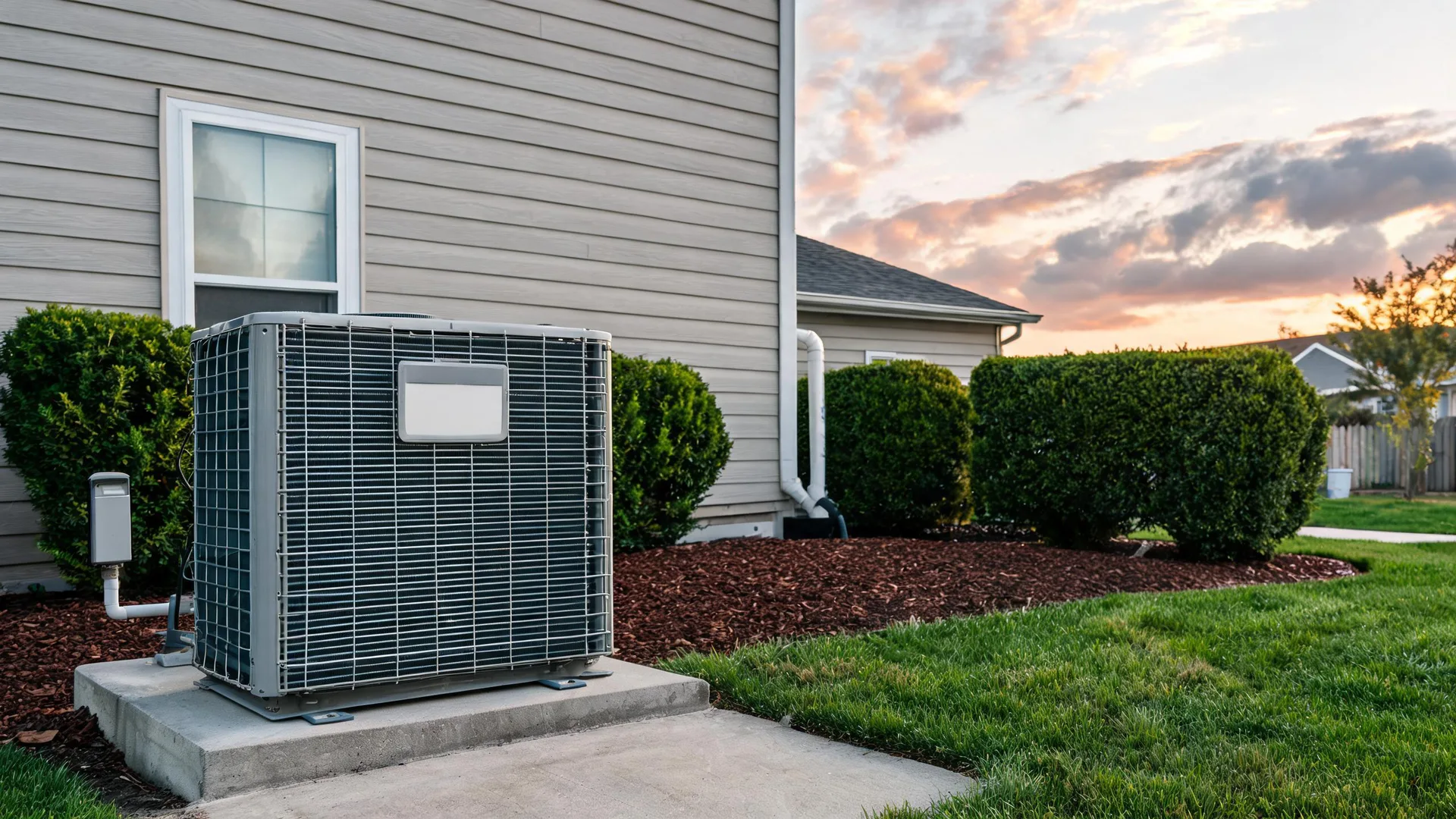
Whatever outdoor unit comes out needs a plan

A straight air conditioner or an older heat pump being replaced has refrigerant inside it that has to be recovered before the unit is scrapped. That's not optional, and it's not something to leave for whoever hauls scrap metal. Ask the installer how the old equipment leaves the property, not just how the new one arrives.

When you're comparing bids, get past the brand names and ask what each installer means by capacity. Systems with the same rated size can behave nothing alike in the cold, because what matters is how much heat the unit can still pull out of outdoor air as the temperature drops. Ask for that number at a low outdoor temperature, not just the rating at mild conditions, since that's the point where a weak system starts leaning hard on backup heat. Ask too about the compressor, whether it runs at a single speed or can modulate, because a variable-speed compressor holds the house steadier and doesn't cycle on and off as much. And ask who is sizing the ductwork to the new equipment rather than just connecting it to ducts built for the old furnace. A heat pump moves air differently than a furnace does, and ducts sized for one don't always suit the other.

Installation day starts with the crew confirming the ductwork and the electrical panel can actually handle the new system, not just assuming the old setup will do. The outdoor unit goes on level ground, away from anything that blocks airflow or throws debris into the coils. The line set runs between indoor and outdoor units, then the whole system gets evacuated and charged with refrigerant to the manufacturer's spec, not topped off by feel. Once it's running, a tech checks the temperature split at the vents and the amp draw on the compressor, confirming the unit is pulling what the nameplate says it should. None of that shows up from the curb. It's the difference between a system that holds up through its first hard winter and one that struggles from the start.