A row of dark-sided single-story houses with shingled roofs behind trimmed hedges and mown lawn, framed by large leafy trees under an overcast sky.

Heat Pump Installation in Ann Arbor, MI

Tell us about the job

Takes about a minute. No obligation.

New system or replacementHeat PumpWashtenaw County, MI
Step 1 of 2

What ZIP code is the job in?

Washtenaw County gets hit with weather

Washtenaw County recorded 166 severe weather events between 2015 and 2024. That includes 89 damaging wind events, 60 hail events, 16 winter storms, and a tornado. An outdoor heat pump unit sits outside through all of it.

Power doesn't always hold up

More than a third of Michigan households went at least 24 hours without power in 2024. A heat pump needs electricity to run, and so does the backup most installs pair it with for the coldest days. An outage here isn't rare enough to plan around hoping it won't happen.

8 months
October through May, your system heats
3 months
June through August, it cools
19°F
the average winter night it heats against
81°F
the average summer afternoon it cools against
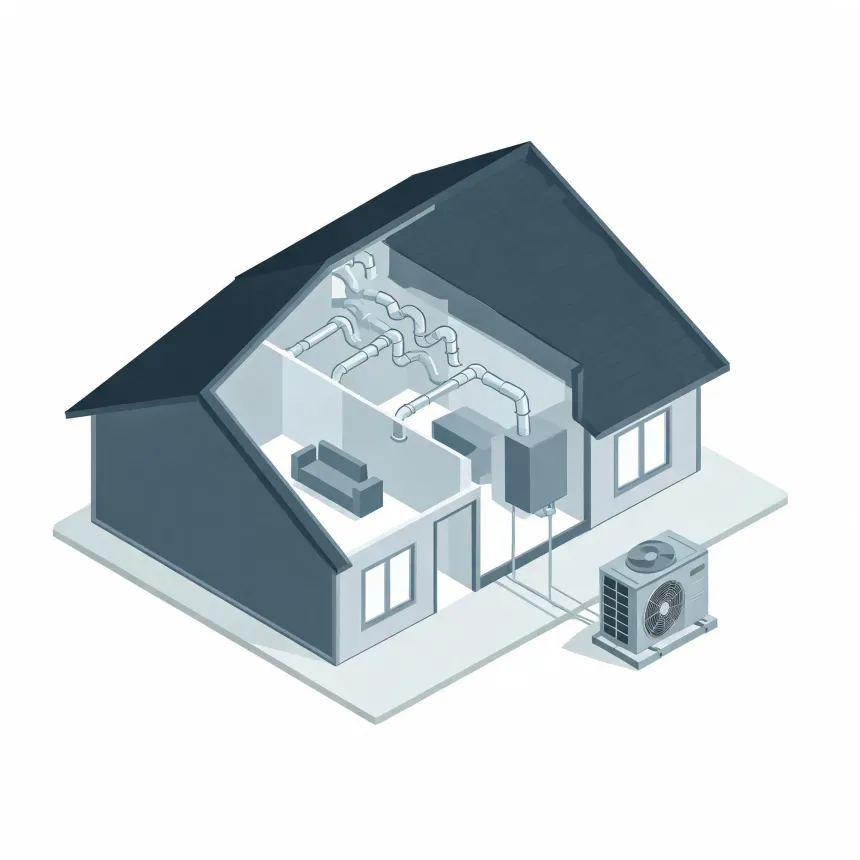
Isometric cutaway illustration of a house showing interior ductwork, an indoor air handler unit, and an outdoor condenser unit beside the building.
Your system heats October through May and cools June through August.

NOAA nClimDiv, 1991–2020 normals

Gas heats three out of four homes in Washtenaw County.

A heat pump installed here usually goes in alongside the furnace already there, not in place of it.

Electricity here runs 20.02 cents a kilowatt-hour, and a heat pump runs on electricity all summer

Power here costs 20.02 cents per kilowatt-hour
Climate zone 5A
Cooling runs June through August

Washtenaw County falls in climate zone 5A, a cool zone where the heating load matters as much as cooling. Any split-system heat pump installed here now has to meet the federal minimums that took effect in 2023: at least 14.3 Btu of cooling delivered for every watt-hour it draws, and at least 7.5 Btu of heat for every watt-hour in winter. That rules out older, less efficient models that used to be sold here. It also means two systems rated for the same climate can still land at different points above that floor, and the difference shows up on the electric bill every month the system runs.

Plan for the outage before it happens, not during it

Installing now means the outdoor unit's placement, its guard, and the backup plan for heat and hot water can all get decided up front, before the next storm tests them.

Find a contractor
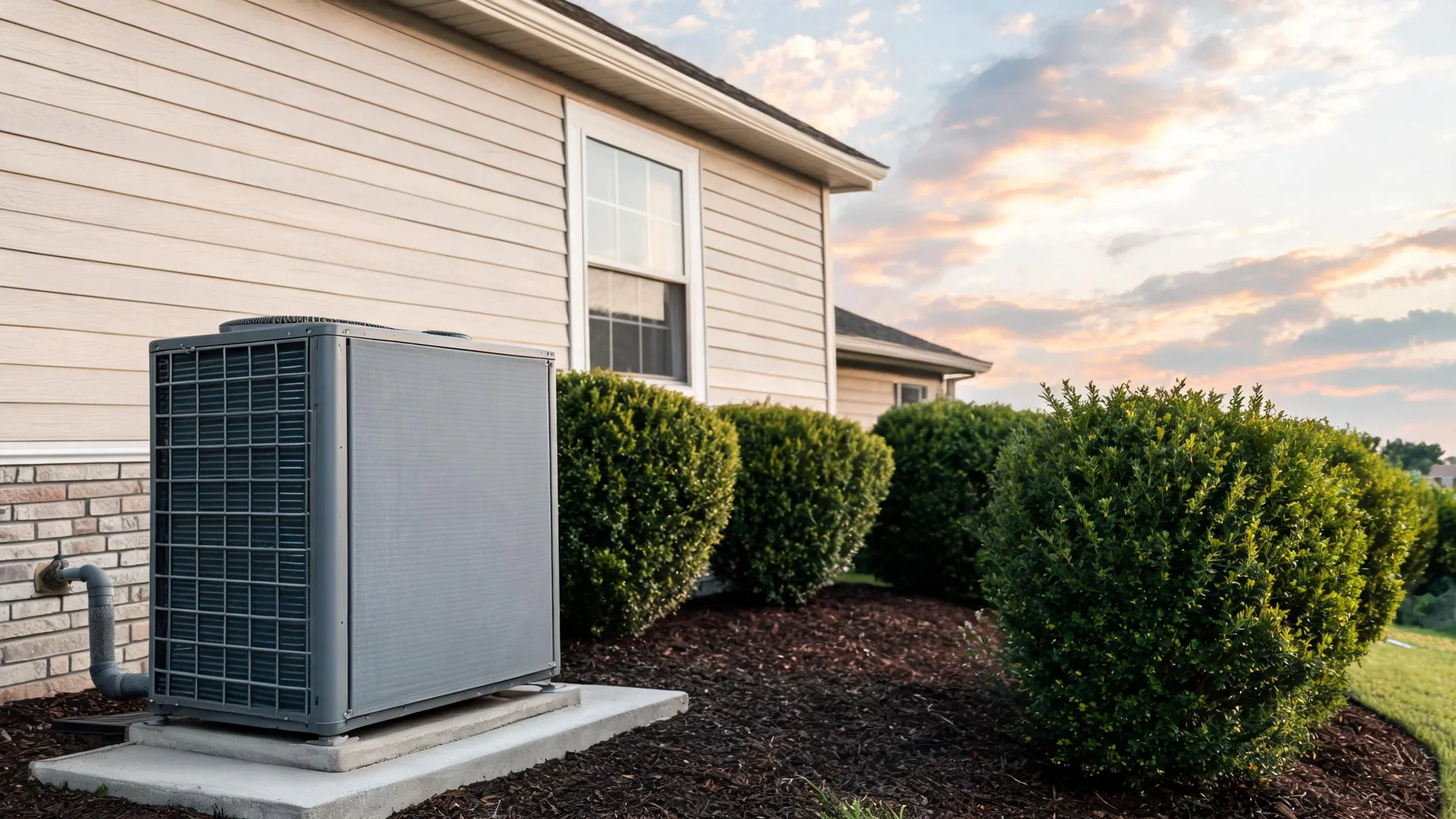
A white mini-split heat pump outdoor unit mounted on a concrete pad beside a gray-sided house, surrounded by gravel and green shrubs.

Most of the year, this is the machine doing the work

Heat here runs October through May, eight months out of twelve. Cooling takes the other three, June through August. A heat pump works both ends of that, so it's doing something most of the year, not just through one season. Getting it installed in September, before the heat starts, means it's already running and already proven before the first cold night hits. Wait until winter is testing it and any problem with the install shows up when the overnight low is near 19 degrees, not while there's still time to fix it on your terms.

The old equipment doesn't just get unhooked

A furnace or AC swap means disconnecting line sets, capping or reusing gas lines, dealing with old refrigerant under pressure, and patching whatever the new unit doesn't need. A heat pump install usually touches both the outdoor condenser and the indoor coil, sometimes the air handler too. Whoever does the work has to recover the refrigerant properly, not just vent it, and that takes certification most scrap haulers don't have.

What stays depends on what the new system needs

Ductwork, the electrical disconnect, the condensate line, sometimes the indoor coil cabinet itself can often be reused if they're in good shape and sized right. A heat pump draws differently than a straight AC unit did, so the breaker and wiring get checked against the new load, not assumed to carry over. Anything undersized gets replaced before the new unit ever runs, not after.

A heat pump that's too big cools the room fast and shuts off before it pulls the moisture out of the air, so the space ends up cold and still damp. One that's too small runs flat out and never quite catches up on the coldest or hottest days, and leans harder on backup heat than it should. Getting the size right starts with a load calculation, not a swap based on the old unit's tonnage. That calculation looks at the square footage, the insulation, the windows, how much shade the house gets, and how many people live there, then works out how much heat the house actually loses in winter and gains in summer. Two houses the same size can need different sized systems once that math is done. Skipping the calculation and matching the new unit to whatever was there before carries the old mistake into the new equipment, if there was one.

A system sitting right at the federal minimum and one rated well above it can cool the same house equally well on a mild day. The difference shows up once the compressor is running for hours at a stretch, because every bit of waste gets paid for on that month's bill. Asking what efficiency rating a system carries, not just what size, is worth doing before signing off on a model. Two units can carry the same tonnage and still cost different amounts to run every month they're working, which here is most of the year.