





A illuminated two-story red brick house on a quiet residential street at dusk, flanked by mature trees under a deep blue evening sky.

Heat Pump Installation in Allegan, MI

Tell us about the job

Takes about a minute. No obligation.

New system or replacementHeat PumpAllegan County, MI
Step 1 of 2

What ZIP code is the job in?

Electricity in Michigan ran 19.3 cents per kilowatt-hour in 2024. A heat pump moves heat instead of burning gas or resisting current to make it, so it gets more warmth out of every kilowatt it uses. At that price, the difference between a unit that does this well and one that doesn't shows up on your bill every month, not just in a sales brochure. Ask about the HSPF2 rating when you compare models. A higher number there means less electricity burned to keep the house at the temperature you set.

8 months
October through May, your system heats
3 months
June through August, it cools
20°F
the average winter night it heats against
81°F
the average summer afternoon it cools against
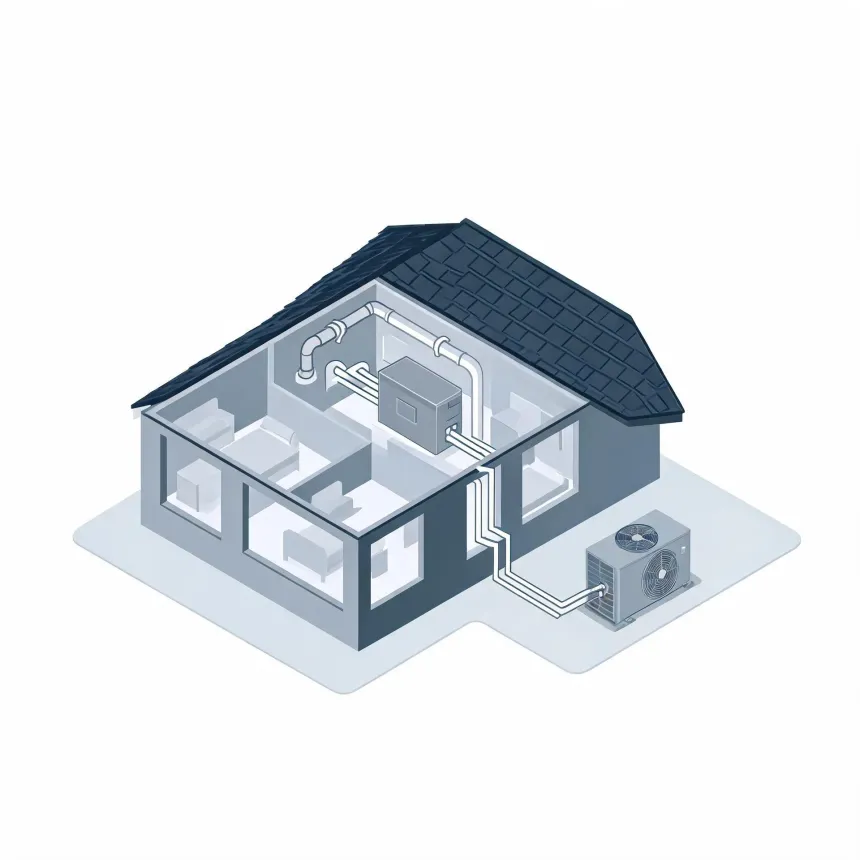
Isometric cutaway illustration of a gray house showing interior rooms, a central air handler with ducts in the attic, and refrigerant lines running to an outdoor condenser unit beside the building.
Your system heats October through May and cools June through August.

NOAA nClimDiv, 1991–2020 normals

Allegan County logged 62 severe weather events between 2015 and 2024, including damaging wind and tornadoes.

A heat pump's outdoor unit sits outside through all of it, so where it goes and what shields it matters as much as the model you pick.

Most of Allegan County already heats with gas, and that changes how a heat pump gets used here

62.5% of homes heat with gas
31 damaging wind events from 2015 to 2024
9 hail events from 2015 to 2024

Zone 5A means winter is the long season here, with overnight lows averaging 20°F across December, January and February. A heat pump earns its keep by running steady through that stretch, not by hitting some peak output on the coldest morning. That's a different job than the one it has in a hot climate, where the compressor gets pushed hard all summer. Here the load is real but even, so a well-built mid-range system holds up fine. You don't need the highest-tier model on the lot to get through an Allegan winter. Put the money into the right size and a good installation instead.

Get it in before October, on your schedule

Heat here runs October through May. September is the month to get a new system in, so it's set up and tested before the first cold night, not chosen in a rush after your old one quits.

Find a contractor
A man in a cap, dark jacket and tan work pants carries a canvas tote bag as he steps up concrete stairs toward a blue front door, with a potted shrub beside him.
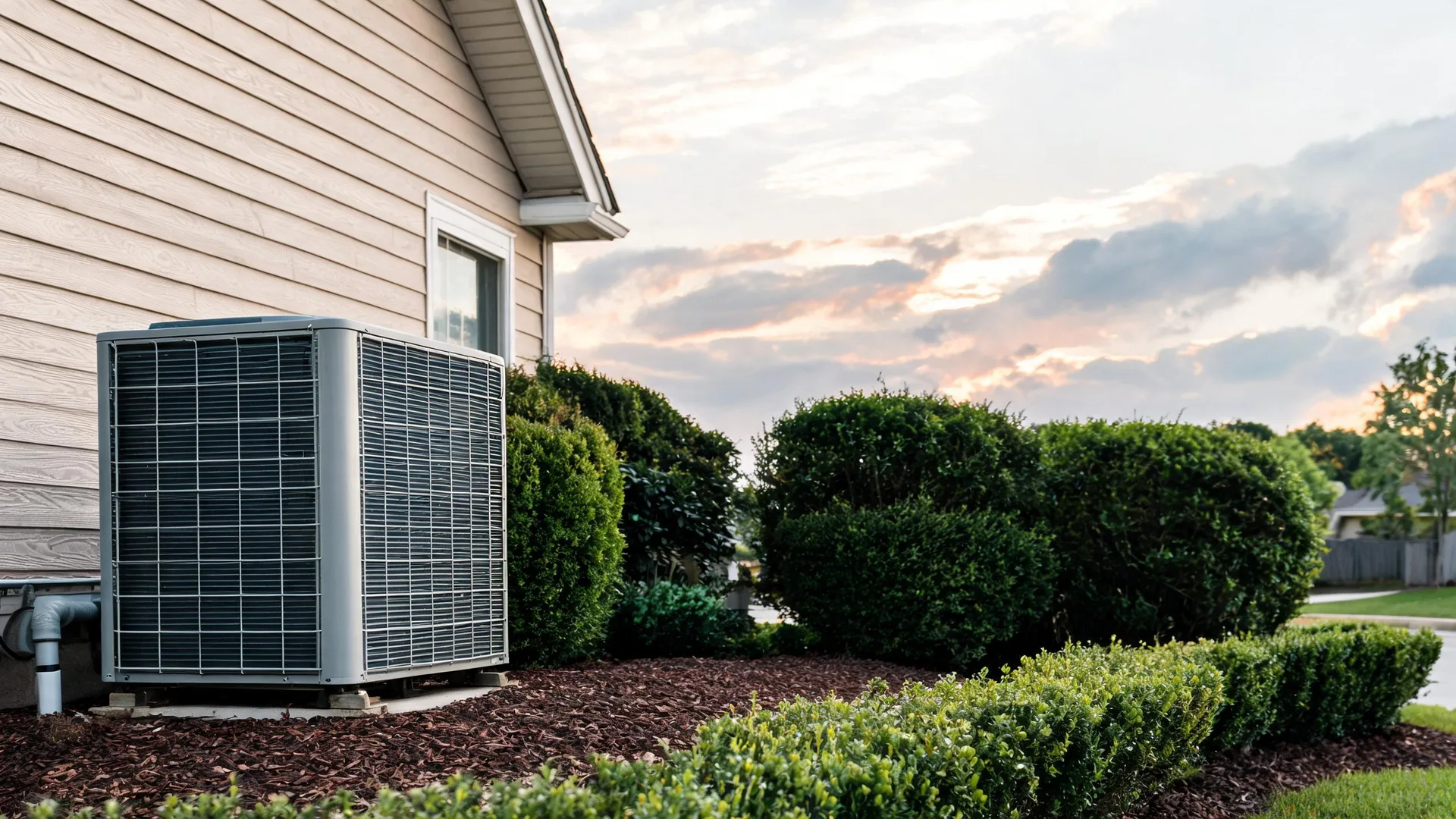
A gray heat pump outdoor unit mounted on a concrete pad next to a residential house with lap siding and stone accents.

A steady load, day into night

Watch this unit across a full day here and it never spikes. The compressor settles into a steady rate through the night and holds it, because the load it's working against doesn't swing the way it does in a place with hard summers. Winter nights average 20°F, and that's the number it's built for, not some occasional extreme. A system doing the same steady job for months wears evenly. That's why a well-built mid-range unit gets through an Allegan winter without strain, and why problems that show up later usually trace back to age or a skipped service, not the machine being overmatched.

Cooling and heating get rated separately

SEER2 rates how the system cools, HSPF2 rates how it heats, and a heat pump does both jobs. A model that looks great on one number can be ordinary on the other. Ask for both ratings before you compare price tags, and pay more attention to the one that matches the season this system works hardest.
The rating is measured on a system set up right

The efficiency number on the label comes from a unit charged correctly and matched to ductwork that can move the air it produces. A heat pump sized wrong for the space, or choked by undersized ducts, will not hit that number no matter what the label says. The rating is what's possible, not what's guaranteed. A careful installation is what closes the gap.

Ask what happens when the temperature drops low enough that the heat pump can't keep up on its own. Most systems pair with backup heat, electric strips or the gas furnace already in the house, and how that handoff is set up affects comfort and the bill both. Ask how the contractor sized the unit, since a load calculation for this specific house matters more than a number off a chart. Ask what's included in the warranty and whether it covers labor or just the part. And ask how the compressor sounds at start-up, because a unit that's quiet at low speed and only ramps up when it needs to will outlast one that's always running flat out.

Whoever installs the heat pump should also be able to tell you what happens to the furnace it's replacing, if it's being replaced at all. In a lot of homes here the gas furnace stays, wired in as backup heat for the coldest stretches, so there's no old equipment to haul away at all, just a new outdoor unit and air handler added alongside what's already there. If the furnace is coming out because it's old or already failing, it gets disconnected from the gas line and vented flue, and that gas line either gets capped safely or reused if you're keeping a gas stove or water heater on the same supply. Ask who handles that disconnection and whether it's part of the installation quote or a separate call. A furnace sitting unused in the basement isn't dangerous, but a gas line that wasn't capped correctly is, so don't let that step get skipped because the heat pump itself is the more exciting part of the job.