





An unfinished basement interior featuring a large metal furnace unit, exposed ceiling joists, concrete walls, and scattered boxes and cables on the floor.

Furnace Repair in Warren, MI

Tell us about the job

Takes about a minute. No obligation.

RepairFurnace or heatingMacomb County, MI
Step 1 of 2

What ZIP code is the job in?

Macomb County saw 142 severe weather events between 2015 and 2024. Most of that was wind, 99 events, with 26 hail events and a few winter storms mixed in. Hail dents furnace venting and intake caps outside, and wind drives branches and grit into them. A furnace can keep running with a damaged vent or a cracked intake pipe, which is what makes it dangerous rather than obvious. If a storm has come through and hit the outside of the house, it's worth having someone check the vent and intake before the next cold stretch, even if the furnace seems fine.

8 months
October through May, your furnace is on duty
21°F
the average winter night it heats against
88%
of homes here heat with gas, so most furnaces here burn gas
16 winter storms
in ten years, the nights a failure hurts most
Isometric cutaway illustration of a small gabled house showing a furnace with flue pipe and ductwork connecting to interior rooms containing a sofa, bed, and cabinets.
Your furnace works hardest from November through March.

NOAA nClimDiv, 1991–2020 normals

Furnaces in Warren start their first real workload in October.

A furnace that limped through last winter on a weak part usually fails in the first cold snap, not mid-January.

Eight months of heat a year wears a furnace down faster than people expect

Heat runs October through May
Winter nights average 21°F
Climate zone 5A

Eight months of heat a year means this furnace is rarely off from October through May. That kind of runtime catches up with a part before it would somewhere milder. When one starts failing, the fix that actually holds is finding which part gave out and why, not just getting the blower running again for the night. A furnace that's been patched instead of diagnosed tends to quit again at the next cold snap. Worth having someone trace the actual problem now, especially if this isn't the first time it's acted up this winter.

If a storm's come through, check the furnace vent before the cold does

If hail or wind has hit the house this year, get the vent and intake checked before the furnace has to run hard again. A cracked intake or a dented vent cap won't always stop the furnace from running, it just makes it worse at its job.

Find a contractor
A gray residential gas furnace installed in an unfinished basement, surrounded by ductwork, a metal flue pipe, and a gas supply line.

The furnace usually tells you before it quits

A furnace usually gives some warning before it quits outright. It short cycles, running for a few minutes and shutting off before the house warms up, because a part is overheating or a safety switch is catching something wrong. The blower runs but the air coming out is barely warm, which points to the igniter or the gas valve not doing its job all the way. It gets loud: a bang at startup means gas is building up before it catches, a rattle means a panel or mount has worked loose, a screech usually means the blower motor bearing is going. The flame behind the viewing window should burn steady and blue. If it's yellow, flickering, or pulling away from the burner, something's off with the combustion and that's not a wait and see sign. A furnace that clicks over and over without lighting is failing to prove ignition, and it will keep trying until a limit switch shuts the whole thing down for safety. None of these mean the furnace is done. They mean a part has started to fail, and a part that's failing now is cheaper to deal with than the one it takes down with it.

Most failures start with one part, not the whole system

A furnace rarely dies all at once. It's usually a single part giving out: an igniter that's lost its ability to glow hot enough, a flame sensor coated with residue so it can't detect the flame, a capacitor too weak to start the blower motor, or a limit switch that's gone bad and shuts things down out of caution. Each one has a job, and when it fails, the furnace either won't start, won't stay running, or runs without heating.

Age and runtime decide which part goes first

The parts that fail most are the ones that cycle every single run: igniters heat up and cool down hundreds of times a season, blower motor bearings spin for hours at a stretch, flame sensors sit directly in the exhaust path. Wear shows up there before anywhere else. A furnace that's been running hard for years is due for one of these, not because it was built wrong, but because those parts have a working life and they're reaching the end of it.

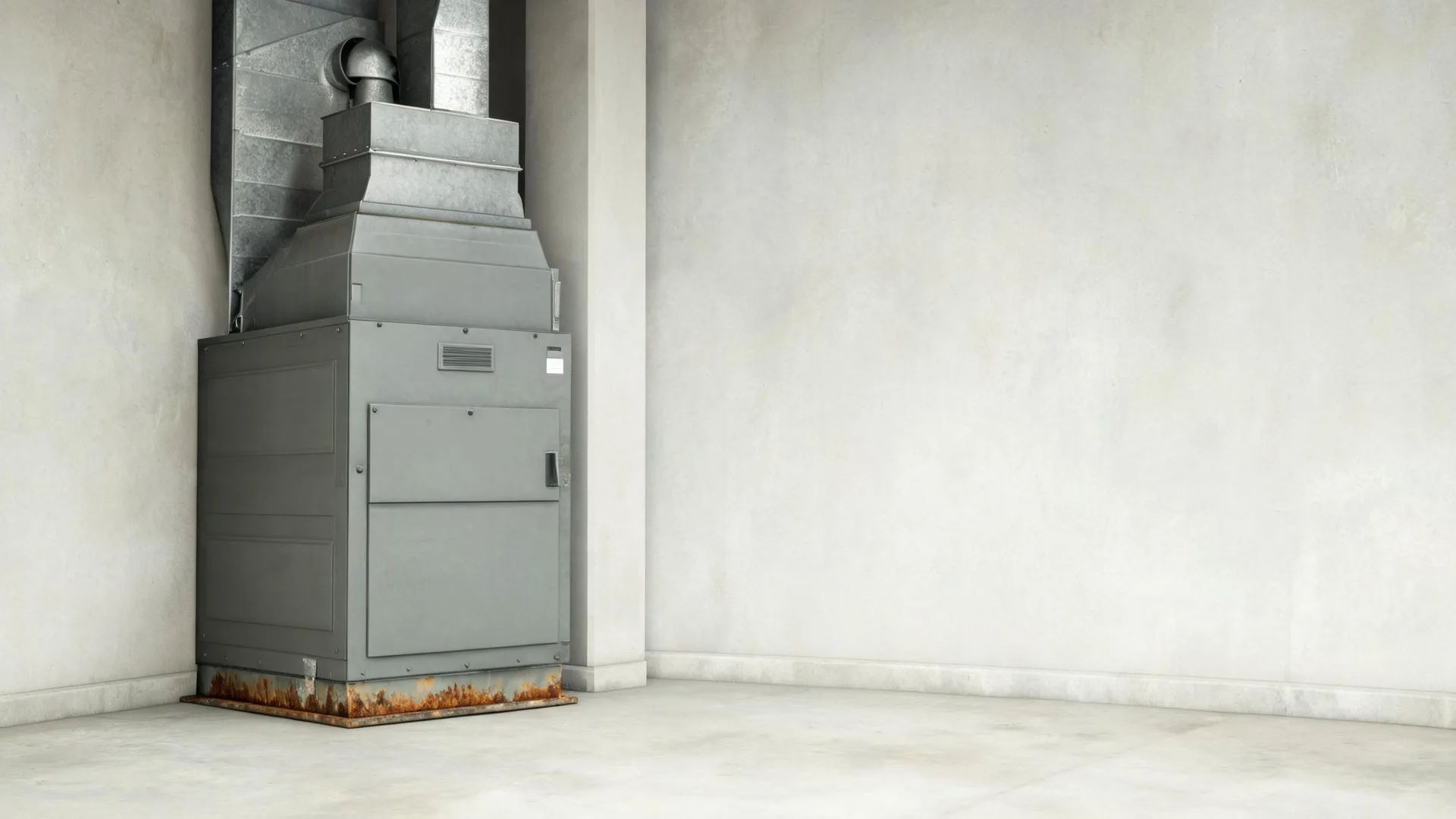
A gas furnace and sheet-metal air handler unit installed in an unfinished concrete basement.

A new furnace would cut about $130 a year off heating for a typical Macomb County home.

  • A new high-efficiency furnace$570 a year
  • An older furnace$700 a year

Estimates for a typical Macomb County home, compared with an older unit built to the previous federal minimum, from EIA household energy data, Michigan fuel prices and NOAA climate normals. Your home will differ.

Repair makes sense when one part has failed and the heat exchanger is sound.

Replacement makes sense when the heat exchanger is cracked or the furnace keeps needing parts.

Once a part's been named, the next question is whether it's worth fixing at all. A single part failing, even an expensive one, is usually worth repairing if the furnace is otherwise sound. What changes the math is a furnace that's already had two or three different parts go in the past couple years. That's not bad luck, that's a furnace telling you its parts are all reaching the end of their working life around the same time, and the next failure is already waiting. A cracked heat exchanger is its own category, since that's a safety issue and not a wear item, and it usually means the furnace is done regardless of what else still works. Age matters less than pattern. A furnace that's needed nothing in years and suddenly has one part fail is a different situation than one that's been limping from repair to repair.