



A lit brick residential street at dusk showing a row of two-story homes with covered porches and mature trees.

Furnace Repair in Troy, MI

Tell us about the job

Takes about a minute. No obligation.

RepairFurnace or heatingOakland County, MI
Step 1 of 2

What ZIP code is the job in?

Oakland County saw 210 severe weather events between 2015 and 2024. Damaging wind caused 164 of those, and hail hit the county 25 times in the same stretch. Hail dents fan blades and coil fins on an outdoor unit, and wind throws branches and grit into it. A furnace itself usually sits safe inside, but it depends on the same power and the same outdoor equipment as the rest of the system. Across Michigan, 34% of households lost power for 24 hours or more in 2024. If a storm has come through and your system took a hit, it's worth having it looked at even if it's still running.

8 months
October through May, your furnace is on duty
19°F
the average winter night it heats against
86%
of homes here heat with gas, so most furnaces here burn gas
16 winter storms
in ten years, the nights a failure hurts most
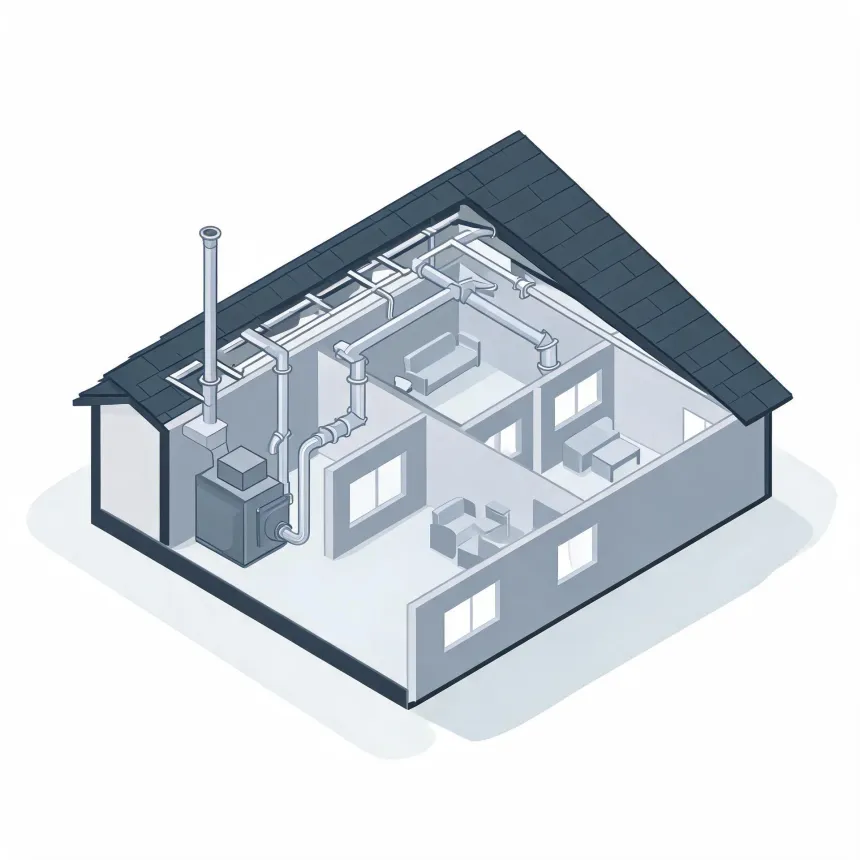
Isometric cutaway illustration of a single-story house showing interior rooms, a furnace unit with flue pipe, and branching ductwork running through the ceiling space under a dark shingled roof.
Your furnace works hardest from November through March.

NOAA nClimDiv, 1991–2020 normals

A furnace that won't start can still tell you something before anyone shows up.

Check the thermostat, the switch on the furnace itself, and the breaker first. Half the no-heat calls end there.

Eight months of heat a year wears a furnace down faster

Heat runs October through May
Winter nights average 19°F
Climate zone 5A
Ready before OctoberFurnace season starts in October here, and problems tend to show up in the first cold weeks.

Eight months of runtime a year means more cycles on the igniter, the blower motor, and every switch in between. When one of those finally quits, it's rarely random. It's the part that was already closest to the edge. A tech who knows this can usually tell you right away whether what failed is a one-off or a sign the rest of the system is catching up to its age. That's worth knowing before you pay for a repair. Fixing the symptom without checking what else is worn close to failing just means another call in a month or two.

If a storm just hit your system, get it looked at now

If your furnace quit after a storm came through, don't assume the repair ends with the furnace. Have the outdoor unit checked too. A bent fan blade or a coil full of debris can bring your whole system down even when the furnace itself is untouched.

Find a contractor
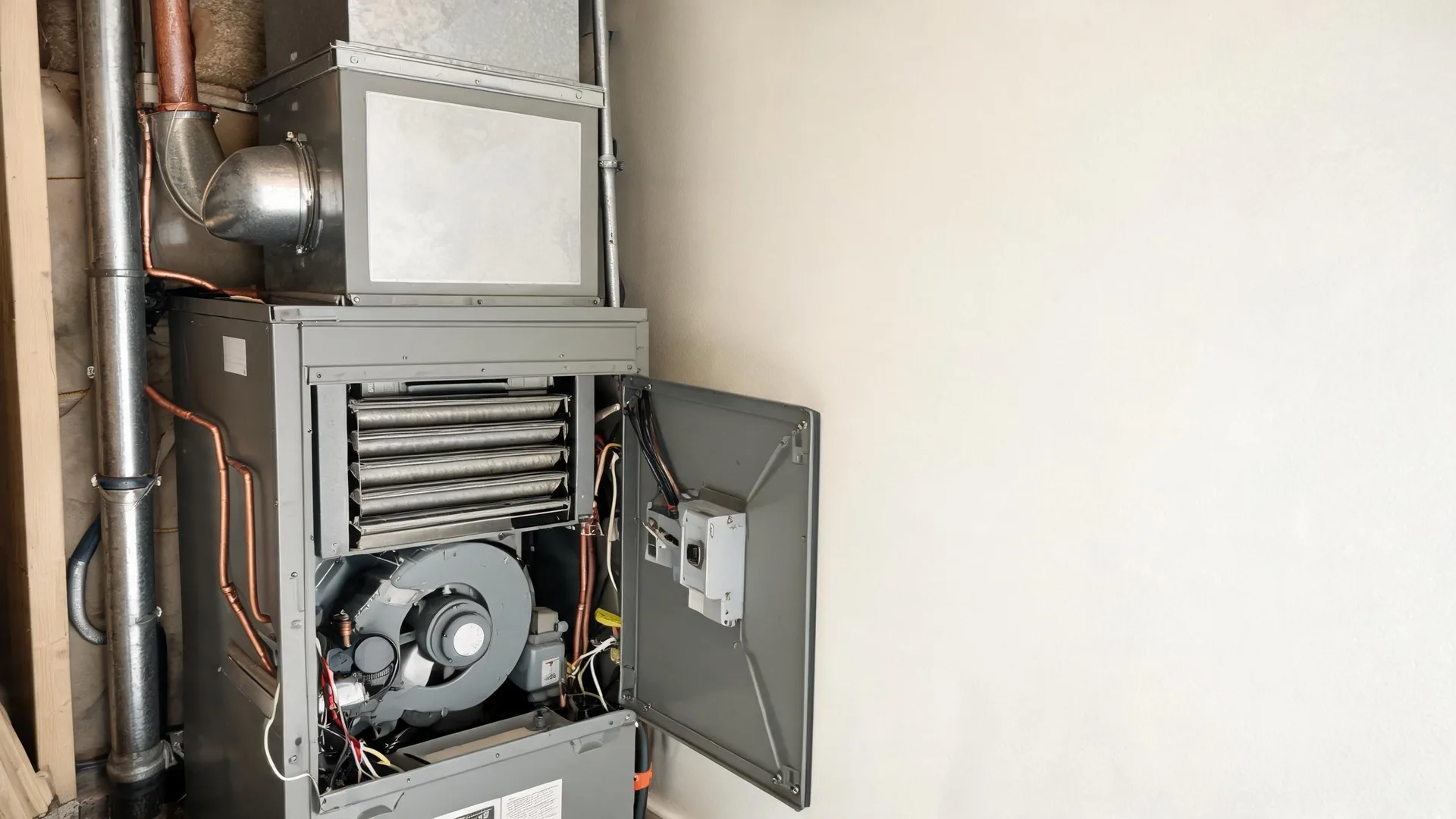
A gray residential gas furnace installed in an unfinished basement, surrounded by ductwork, a metal flue pipe, and a gas supply line.

What a furnace tells you before it quits

A furnace that's starting to fail doesn't usually just stop. It warns you first, if you know where to look. Short cycling is one of the clearest signs: the burner fires, runs a couple minutes, shuts off, then starts again a short while later. That's often a cracked heat exchanger tripping a safety switch, or a flame sensor too coated to hold a signal. A burner flame that's flickering yellow instead of steady blue means something isn't burning clean, and that's not a wait-and-see problem. Rooms that used to heat evenly and now don't, a blower that runs louder or longer than it used to, a smell of gas or something hot and electrical. Each one points at a different part, but they all mean the same thing: something inside is working harder than it should to do the same job.

Most failures start small

A furnace rarely dies from one big event. The igniter wears thin after thousands of cycles. The flame sensor builds up a film that keeps it from reading the flame. A blower motor's bearings dry out and start grinding before they seize. Each part has a lifespan, and age is the main thing working against all of them at once.

What that means for the fix

Once a tech knows which part failed, the next question is why. A flame sensor caked in residue is normal wear and a quick clean. The same sensor failing again a month later points to a draft problem or a dirty burner feeding it soot faster than it should build up. Treating the part without asking what wore it out leaves the real cause to fail something else next.

A gray forced-air furnace with sheet-metal ductwork stands in an unfinished basement with exposed wooden joists, concrete walls, and a hanging incandescent bulb.

A new furnace would cut about $150 a year off heating for a typical Oakland County home.

  • A new high-efficiency furnace$590 a year
  • An older furnace$740 a year

Estimates for a typical Oakland County home, compared with an older unit built to the previous federal minimum, from EIA household energy data, Michigan fuel prices and NOAA climate normals. Your home will differ.

Repair makes sense when one part has failed and the heat exchanger is sound.

Replacement makes sense when the heat exchanger is cracked or the furnace keeps needing parts.

A repair makes sense when the part that failed is on its own, and the rest of the furnace still has life in it. A new igniter or flame sensor on a furnace that's otherwise sound is a straightforward call. Replacement starts to make more sense when the failures stack up, one part fixed this year and another last year, or when the part that broke is central and expensive on its own, like a cracked heat exchanger. Age works against every part in the furnace at the same time, so a tech looking at one failure is also looking at how much life is probably left in the rest. A furnace that's needed a few different repairs in a short stretch is usually telling you it's running out of parts that haven't worn down yet, not just the one that happened to go first.