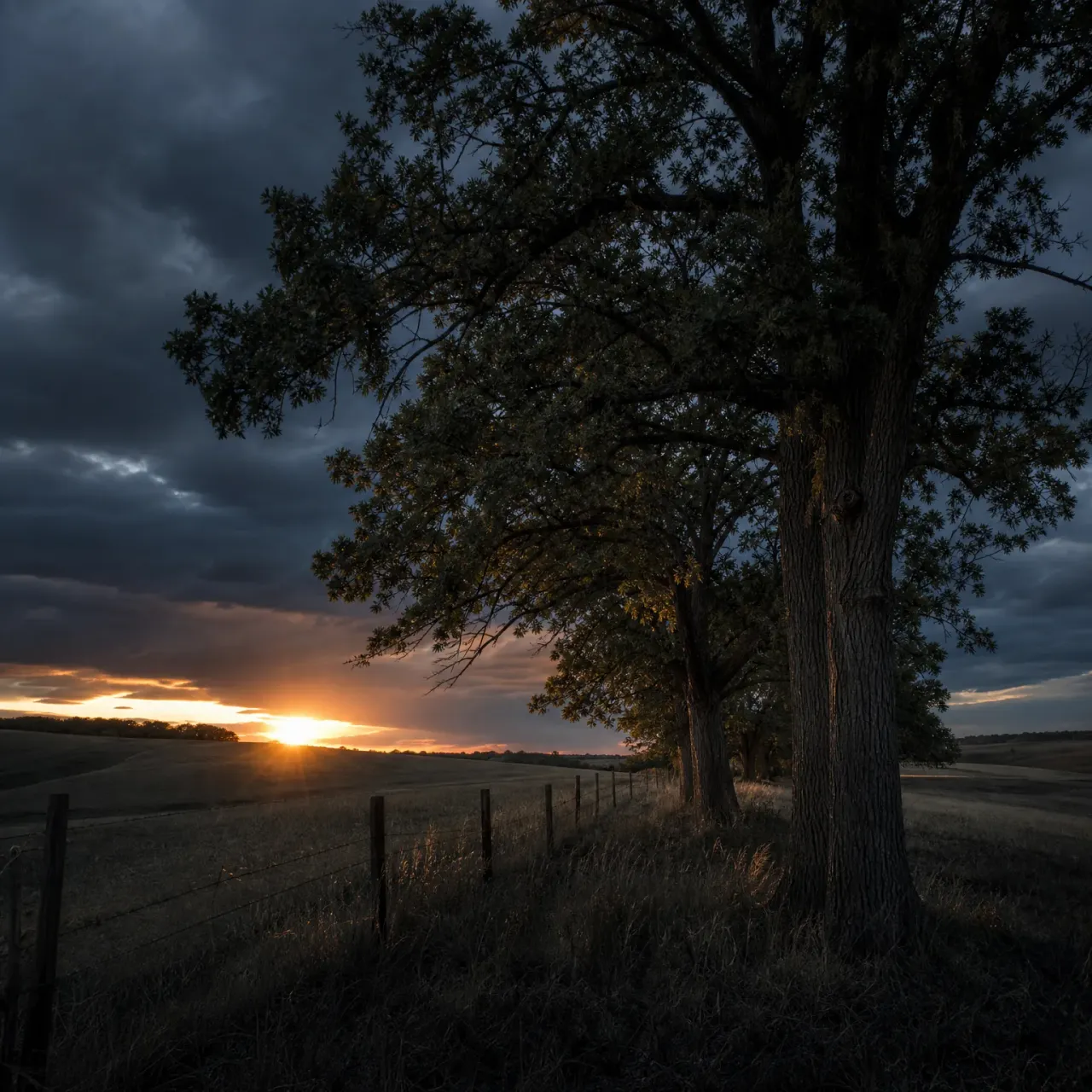
A row of dark-sided houses with brown shingled gable roofs behind tall trimmed hedges, with a mowed lawn in the foreground and overhanging tree branches against an overcast sky.

Furnace Repair in Traverse City, MI

Tell us about the job

Takes about a minute. No obligation.

RepairFurnace or heatingGrand Traverse County, MI
Step 1 of 2

What ZIP code is the job in?

The igniter wears out before anything else does

A furnace cycles on and off many times a day all winter, and the igniter takes that strain every time. It's a thin piece of ceramic or metal that heats up fast, and that heating and cooling over and over is what eventually cracks it. When it fails, the furnace runs through its startup sequence and then shuts itself down without ever lighting. That's the most common reason a furnace won't fire at all.
A dirty flame sensor reads as a bigger problem

The flame sensor's job is to confirm the burner actually lit, so the furnace knows it's safe to keep running. Soot builds up on it over time and coats the metal, and once it can't read the flame, the furnace shuts down as a safety measure even though the burner was working fine. It looks like the furnace won't stay on, but the fix is usually just cleaning that one part.

9 months
September through May, your furnace is on duty
16°F
the average winter night it heats against
73%
of homes here heat with gas, so most furnaces here burn gas
27 winter storms
in ten years, the nights a failure hurts most
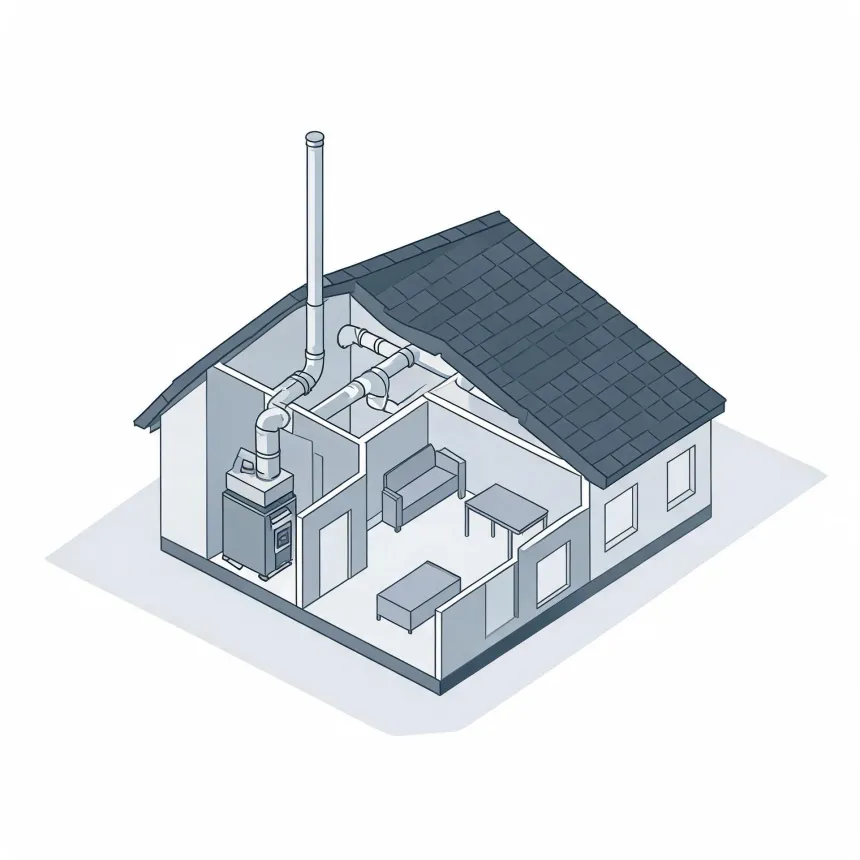
Isometric line illustration of a cutaway single-story house with a shingled roof, showing an interior furnace connected to ductwork and a tall vertical flue pipe, plus simple furniture in the adjacent room.
Your furnace works hardest from November through April.

NOAA nClimDiv, 1991–2020 normals

Half the homes in Grand Traverse County were built in 1986 or later.

A furnace that came with a newer house still has years left in it, and that makes repair the right first call.

Nine months of heat a year is a long season for one machine

Heat runs September through May
Winter nights average 16°F
Climate zone 6A

Furnace season here starts in September. August is the month to get a furnace looked at, before it's working every day. A part that was already failing over the summer, sitting idle, tends to give out in those first cold weeks once the burner is cycling for hours at a stretch instead of minutes. By December the overnight low here averages 16°F, and that's not when you want to find out the igniter was already cracked. Having it checked before September means a weak part gets caught on a slow day, not during the first real cold snap.

Repair it

If your system came with a newer house, it likely has plenty of life left. Repair is usually the right call.

Find a contractor
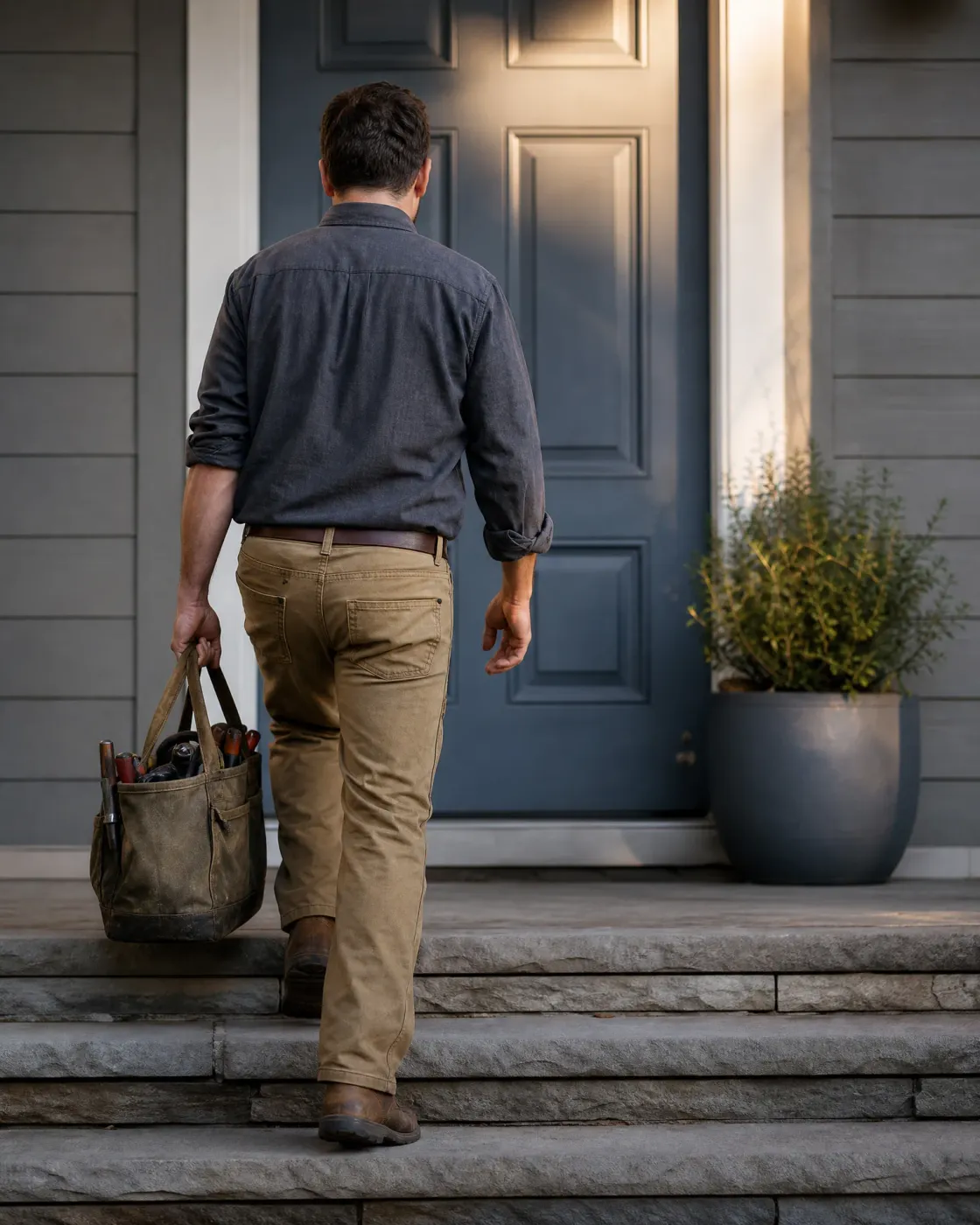
A man in a dark shirt and tan pants carries a canvas tool bag up stone steps toward a dark blue front door, with a potted shrub beside the entry.
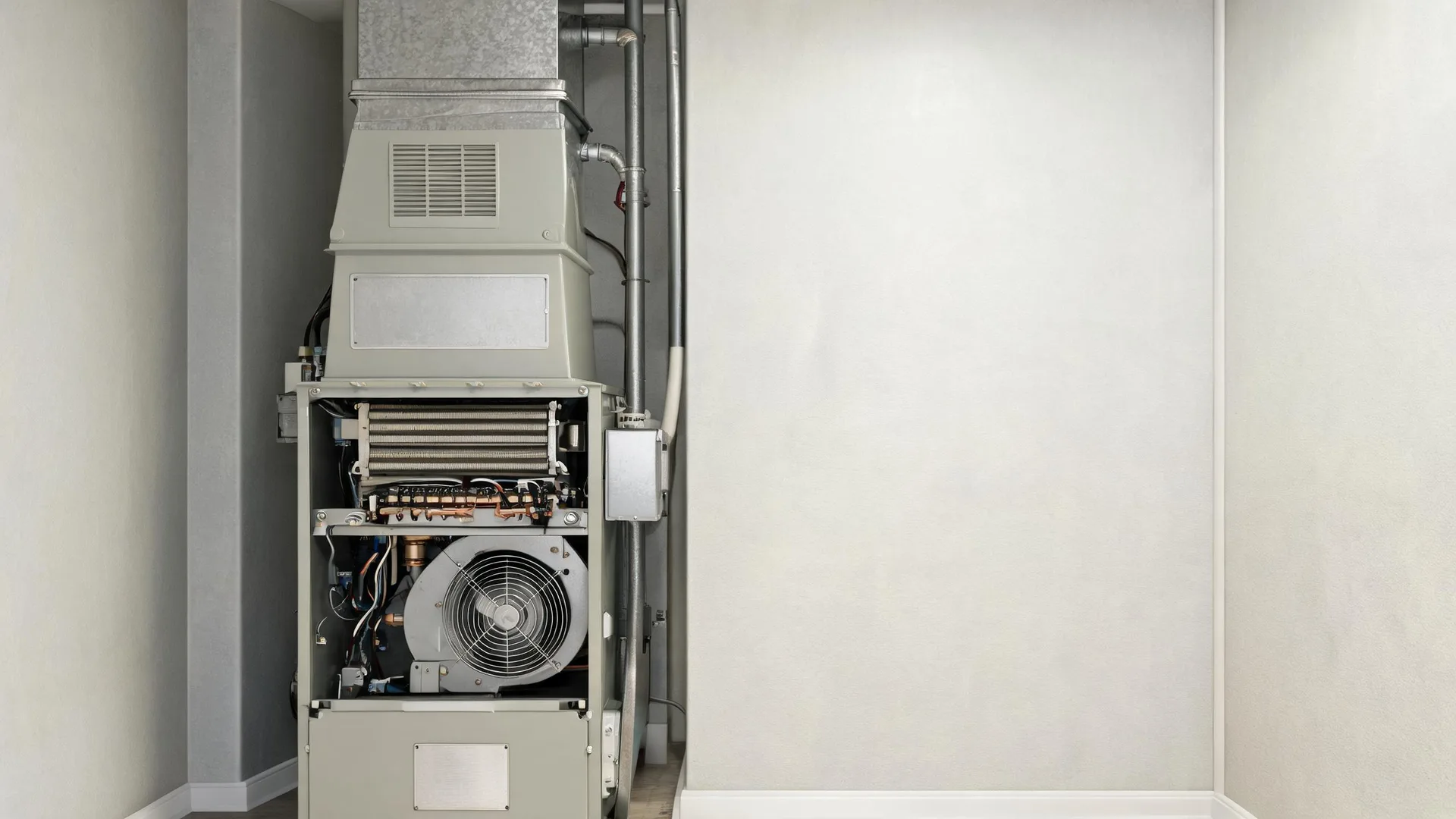
A gray residential gas furnace installed in an unfinished basement, surrounded by ductwork, a metal flue pipe, and a gas supply line.

Ask for the age before the estimate

When the contractor comes out, ask them to check how old the furnace is before anything else. If it came with the house, that's usually a furnace with years left in it, and that's worth knowing before you hear what's wrong with it. A repair on a system like that is almost always the right call, not a stopgap before a bigger job. Most of what fails on a furnace that age is a single part worn out from use, not the unit itself giving out.

Check the thermostat and the switch first

Make sure the thermostat is set to heat and the set point is above room temperature, and check that its batteries aren't dead if it uses them. Then find the switch that looks like a light switch near the furnace, usually on the side of it or on a nearby wall. That's the furnace's power switch, and it gets bumped off or switched off by mistake more often than people expect.

Look at the filter and the exterior vent

Pull the air filter and hold it up to a light. If you can't see light through it, it's restricting airflow badly enough to shut the furnace down or freeze the coil. Then go outside and check the intake and exhaust pipes on the side of the house for snow, ice or debris blocking them. A blocked vent will stop the furnace from running at all, and clearing it is something you can do yourself.

A bare concrete basement containing a gray gas furnace with metal ductwork and a vertical flue pipe, lit by a single hanging bulb.

A new furnace would cut about $170 a year off heating for a typical Grand Traverse County home.

  • A new high-efficiency furnace$670 a year
  • An older furnace$840 a year

Estimates for a typical Grand Traverse County home, compared with an older unit built to the previous federal minimum, from EIA household energy data, Michigan fuel prices and NOAA climate normals. Your home will differ.

Repair makes sense when one part has failed and the heat exchanger is sound.

Replacement makes sense when the heat exchanger is cracked or the furnace keeps needing parts.

A diagnostic visit starts before any panel comes off. The tech asks what the furnace was doing, whether it tried to light and failed or ran for a bit and then quit, because that alone narrows down which part to check first. From there it's a sequence: power and thermostat signal, then the igniter or pilot, then whether the burners light, then whether the flame stays lit once the blower kicks on. Each step rules something out. A multimeter checks the igniter for continuity instead of guessing by sight, since a cracked igniter doesn't always show a visible break. If the burners light but the furnace still shuts down, the flame sensor and the limit switch are next, since both will cut the furnace off as a safety response even when the burner itself is fine. The point of going in order is that two things can look like the same problem from the thermostat, and only checking each stage tells you which one it actually is.