Three illuminated two-story brick houses on a tree-lined residential street photographed at twilight, with warm window light and landscape uplighting visible against a deep blue evening sky.

Furnace Repair in Sturgis, MI

Tell us about the job

Takes about a minute. No obligation.

RepairFurnace or heatingSt. Joseph County, MI
Step 1 of 2

What ZIP code is the job in?

St. Joseph County sees its share of severe weather

Between 2015 and 2024, the county logged 122 severe weather events, including 88 damaging wind events, 16 winter storms, 14 hail events and 4 tornadoes. Over a third of Michigan households went at least a day without power in 2024.
Your furnace depends on what's outside too

Wind and hail reach the outdoor parts of a heating system, not just the furnace itself. A winter storm can knock out the power a gas furnace needs to run even when the gas line is fine.

8 months
October through May, your furnace is on duty
20°F
the average winter night it heats against
61%
of homes here heat with gas, so most furnaces here burn gas
16 winter storms
in ten years, the nights a failure hurts most
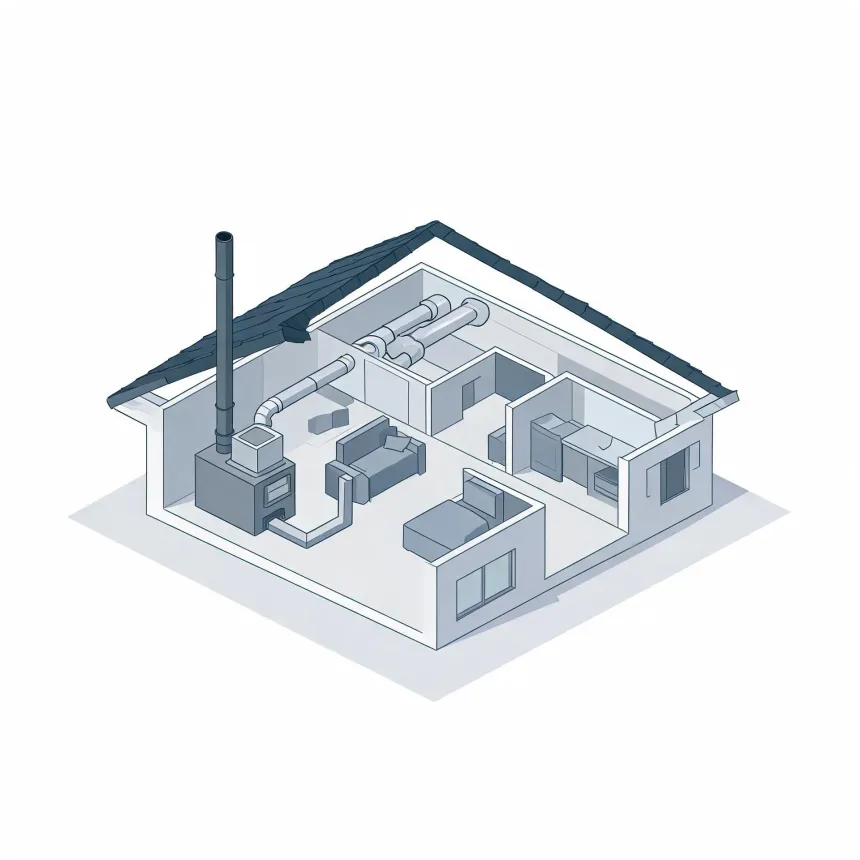
Isometric line illustration of a cutaway single-story house showing interior rooms with furniture, a furnace unit with a tall flue pipe, and connected ductwork running under the pitched roof.
Your furnace works hardest from November through March.

NOAA nClimDiv, 1991–2020 normals

Furnaces in St. Joseph County start running in October, after sitting idle since spring.

A furnace that failed to fire right in October was already weak before the cold set in.

Half the homes here were built by 1970

Half the homes here were built by 1970
Heat runs October through May
Winter nights average 20°F

Eight months of heat a year is a long stretch for any furnace to carry. That's most of the time between October and May, and this one has to run on the coldest nights and the mildest ones alike. The igniter cycles every time the thermostat calls for heat, the blower motor logs more hours, and the heat exchanger goes through more expansion and contraction than it would somewhere with a short winter. Whatever is wrong right now has had eight months to get worse, not fewer. A proper diagnosis finds out which part gave out and why, instead of patching the symptom and sending you into the next cold stretch on borrowed time.

If the outdoor unit took a hit, get it looked at now

Hail and wind reach the outdoor parts of a gas furnace system, and a storm can cut the power it needs to fire at all. If a recent storm hit your property, don't wait for a bigger failure to find out something was damaged. Have it checked even if the furnace still runs.

Find a contractor
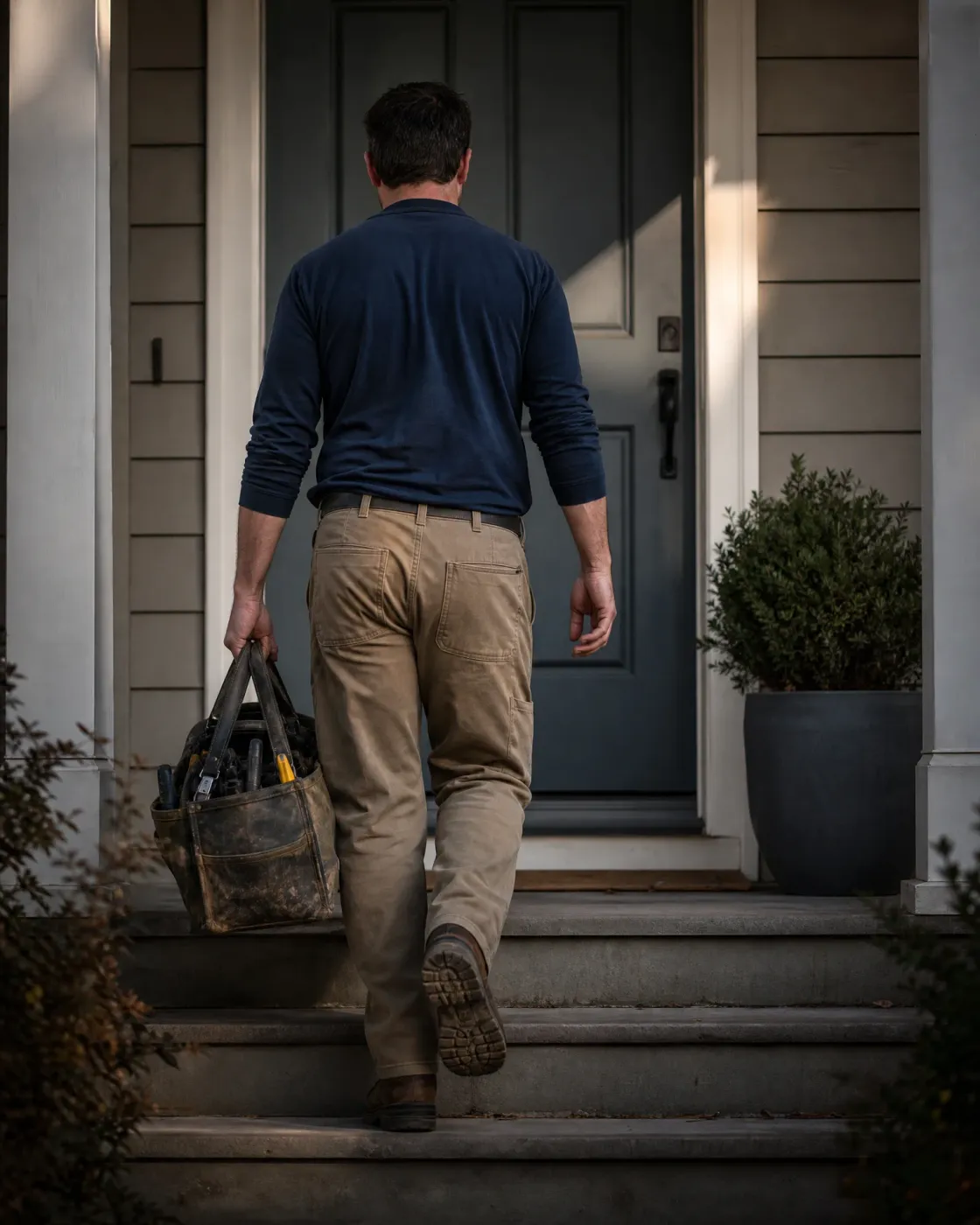
A man in a navy long-sleeve shirt and tan pants carries a canvas tool bag up concrete steps toward a dark blue front door flanked by columns and a potted shrub.
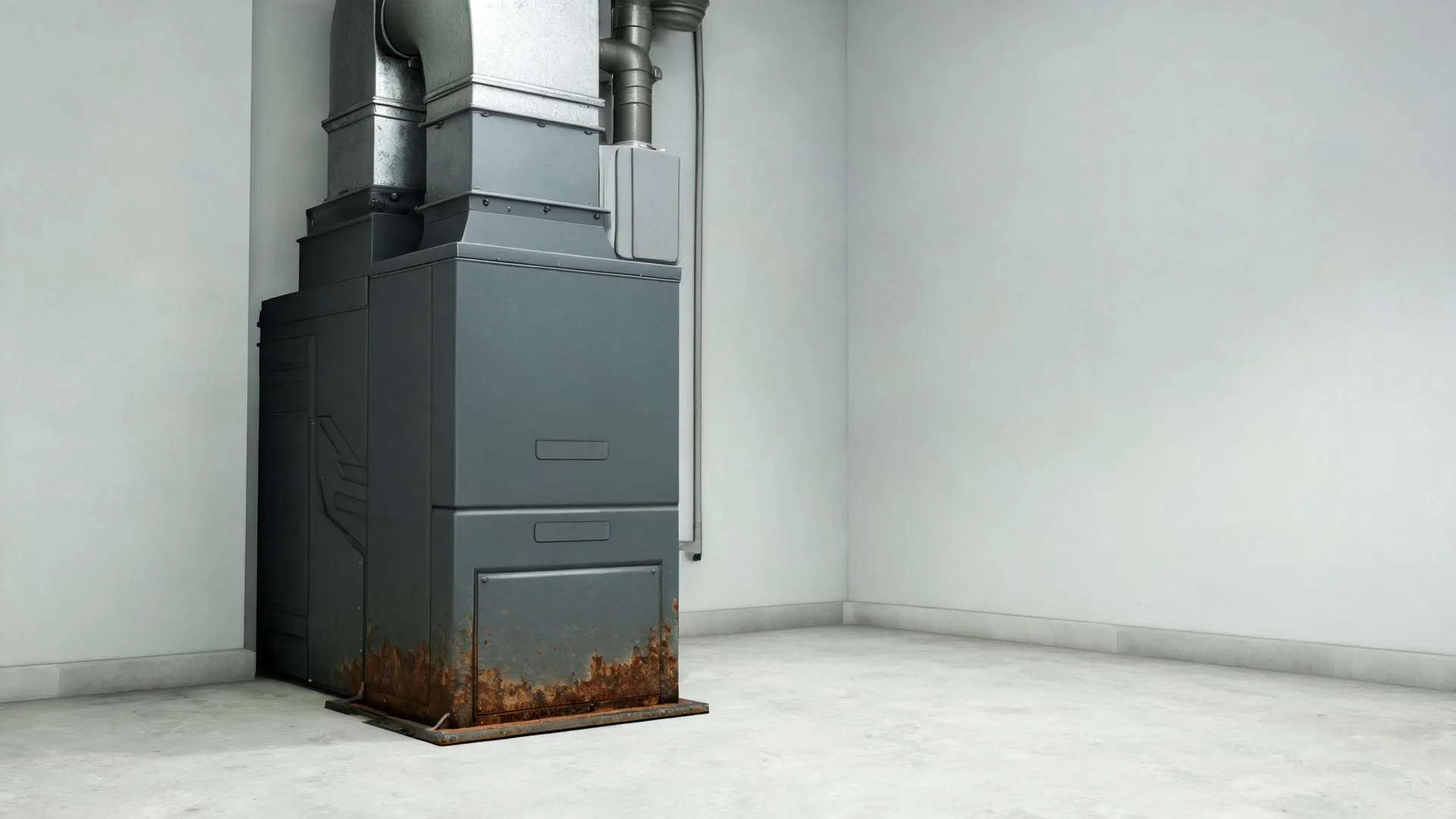
A gray residential gas furnace installed in an unfinished basement, surrounded by ductwork, a metal flue pipe, and a gas supply line.

Eight months in, most years

Count the mild days in with the cold ones and a furnace here is at work from October to May. Eight months on, eight months of parts cycling on and off, and the clip beside this one is just a single day of it. A furnace that's struggling in month two of that stretch has six more to go before it gets a break. Get the diagnosis now instead of waiting to see if it holds.

A cracked heat exchanger gets worse every time it fires

Metal that's already cracked flexes again with every heat cycle, and the crack grows. Running the furnace while that's happening can push exhaust where it shouldn't go. Once a technician finds a crack, the furnace needs to stay off until it's dealt with.

A failing part can take others down with it

A blower motor that's struggling pulls more current and runs hotter than it should. A limit switch tripping again and again wears out faster than one that trips once. Small problems left alone tend to strain whatever is next in line, turning a single repair into several.

A gas furnace with sheet-metal ductwork and PVC pipes installed in an unfinished basement.

A new furnace would cut about $140 a year off heating for a typical St. Joseph County home.

  • A new high-efficiency furnace$570 a year
  • An older furnace$710 a year

Estimates for a typical St. Joseph County home, compared with an older unit built to the previous federal minimum, from EIA household energy data, Michigan fuel prices and NOAA climate normals. Your home will differ.

Repair makes sense when one part has failed and the heat exchanger is sound.

Replacement makes sense when the heat exchanger is cracked or the furnace keeps needing parts.

A diagnostic visit starts before the panel comes off. The technician asks what the furnace was doing: short cycling, blowing cold air, tripping the breaker, making a noise it didn't used to make. That tells them where to look first. From there they'll check for a flame and watch its color, test the igniter or pilot assembly, and check whether the flame sensor is reading properly. They'll pull the blower access panel and check the motor and the filter behind it, since restricted airflow shows up as several different complaints depending on where it hits. A multimeter comes out for the control board and the safety switches, because a part can look fine and still be failing electrically. The heat exchanger gets a visual check too, since a crack there isn't something to guess about. By the end, the goal is a specific answer: which part failed, and whether anything else is close behind it.