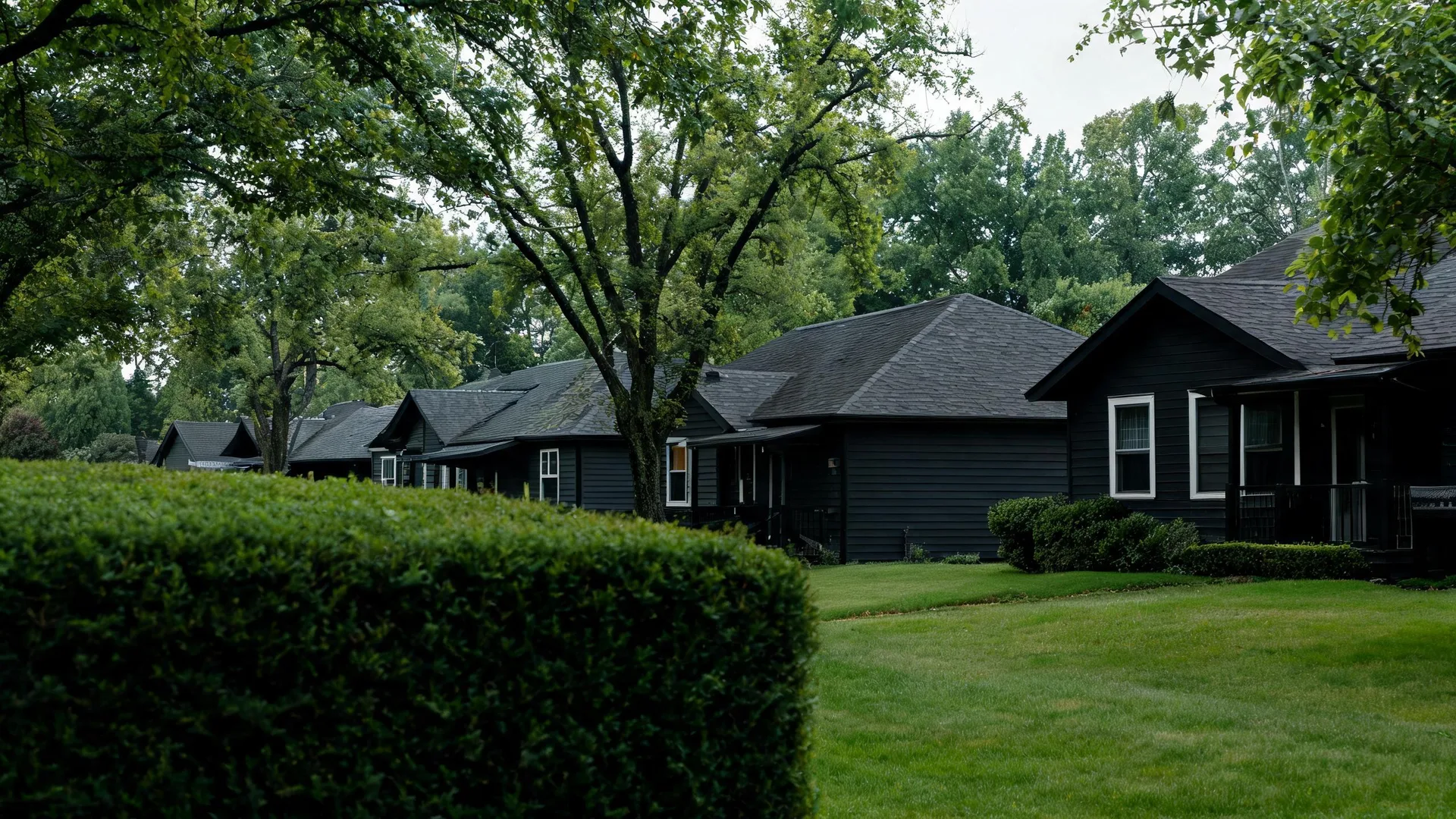



A row of dark-painted single-story houses with gabled shingle roofs behind a trimmed hedge and mown lawn, surrounded by large leafy trees under an overcast sky.

Furnace Repair in South Haven, MI

Tell us about the job

Takes about a minute. No obligation.

RepairFurnace or heatingVan Buren County, MI
Step 1 of 2

What ZIP code is the job in?

Van Buren County saw 59 severe weather events between 2015 and 2024. Damaging wind was the biggest piece of that, 33 times. Add in 17 winter storms with heavy snow and ice, and 9 hail events, and that's a lot of chances for an outdoor unit to take a hit. A furnace itself usually sits in the basement or a closet, out of the weather, but the system around it isn't always so protected. Wind-driven debris can bend fins or crack a housing without stopping the unit from running that same day. If a storm came through and nothing has been checked since, it's worth asking someone to look, even if everything still seems fine.

8 months
October through May, your furnace is on duty
20°F
the average winter night it heats against
58%
of homes here heat with gas, so most furnaces here burn gas
17 winter storms
in ten years, the nights a failure hurts most
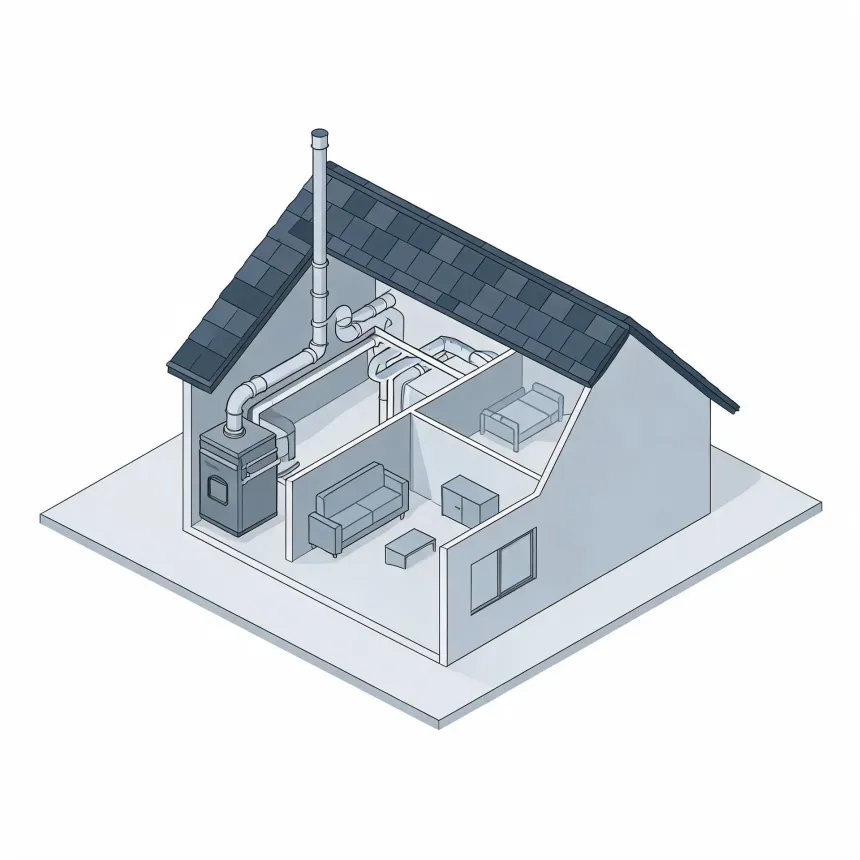
Isometric cutaway illustration of a small gabled house showing a furnace with flue pipe and ductwork connecting to interior rooms containing a sofa, bed, and cabinets.
Your furnace works hardest from November through March.

NOAA nClimDiv, 1991–2020 normals

Furnaces here start running in October.

A part that was already weak going into fall usually fails in those first cold weeks, not months into winter.

Eight months of heat a year means this furnace doesn't get much time off

Heat runs October through May
Winter nights average 20°F
Climate zone 5A

Eight months of heat a year adds up to a lot of cycles on the igniter, the blower motor, the heat exchanger. A furnace that runs October through May doesn't get the long rest that systems in milder places get, and whatever's already worn keeps wearing instead of sitting idle. If yours is making a new noise, short-cycling, or not keeping up the way it used to, that's worth having a contractor look at rather than waiting to see if it gets worse. A proper diagnosis finds the actual part at fault, not just the symptom. Fixing the real problem now holds up better than a patch that gets you through to spring.

Have it checked before the next storm takes the power out

A furnace that loses power in a winter storm stops heating, and Michigan households lose power for a day or more more often than most. If a storm bent the housing outside or knocked something loose, it may not show up until the system is asked to run through a cold night. Getting it looked at now means it's ready before the next outage, not during one.

Find a contractor
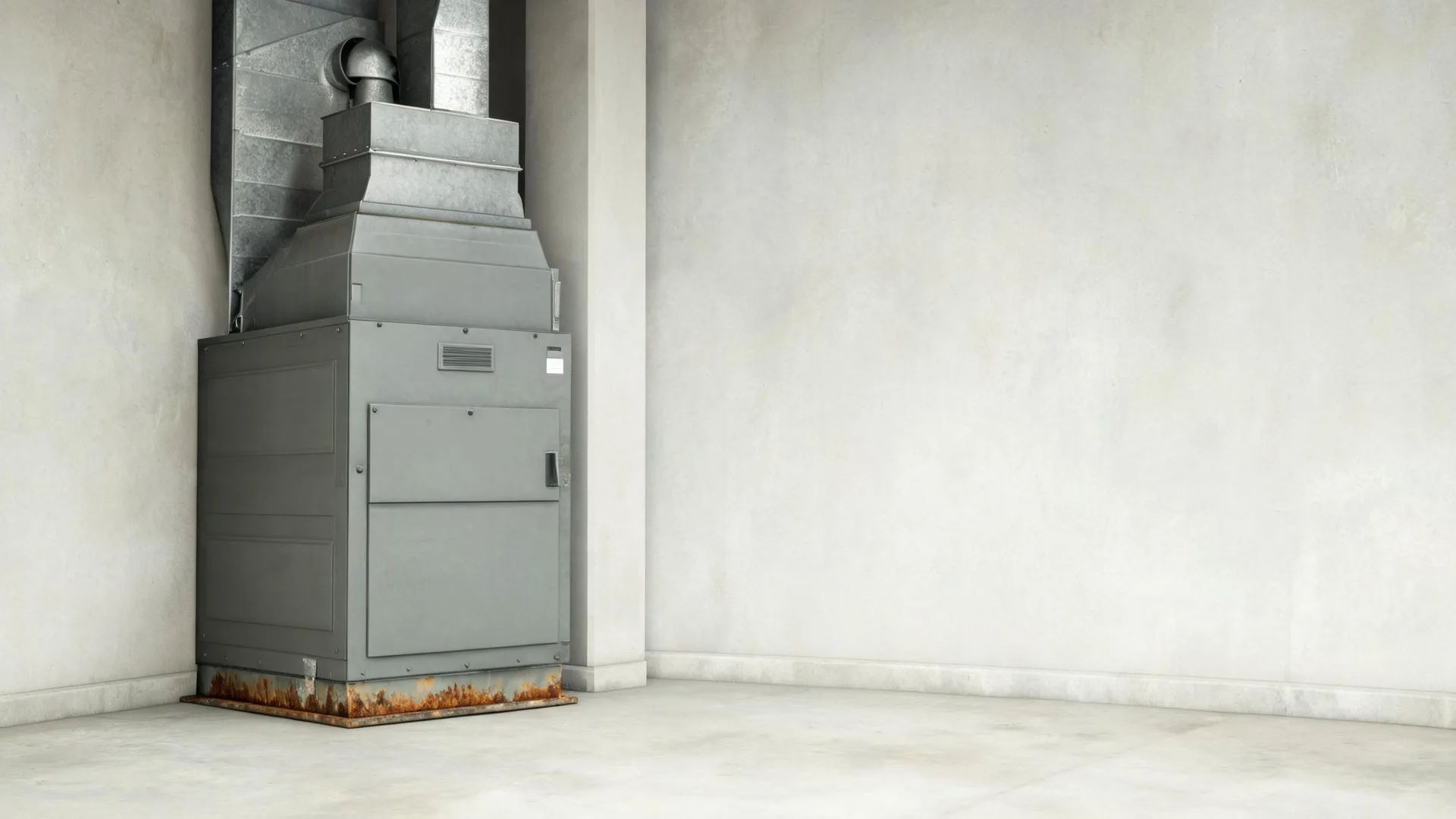
A gray residential gas furnace installed in an unfinished basement, surrounded by ductwork, a metal flue pipe, and a gas supply line.

What a furnace sounds like and looks like right before it fails

A furnace usually tells you something is wrong before it quits outright. The burner flame should be steady and blue. If it's flickering yellow or orange, that's a sign of a combustion problem worth having checked right away. A clicking igniter that doesn't catch, or a furnace that tries to start several times before it does, points to a weak igniter or a dirty flame sensor. Short-cycling, where it kicks on and off every few minutes instead of running a full cycle, often means a clogged filter, a cracked heat exchanger, or a thermostat sensing something it shouldn't. Warm air that isn't as warm as it used to be can mean the heat exchanger or the blower isn't doing its job the way it should. A burning or musty smell the first time it runs after sitting idle is normal for a few minutes, but a smell that lingers or comes back isn't. Rattling, banging, or a new squeal from the blower usually means a loose part or a motor bearing going bad, not something to run until it fails on its own.

A cracked heat exchanger gets worse under heat

Metal expands every time the burners fire and contracts when they shut off. A small crack grows a little more with each cycle. Left alone, it can let combustion gases mix into the air the blower pushes through the house, which is why a furnace with a suspected crack should be shut down rather than run until the next visit.

A dirty flame sensor doesn't fix itself by running

A flame sensor coated in residue reads the flame weakly and tells the control board to shut the gas off, even though the burner lit fine. Each failed attempt to start adds another cycle of ignition without easing the problem underneath. The sensor only gets dirtier with use, not cleaner, so the short-cycling it causes keeps happening until someone cleans or replaces it.

An unfinished basement interior featuring a large metal furnace unit, exposed ceiling joists, concrete walls, and scattered boxes and cables on the floor.

A new furnace would cut about $130 a year off heating for a typical Van Buren County home.

  • A new high-efficiency furnace$570 a year
  • An older furnace$700 a year

Estimates for a typical Van Buren County home, compared with an older unit built to the previous federal minimum, from EIA household energy data, Michigan fuel prices and NOAA climate normals. Your home will differ.

Repair makes sense when one part has failed and the heat exchanger is sound.

Replacement makes sense when the heat exchanger is cracked or the furnace keeps needing parts.

A diagnostic visit starts before any panel comes off. A contractor asks what the furnace was doing, when it started, and whether anything changed right before, a new noise, a smell, a breaker that tripped. Then they watch it run through a full cycle if it will, since a problem that only shows up after ten minutes won't show up in the first thirty seconds. They check the flame through the viewing port, test the flame sensor and igniter, and look at the heat exchanger for cracks or rust-through. They'll pull the filter, check static pressure in the ducts, and test the limit switch and pressure switch along the way. The goal is to find the one part actually causing the symptom, not to replace everything that could be related. A furnace with several small issues often has one real cause and a few side effects that clear up once it's fixed.