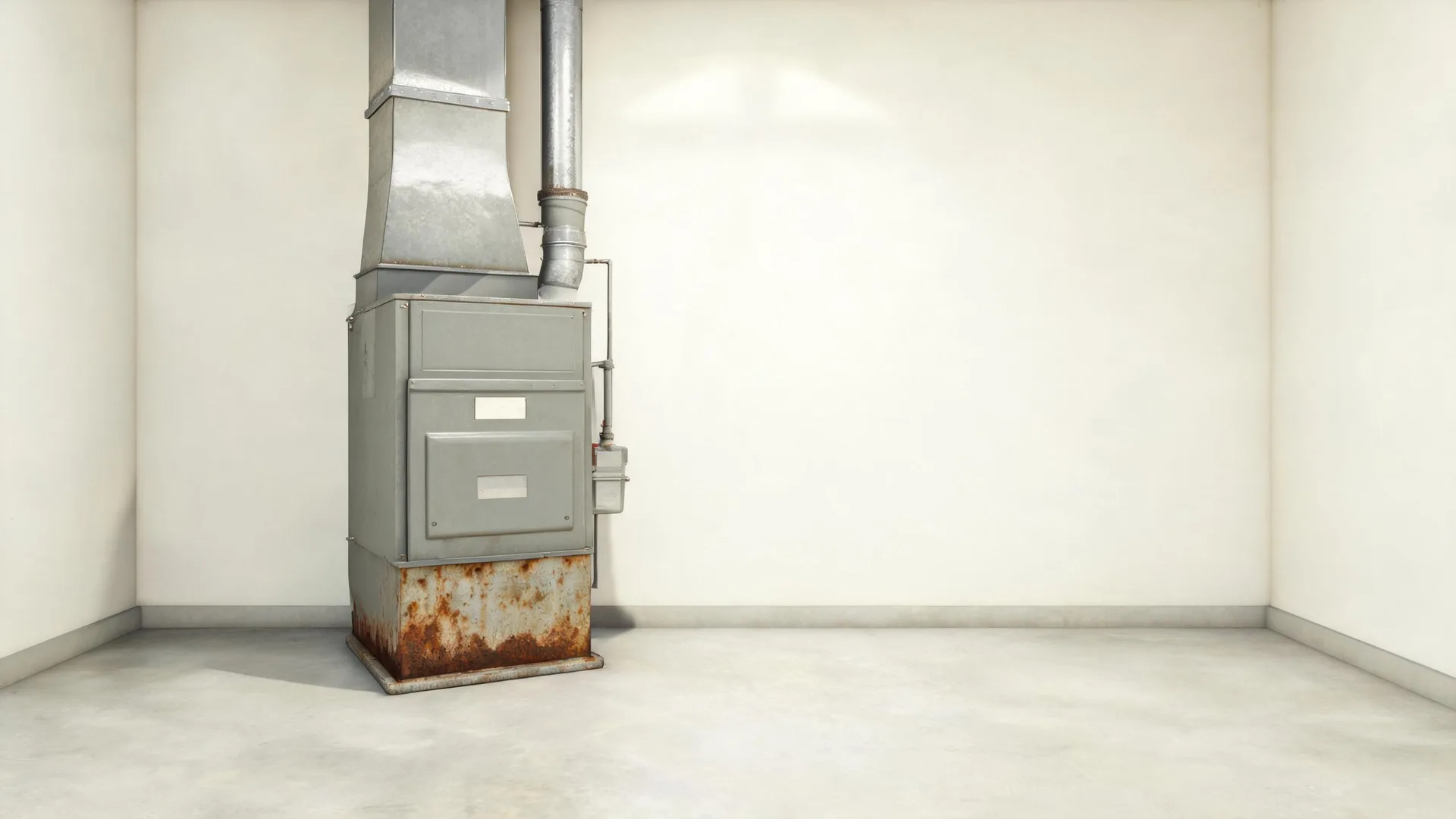
Lapeer County gets hit often
Lapeer County logged 95 severe weather events between 2015 and 2024, including 65 cases of damaging wind, 17 winter storms and 12 hail events. That's a lot of chances for something outside to take a hit.
Takes about a minute. No obligation.
Lapeer County logged 95 severe weather events between 2015 and 2024, including 65 cases of damaging wind, 17 winter storms and 12 hail events. That's a lot of chances for something outside to take a hit.
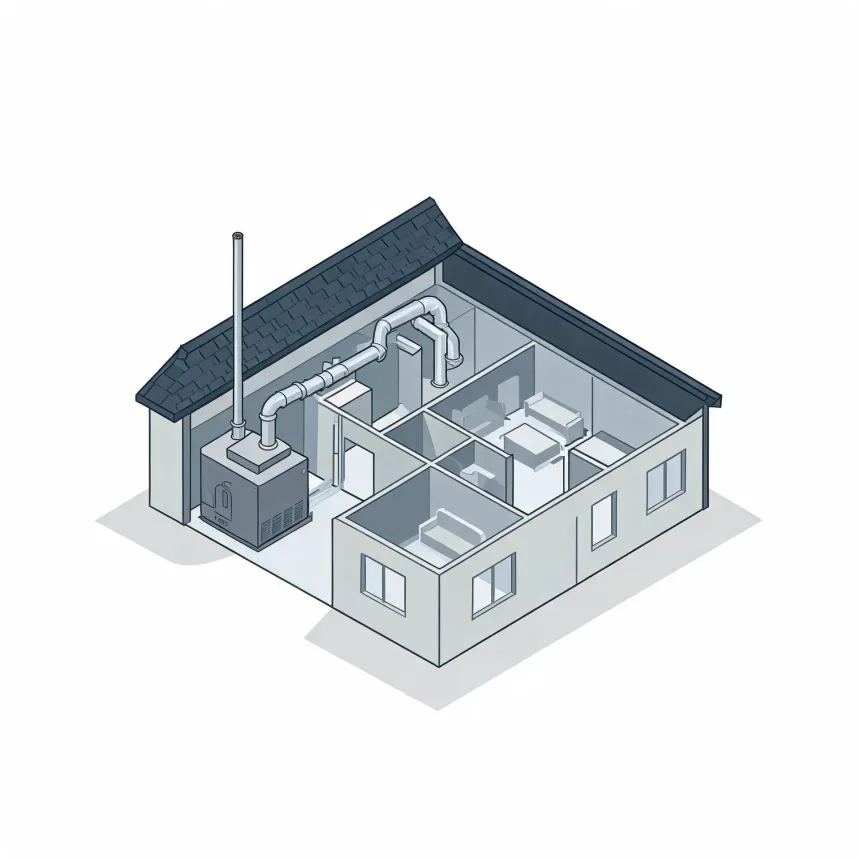
Wind and hail reach the outdoor unit tied to your heating system, and ice from a winter storm can build up around it. Power matters as much as the weather. More than a third of Michigan households went at least 24 hours without power in 2024, and a furnace with no power won't run no matter what shape it's in.
NOAA nClimDiv, 1991–2020 normals
A furnace that short cycles is wearing out its ignition system faster than it should.
If yours fires up, runs a few minutes and shuts off again and again, have the ignition checked before it quits for good.



Get the short cycling diagnosed instead of just reset. A furnace here runs from October through May, eight months straight, with little time off to recover from a small fault that keeps repeating. A technician can tell you whether it's a dirty flame sensor, a weak igniter, or a control board misreading a signal, and that's the difference between a quick fix and a repeat visit. Skipping that step usually means the same call again once the weather turns hard.
Wind, hail and ice have had plenty of chances to reach the outdoor unit tied to your furnace. If it still runs, that doesn't mean it came through clean. Have it looked at before the cold settles in for good.
Find a contractor
A cracked heat exchanger is the clearest case. Keep running a furnace with a crack like that and the metal flexes under heat again and again, and the crack grows. A flame that's burning yellow instead of blue means it isn't getting the air it needs, and it will keep coating the burner and the exchanger in soot the whole time it runs. A blower motor straining on a worn bearing is building up heat in the windings every minute it turns, right up until it seizes. None of these get better on their own. The furnace doesn't rest and heal between cycles, it just repeats whatever condition caused the problem in the first place, and most of these get more expensive to fix the longer they're ignored.
Make sure the thermostat is set to heat and the setting is above room temperature, and check that its batteries aren't dead. Look at the breaker or switch for the furnace, since a tripped breaker or a flipped service switch will stop it cold. Check the filter too. One that's packed with dust chokes off airflow and can make the furnace shut itself down before it overheats.
Leave the burners, the flame sensor and the control board alone. If you smell gas, don't flip any switches or try to relight a pilot. Leave the house, and call the gas utility or a technician from somewhere else. A furnace that trips its limit switch repeatedly or won't hold a flame needs a technician, not more attempts at a reset.
Estimates for a typical Lapeer County home, compared with an older unit built to the previous federal minimum, from EIA household energy data, Michigan fuel prices and NOAA climate normals. Your home will differ.
Repair makes sense when one part has failed and the heat exchanger is sound.
Replacement makes sense when the heat exchanger is cracked or the furnace keeps needing parts.
A diagnostic visit starts before any panel comes off. A technician asks when the problem started and what it looks like, whether it's a smell, a noise, short cycling, or no heat at all, because that narrows things down before any tools come out. Then comes a check of the basics: power to the unit, gas supply, thermostat signal, and airflow. From there the technician opens the cabinet and tests components directly, checking the flame sensor for corrosion, reading the igniter's resistance, watching the flame color and shape, and pulling an error code from the control board if it keeps one. Each test rules something in or out. By the end, the technician isn't guessing. They can tell you which part failed, why it failed, and what happens if it's left alone.