

A mowed lawn bordered by a tall trimmed hedge, with single-story houses and large leafy trees under an overcast sky.

Furnace Repair in Jackson, MI

Tell us about the job

Takes about a minute. No obligation.

RepairFurnace or heatingJackson County, MI
Step 1 of 2

What ZIP code is the job in?

Jackson County logged 48 severe weather events between 2015 and 2024. Most of that was wind, 31 damaging wind events in that span, plus 13 winter storms bringing heavy snow and ice. Wind and ice both go after a furnace's outdoor venting and any exposed lines, and a winter storm can knock out power right when you need the heat most. Statewide, 34% of Michigan households lost power for 24 hours or more in 2024. A furnace that depends on electronic ignition won't run without power even if the gas line is fine.

8 months
October through May, your furnace is on duty
19°F
the average winter night it heats against
71%
of homes here heat with gas, so most furnaces here burn gas
13 winter storms
in ten years, the nights a failure hurts most
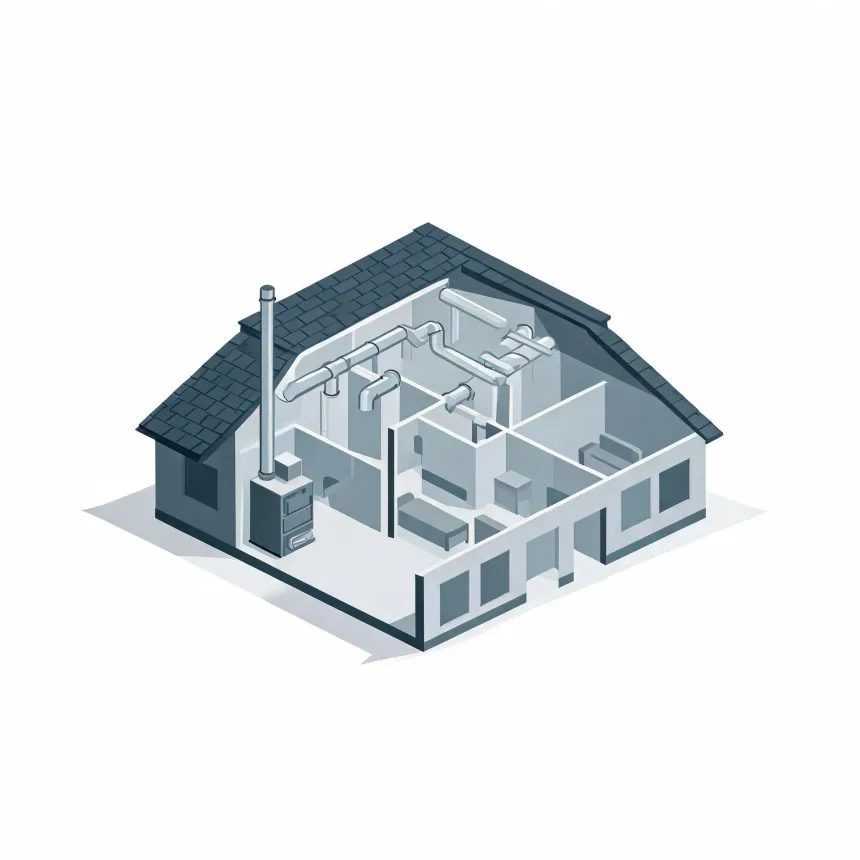
Isometric grayscale illustration of a cutaway house showing interior rooms, ceiling ductwork, a flue pipe, and a furnace unit on the left side.
Your furnace works hardest from November through March.

NOAA nClimDiv, 1991–2020 normals

Your furnace runs eight months a year here, October through May.

That's most of the year carrying the load, so a repair that just masks the symptom won't hold.

Half the homes in Jackson County were built in 1967 or earlier

Half the homes here were built by 1967
Climate zone 5A
Heat runs October through May
Built for a Michigan winter, or just getting byFurnaces here start working in October and don't let up until May

A furnace that came with a house built in 1967 or earlier is old enough that a repair should never be automatic. Before you pay for a big fix, ask the technician straight out how much life is left in the unit. A cracked heat exchanger or a control board that fails on and off can cost nearly as much to repair as the furnace is worth. Get the honest answer on what's left in it, then decide whether the repair makes sense or whether that money is better put toward a replacement.

Storm damage to a furnace doesn't always show up right away

If your furnace's outdoor venting or intake has taken a hit from wind or ice, that's worth a look even if the furnace is still running. A part that got bent or clogged in a storm doesn't always fail right away. Get it checked now, before you're relying on it during the next one.

Find a contractor
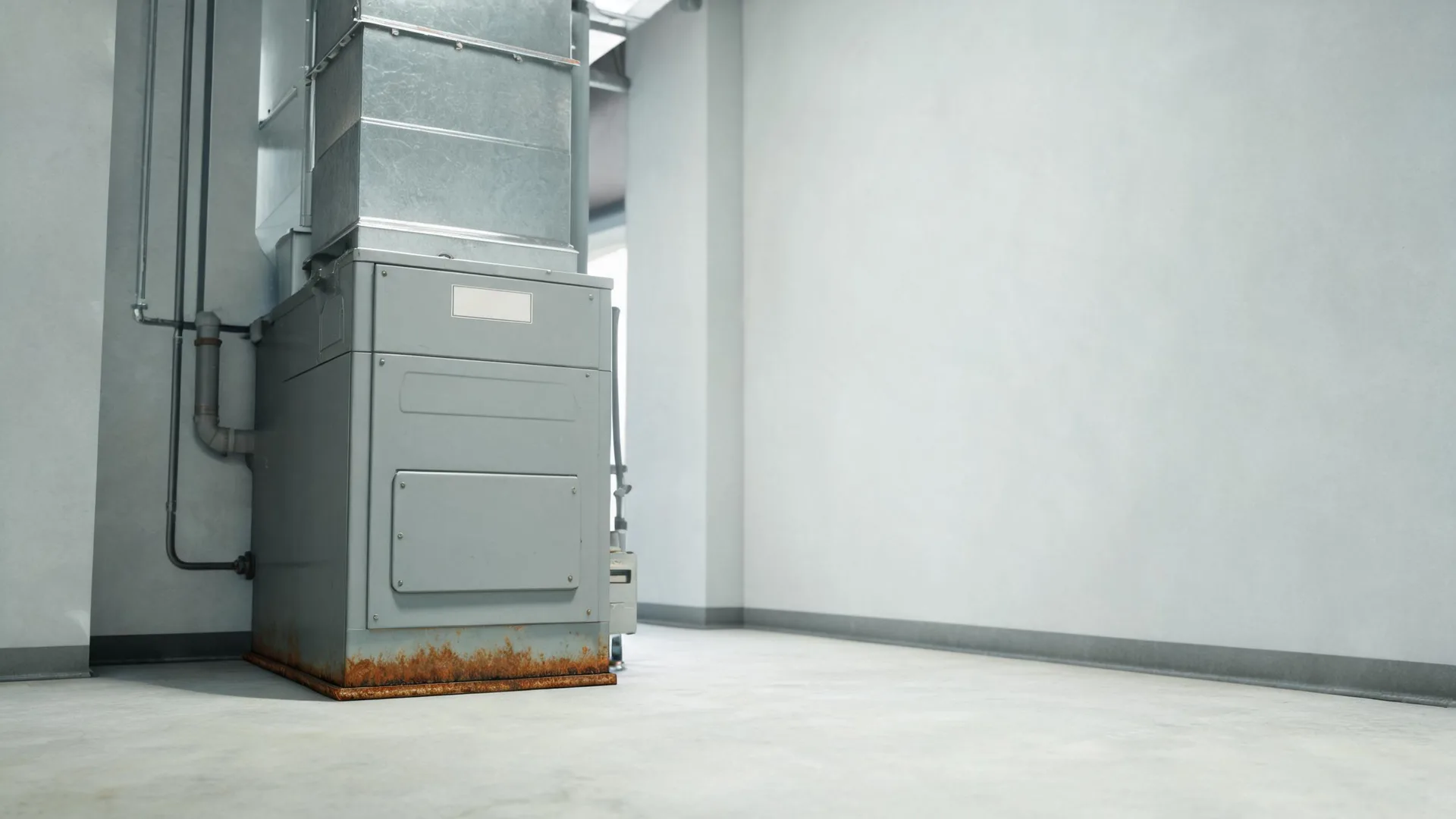
A gas furnace with attached ductwork, gas piping, and condensate lines installed in a concrete-block basement.

Running since October, and not done until May

Eight months of runtime means long stretches where the furnace cycles on and off, night after night, without a break to cool down fully. A part that's wearing out usually gives some warning first: a longer delay before ignition, a burner that sounds different, a cycle that runs longer than it used to. Get those checked when you notice them instead of waiting for a cold morning with no heat. A technician who sees the furnace now, while it's still running, can catch a cracked part or a failing sensor before it leaves you without heat on the day you need it most.

Most failures start small

A flame sensor coated with residue, a clogged filter choking airflow, a draft inducer motor losing strength. None of these stop the furnace outright at first. They make it struggle, cycle oddly, or shut down early, and they get worse with every run until the furnace won't start at all.

What that means for a repair call

The part that finally quits is rarely the whole story. A technician tracing why the igniter failed or why the limit switch keeps tripping often finds the real cause further back, in a clogged filter or a blocked vent. Fixing only the part that failed without finding why it failed means the next part goes the same way.

A gray forced-air furnace with metal ductwork stands in an unfinished basement with exposed wooden joists, concrete walls, and a single hanging light bulb.

A new furnace would cut about $150 a year off heating for a typical Jackson County home.

  • A new high-efficiency furnace$590 a year
  • An older furnace$740 a year

Estimates for a typical Jackson County home, compared with an older unit built to the previous federal minimum, from EIA household energy data, Michigan fuel prices and NOAA climate normals. Your home will differ.

Repair makes sense when one part has failed and the heat exchanger is sound.

Replacement makes sense when the heat exchanger is cracked or the furnace keeps needing parts.

Not every repair is worth doing, and a good technician will tell you that straight out. A furnace that's otherwise sound is usually worth fixing: a new igniter, a new flame sensor, a new capacitor, these are routine parts that wear out and get swapped without much debate. What changes the math is the heat exchanger. That part isn't meant to be replaced on its own, so if it's cracked, you're really pricing out a new furnace anyway. The other thing to weigh is how the repairs have been stacking up. One failure is a repair. A pattern of different parts failing over consecutive seasons is a furnace telling you it's at the end of its service life, and the next failure is already on its way.