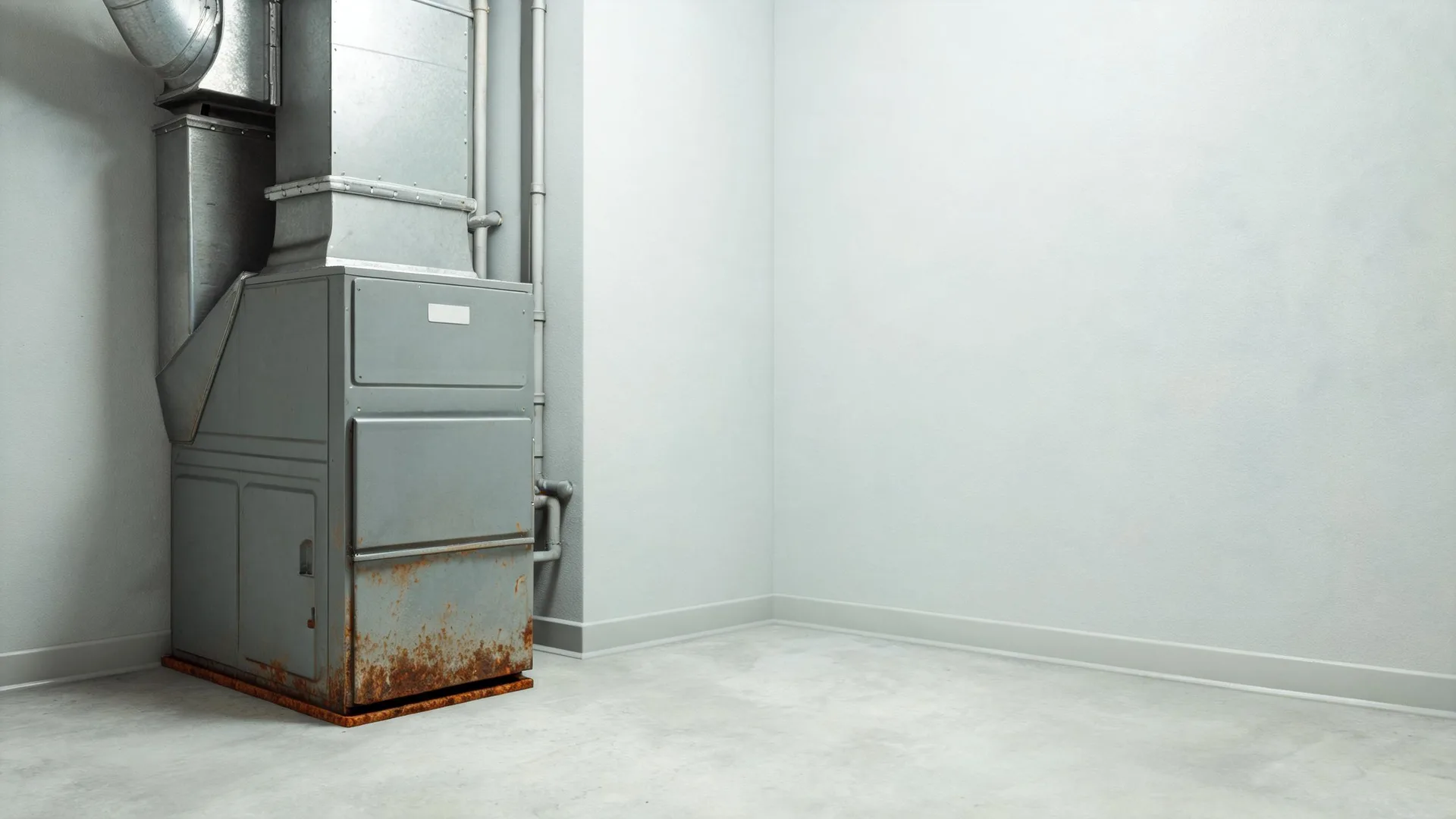
Ionia County gets hit with real weather
Ionia County saw 50 severe weather events between 2015 and 2024. That includes 26 damaging wind events, 6 hail events, 5 tornadoes and 13 winter storms. This isn't an occasional bad night.
Takes about a minute. No obligation.
Ionia County saw 50 severe weather events between 2015 and 2024. That includes 26 damaging wind events, 6 hail events, 5 tornadoes and 13 winter storms. This isn't an occasional bad night.
Over a third of Michigan households went at least a full day without power in 2024. A gas furnace still needs electricity to run the blower, the control board and the igniter. No power means no heat, even with gas in the line.
NOAA nClimDiv, 1991–2020 normals
Furnaces in Ionia County run about eight months a year, October through May.
That much runtime wears parts down early, so a repair call here is often about age caught up with the machine, not a fluke.



October is when furnaces here go back to work after sitting idle since spring. A part that was already marginal, a cracked igniter or a failing flame sensor, usually holds on through the easy months and then quits in the first real cold snap. By December the overnight low averages 18 degrees in this county, and that's not a night to find out the blower motor was already on its way out. If your furnace struggled at the start of last winter, the same weak spot is still there. Getting it looked at in September, before the heat needs to run every day, means a tech can catch it while the fix is still simple.
Wind, hail and winter storms come through Ionia County most years, and a furnace outside that path doesn't always show it right away. A tech can check the cabinet, the vents and the wiring now, while it's still a look instead of a breakdown.
Find a contractorHalf the homes in Ionia County were built in 1972 or earlier. A furnace that came with one of those houses has likely been replaced at least once already, maybe twice, and the one in there now could be on borrowed time without showing it. Age doesn't always announce itself with a strange noise or a bad smell. Sometimes the furnace just runs a little longer each cycle until one morning it doesn't come on at all. If you know roughly when yours was installed, that number matters more than the age of the house itself. If you don't know, a tech can read it off the data plate in a few minutes and tell you whether you're looking at a repair or a conversation about replacement.
A burner that clicks several times before it lights, a blower that runs louder than it used to, short cycles where the furnace shuts off before the room warms up. These are a furnace asking for attention while it still has a say in the matter. Wait past that point and the next sign is cold air out of the vents.
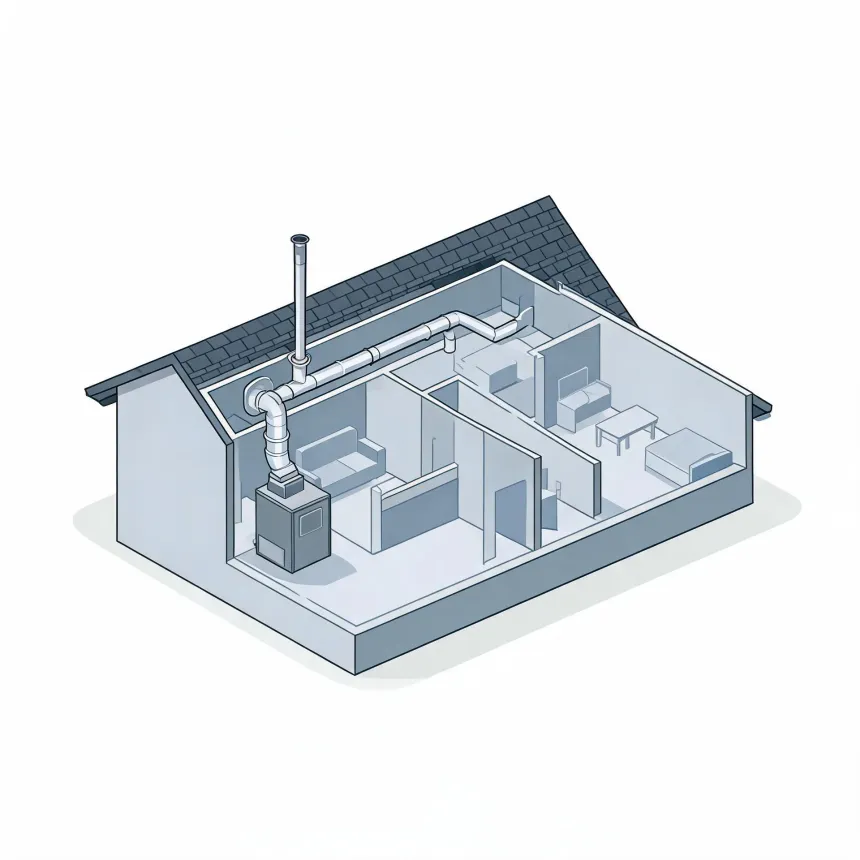
A burner flame that's flickering or yellow instead of steady blue, a burning smell that doesn't fade after the first few minutes of a cycle, or soot around the cabinet. Those point at a combustion problem, and a furnace with a combustion problem can put carbon monoxide into the house along with the heat.
Estimates for a typical Ionia County home, compared with an older unit built to the previous federal minimum, from EIA household energy data, Michigan fuel prices and NOAA climate normals. Your home will differ.
Repair makes sense when one part has failed and the heat exchanger is sound.
Replacement makes sense when the heat exchanger is cracked or the furnace keeps needing parts.
A diagnostic call starts before any panel comes off, with the tech asking what the furnace was doing and when. Short cycling, a burner that won't catch on the first try, cold air from the vents, that history points the visit before the tools come out. From there the tech checks the obvious things first: the filter, the thermostat wiring, the switch on the cabinet door that cuts power if the panel isn't seated right. Then it moves inward, to the flame sensor, the igniter, the gas valve, the pressure switch, checking each against what it should read, not just whether it looks fine. A burner that lights but won't stay lit usually means the flame sensor isn't proving a flame to the control board, even if the flame is right there burning. By the end the tech should be able to point at one part and say that's what's failing, not just that something in there is off.