





An unfinished basement featuring exposed ceiling joists, a metal HVAC unit with round ductwork, a hanging light bulb, and scattered boxes and debris along the left wall.

Furnace Repair in Detroit, MI

Tell us about the job

Takes about a minute. No obligation.

RepairFurnace or heatingWayne County, MI
Step 1 of 2

What ZIP code is the job in?

Wayne County saw 189 severe weather events between 2015 and 2024. Most of that was wind, 142 events, with 23 hail storms and 9 tornadoes mixed in. Hail dents and cracks the fins on an outdoor unit, and wind-driven debris can bend them or crack a line. A furnace tied to a damaged outdoor unit or a cracked line won't show it right away. It might run fine for weeks before the problem shows up as a breaker that trips or a system that won't hold its temperature. After any storm with wind or hail, it's worth having the unit looked at even if nothing seems wrong yet.

8 months
October through May, your furnace is on duty
21°F
the average winter night it heats against
84%
of homes here heat with gas, so most furnaces here burn gas
14 winter storms
in ten years, the nights a failure hurts most
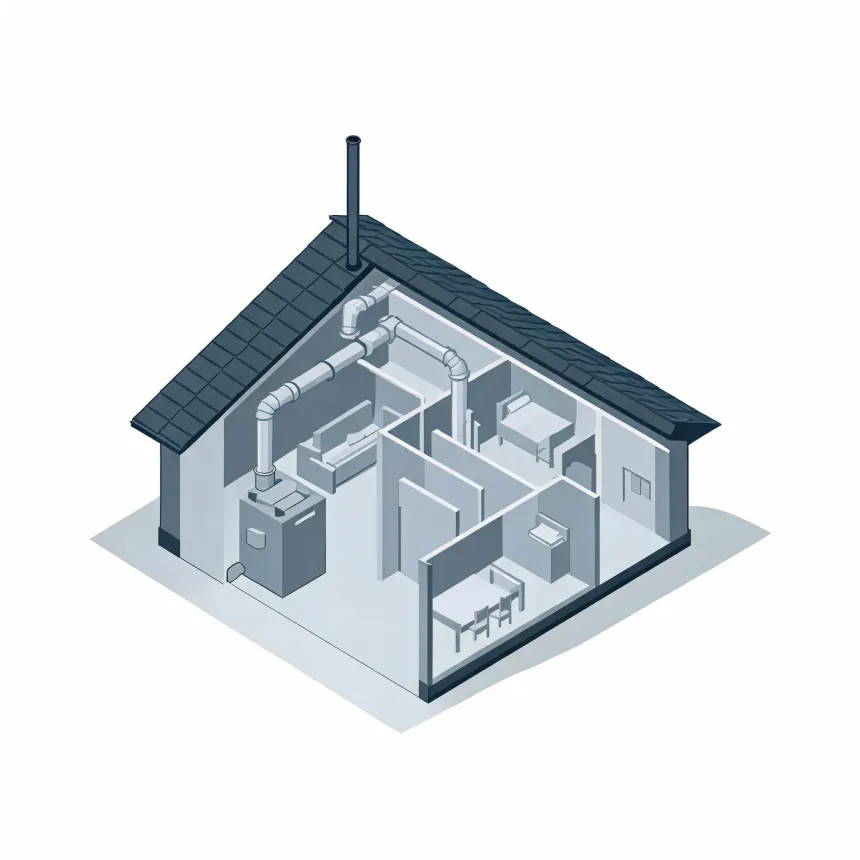
Isometric cutaway illustration of a small single-story house showing interior rooms with furniture, a furnace unit with attached ductwork running to a roof flue, and a dark shingled roof.
Your furnace works hardest from November through March.

NOAA nClimDiv, 1991–2020 normals

Furnaces in Wayne County start working in October and run through May.

A weak part usually waits until that first cold stretch to fail.

Half these homes were built by 1956, and a furnace doesn't last that long

Half the homes here were built by 1956
Climate zone 5A
Heat runs October through May
Eight Months of Work a YearHeat runs here from October through May, longer than almost anywhere else.

If your furnace came with the house, ask the contractor for its age before any repair gets scheduled. A technician can read it off the data plate in a couple of minutes. If it's getting old and the repair is a big one, it's worth asking what a few more years out of it will probably cost versus putting that money toward a new unit instead. That's a harder question to answer once the old one is already torn apart on the basement floor.

After a storm, get the unit checked before a small crack becomes a bigger repair

If the outdoor unit has taken hail or wind damage in a recent storm, don't wait for it to show up as a bigger problem. Have it checked even if the furnace still runs and the house still holds its temperature.

Find a contractor
A gray residential gas furnace installed in an unfinished basement, connected to sheet-metal ductwork and PVC pipes.

Long Runtimes Mean Diagnose It Right the First Time

Eight months of running time wears parts down faster than a short season would. When a repair tech comes out, the job isn't just fixing what quit. It's checking what else is close behind it, since a furnace running this many months a year doesn't give worn parts much of a break to reveal themselves on their own schedule. Get the actual cause written down, not just the symptom that got fixed.

Most failures start with the igniter or the flame sensor

The igniter has to heat up and light the burners every single cycle, and that repeated heating and cooling is what eventually cracks it or burns it out. The flame sensor sits right in the flame and relies on a clean metal surface to prove the burners are lit. A coating of residue on it will make the furnace shut down seconds after startup, as if nothing lit at all. Neither part gives much warning before it quits.

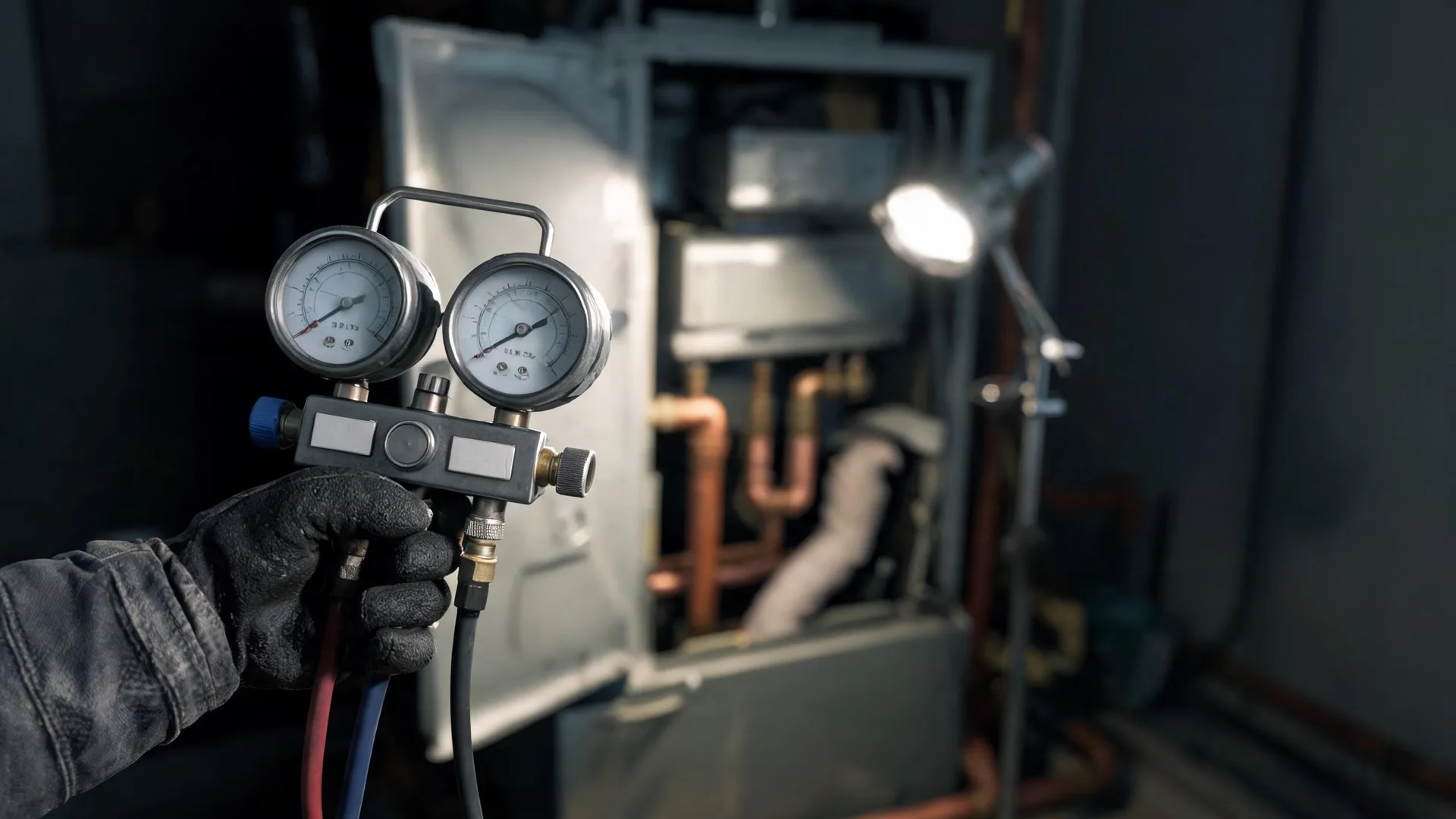
A full inspection catches what a quick fix misses

Replacing the part that failed gets the furnace running again, but it doesn't say why that part failed. A cracked igniter might be normal wear, or it might point to a draft problem or a blower that's not moving enough air across it. A technician checking the whole system, the flame sensor, the blower wheel, the pressure switch, the venting, can catch a second problem before it strands the house without heat on its own schedule.

A gray forced-air furnace with ductwork stands in an unfinished concrete basement surrounded by storage items and clutter.

A new furnace would cut about $140 a year off heating for a typical Wayne County home.

  • A new high-efficiency furnace$550 a year
  • An older furnace$690 a year

Estimates for a typical Wayne County home, compared with an older unit built to the previous federal minimum, from EIA household energy data, Michigan fuel prices and NOAA climate normals. Your home will differ.

Repair makes sense when one part has failed and the heat exchanger is sound.

Replacement makes sense when the heat exchanger is cracked or the furnace keeps needing parts.

A repair decision usually comes down to what broke and what it sits next to. A cracked igniter or a failed flame sensor is a straightforward swap, and on its own it doesn't say much about the rest of the furnace. A cracked heat exchanger is a different kind of problem, since that part isn't meant to be replaced on its own and finding a crack there usually means the whole unit is done. Between those two ends, the question is how many other parts are showing their age at the same time. A furnace that's needed a few unrelated repairs in close succession is telling you something that one more part swap won't fix. Age matters too, but mainly because older furnaces run harder to produce the same heat, so the parts around the failed one have usually been under more strain for longer.