Branch County sees real storms
Branch County recorded 69 severe weather events between 2015 and 2024, including 47 damaging wind events, 4 hail events and 3 tornadoes. That's a lot of chances for an outdoor unit to take a hit.
Takes about a minute. No obligation.
Branch County recorded 69 severe weather events between 2015 and 2024, including 47 damaging wind events, 4 hail events and 3 tornadoes. That's a lot of chances for an outdoor unit to take a hit.
More than a third of Michigan households went at least 24 hours without power in 2024. A furnace with electronic ignition or a blower motor won't run without it, no matter how much gas is in the line.

NOAA nClimDiv, 1991–2020 normals
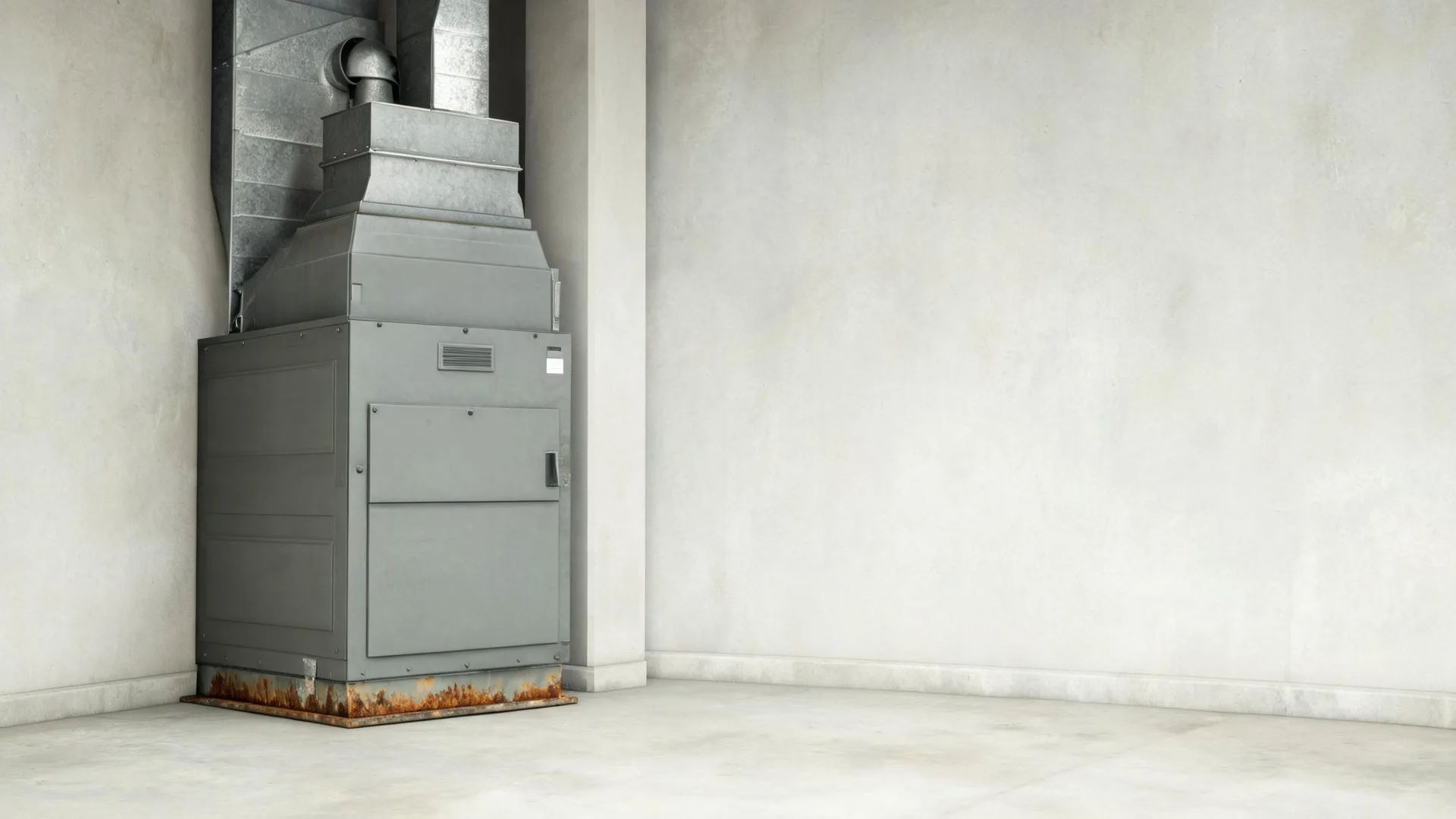
Half the furnaces in Branch County sit in houses built in 1969 or earlier.
A furnace that old may be on its last stretch, so a repair call is also a good time to ask how much life it has left.

Eight months of heat is a long stretch for one machine to carry. From October through May, the furnace is the thing standing between your family and a Branch County winter, and it doesn't get much of a break to recover between cycles. That kind of run time wears on an igniter, a blower motor, a flame sensor, sooner than it would somewhere the furnace only ran half the year. If yours is acting up now, the long season is probably part of why. A tech who checks it properly can tell you if it's a quick fix or a sign of more wear underneath.
Storms in this county can leave more than a mess outside. If your furnace acted up after high wind or hail came through, that's worth mentioning to the tech, even if the unit seems to run fine now. And if the power's been out, give the furnace a few minutes once it's back. Most come on by themselves, but if yours doesn't, that's worth a call too.
Find a contractor
Eight months of heat means more cycles than most furnaces ever have to run, and more chances for a worn part to finally quit. When you call someone out, tell them what the furnace is doing and when it started acting up. That's what lets a tech find the actual part at fault instead of guessing, and it's what makes the fix hold.
Make sure the thermostat is set to heat and the setting is above room temperature. Check that the furnace switch, the one that looks like a light switch near the unit, is flipped on. Look at the breaker for the furnace in the electrical panel. If you have a gas furnace, check that the gas valve is open and that any pilot light is lit. None of this requires tools, and it rules out the simplest causes before anyone drives out.
Check the air filter and see how dirty it is, since a clogged filter can choke airflow and cause all kinds of symptoms. Listen for what the furnace actually does: does it try to start and shut off, run but blow cold air, or not respond at all. Note any smell, any sound it hasn't made before, and when it started. That detail is what lets a tech go straight to the failed part instead of testing every component in the system.
Estimates for a typical Branch County home, compared with an older unit built to the previous federal minimum, from EIA household energy data, Michigan fuel prices and NOAA climate normals. Your home will differ.
Repair makes sense when one part has failed and the heat exchanger is sound.
Replacement makes sense when the heat exchanger is cracked or the furnace keeps needing parts.
A cracked heat exchanger ends the conversation. That's a safety issue, not something to patch, and it means the furnace gets replaced. Most failures aren't that. An igniter, a flame sensor, a blower motor, those are normal wear parts, and replacing one doesn't say much by itself. What matters more is pattern. One part failing once is a repair. A second or third breakdown in the same year, on a furnace that's already old, is the furnace telling you something. A tech who's inside the cabinet can tell you whether the rest of it looks like it's aging in step with the part that just failed.