

A two-story black-painted house with a covered front porch and gray shingled roof, framed by large deciduous trees and fronted by a mowed lawn and trimmed hedge.

Furnace Repair in Charlotte, MI

Tell us about the job

Takes about a minute. No obligation.

RepairFurnace or heatingEaton County, MI
Step 1 of 2

What ZIP code is the job in?

Eaton County saw 30 severe weather events between 2015 and 2024, counting damaging wind, hail and winter storms. Wind hit 11 times. Hail hit 8 times. Winter storms, the heavy snow, ice and blizzards kind, hit 11 times. A furnace itself sits indoors, but what feeds it doesn't. Power is what lights the igniter and runs the blower, and across Michigan over a third of households lost power for 24 hours or more in 2024. A furnace that can't get power doesn't run, no matter how sound it is otherwise. Storm damage to the home, a downed line, a surge when power comes back, any of that can leave a furnace tripped out or damaged even if nothing looks wrong on the outside.

8 months
October through May, your furnace is on duty
19°F
the average winter night it heats against
63%
of homes here heat with gas, so most furnaces here burn gas
11 winter storms
in ten years, the nights a failure hurts most
Isometric cutaway illustration of a house showing interior rooms with furniture, a furnace unit with a tall flue pipe outside, and ductwork running through the attic.
Your furnace works hardest from November through March.

NOAA nClimDiv, 1991–2020 normals

Furnaces here start working in October and keep going through May.

A weak part can hold on through a mild September and give out the first hard night it has to work for real.

Eight months of heat a year wears a furnace down early

Heat runs October through May
Winter nights average 19°F
Climate zone 5A

Eight months of heat a year adds up to a lot of cycles on the igniter, the blower motor, the flame sensor, every part that switches on and off each time the thermostat calls. That kind of use catches up with a furnace sooner here than in places where the system gets a few months off. When something starts acting up, a short cycle, a weak flame, a blower that runs rough, it's worth having someone look at the actual part that's failing rather than guessing. A repair that addresses what's really worn holds up through the rest of the season. One that papers over the symptom tends to come back on the next cold night.

After a storm, get the furnace checked even if it still runs

If a storm came through and the outdoor power equipment took a hit, a tripped breaker or a surge can knock a furnace out even when the furnace itself is fine. Worth having it checked rather than waiting to find out on a cold night.

Find a contractor
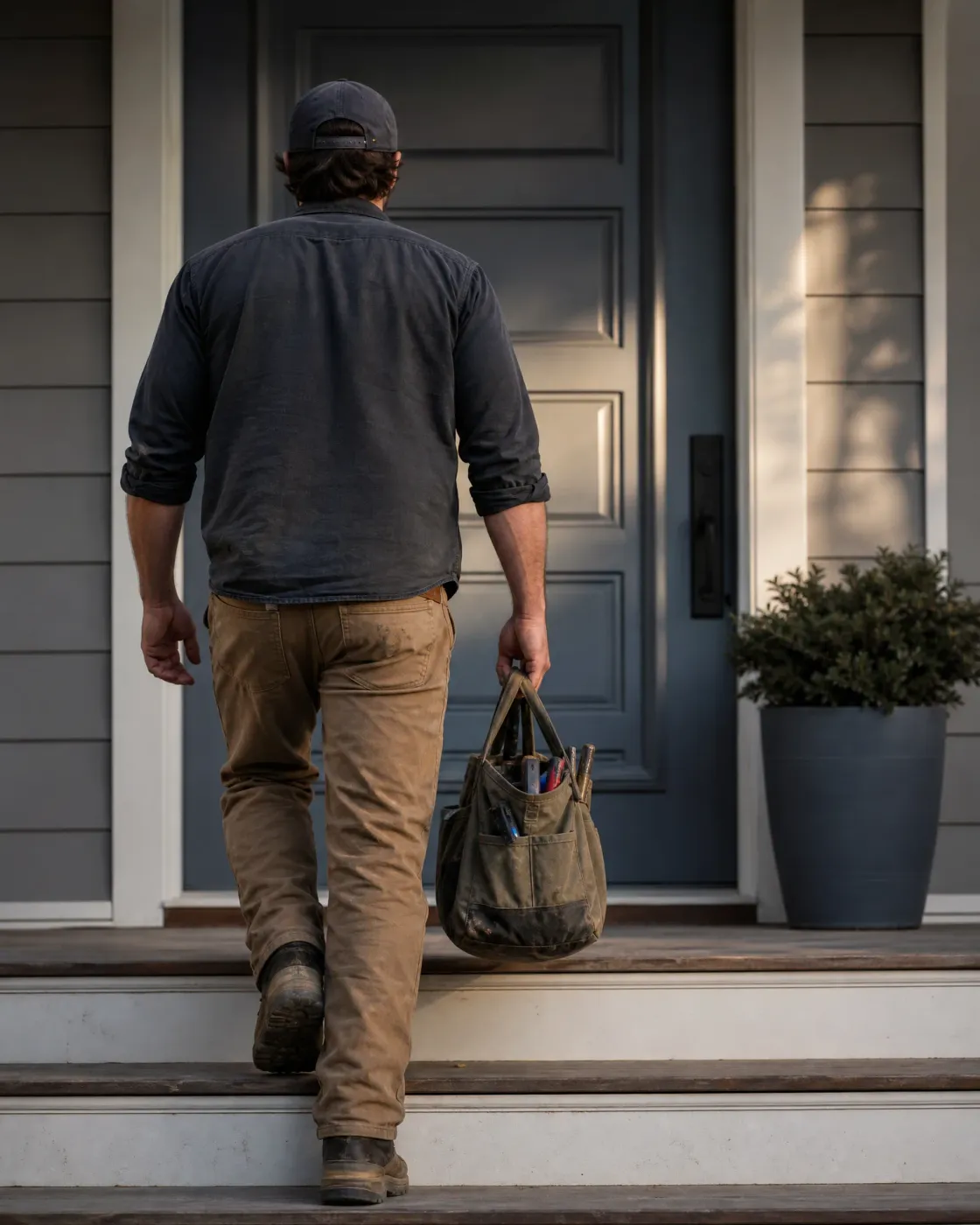
A man in a cap, dark shirt and tan work pants walks up porch steps toward a dark blue paneled front door, carrying a canvas tool bag, with a potted shrub beside the entry.
A gas furnace with attached ductwork, gas piping, and condensate lines installed in a concrete-block basement.

What to check before you call

Before calling anyone, a few things are safe to check yourself. Start at the thermostat. Make sure it's set to heat and the set point is above room temperature, and if it runs on batteries, swap them. At the furnace itself, check that the switch on or near the unit, it looks like a light switch, is flipped on. Some furnaces sit behind a door panel that has to be seated right or a safety switch keeps the whole thing from firing. Check the breaker for the furnace in the electrical panel. If it's tripped, reset it once. If it trips again, stop and leave it alone. Look at the air filter. A filter clogged with dust chokes off airflow, and a lot of furnaces will shut themselves down rather than overheat the blower or crack the heat exchanger. If the furnace vents through a pipe to the outside wall, check that the pipe isn't blocked by anything. And if the furnace has a standing pilot light, check whether it's lit, the instructions for relighting it are usually printed right on the unit. None of this means opening the cabinet or working on the gas line or the electrical connections. That part is for someone who does this for a living.

A small problem can turn into a bigger one if it keeps running

A furnace that's cracking, arcing or overheating doesn't stop doing that on its own. A cracked heat exchanger gets worse with every cycle of heating up and cooling down. A flame sensor coated with residue reads a weaker signal each time until the furnace stops firing for good. A blower motor running on a bad bearing keeps grinding until it seizes. Letting the furnace keep running on a fault like this turns a part replacement into something bigger, and in the case of a cracked exchanger or a gas smell, it's not safe to run at all.

Shutting it off is the right call more often than people think

If a furnace is short cycling, tripping its limit switch, or smells like gas, turning it off and calling for a repair protects the parts that are still good. A furnace that keeps restarting after it shuts itself down is doing that because a safety switch is catching something wrong, not because it's being stubborn. Overriding that or resetting it over and over pushes the failure onto a part that would have been fine otherwise, usually the heat exchanger or the control board.

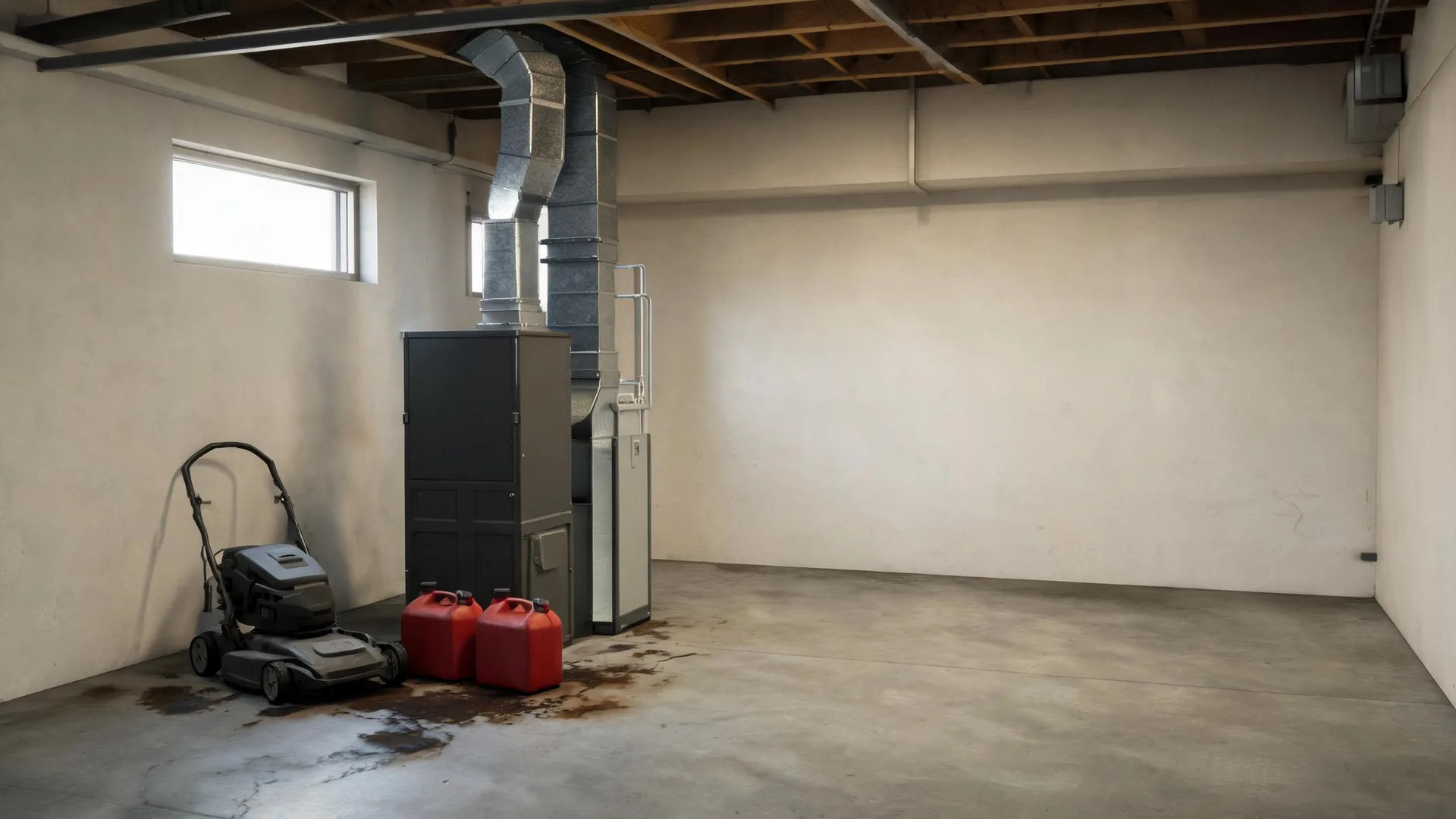
A bare concrete basement containing a gray gas furnace with metal ductwork and a vertical flue pipe, lit by a single hanging bulb.

A new furnace would cut about $140 a year off heating for a typical Eaton County home.

  • A new high-efficiency furnace$600 a year
  • An older furnace$740 a year

Estimates for a typical Eaton County home, compared with an older unit built to the previous federal minimum, from EIA household energy data, Michigan fuel prices and NOAA climate normals. Your home will differ.

Repair makes sense when one part has failed and the heat exchanger is sound.

Replacement makes sense when the heat exchanger is cracked or the furnace keeps needing parts.

A furnace is worth fixing when the failure is one part and the cabinet, the heat exchanger and the control board are sound. A new igniter, a new flame sensor, a new blower motor, any of those are routine repairs on a furnace that's otherwise in good shape. It starts looking different when the heat exchanger is cracked, since that's the part that isn't sold or swapped on its own in a lot of cases, or when the control board and a motor fail within the same year or two of each other. That pattern means the furnace is wearing out everywhere at once, not failing in one spot. A tech who's inside the cabinet can tell you which one you're looking at, because the signs are different up close than they are from the thermostat.