


An unfinished basement containing a metal furnace with ductwork, exposed wooden joists on the ceiling, cardboard boxes, a coiled cable, and a single hanging incandescent bulb.

Furnace Repair in Big Rapids, MI

Tell us about the job

Takes about a minute. No obligation.

RepairFurnace or heatingMecosta County, MI
Step 1 of 2

What ZIP code is the job in?

Furnaces in Mecosta County run nine months out of the year, from September through May. That is most of the calendar spent cycling on and off, heating a house through weather that does not let up. The igniter, the blower motor, the pressure switch, all of it logs more hours here than it would somewhere with a short winter. More hours means parts reach the end of their working life sooner. It also means a small issue, a flame sensor starting to read dirty or a motor bearing starting to wear, shows up as a real symptom faster than it would on a machine that only ran half the year. When something's off, there's usually a specific reason, and it is worth having someone find it rather than guess.

9 months
September through May, your furnace is on duty
16°F
the average winter night it heats against
11 winter storms
in ten years, the nights a failure hurts most
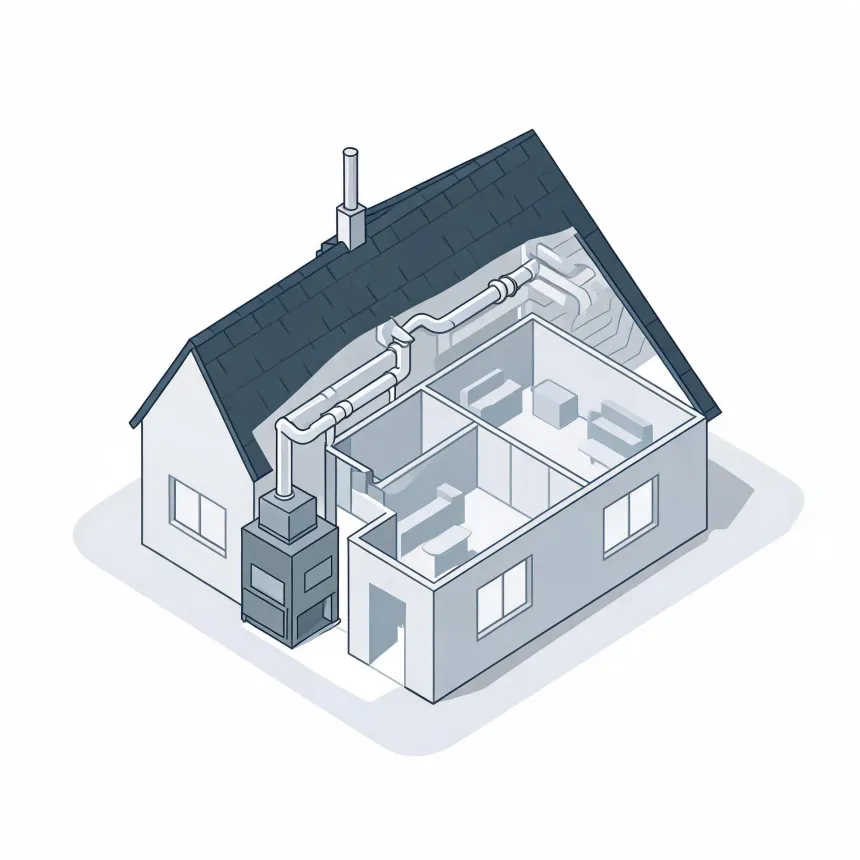
Isometric line illustration of a cutaway single-story house with a dark shingled roof, showing interior rooms and ductwork connected to a gray furnace unit with a flue pipe.
Your furnace works hardest from November through March.

NOAA nClimDiv, 1991–2020 normals

A furnace that short cycles is shutting off before it finishes a heating run.

That points to a flame sensor or limit switch cutting power too soon, not a thermostat problem.

Storms here do not skip the furnace

29 severe weather events from 2015 to 2024
34% of homes statewide lost power a day or more in 2024
13 damaging wind events from 2015 to 2024
September Starts ItFurnaces here come on in September and most break in that first cold week.

After a storm knocks the power out, a gas furnace will not always restart on its own. If the ignition control lost power mid cycle, it may need a reset before it will fire again. Between 2015 and 2024 this county saw 13 windstorms, 11 winter storms, 2 tornadoes and 3 hail events, and statewide, a third of households went at least a day without power in 2024 alone. If your furnace was short cycling or running rough before the lights went out, getting power back does not fix what was already wearing on it. Worth having it looked at while it is still running, not after it quits on the coldest night of the year.

Nine months of runtime wears a furnace down here

A furnace that runs September through May gets found out fast when a part starts to go. Get the cause pinned down now and the fix holds for the rest of the winter.

Find a contractor
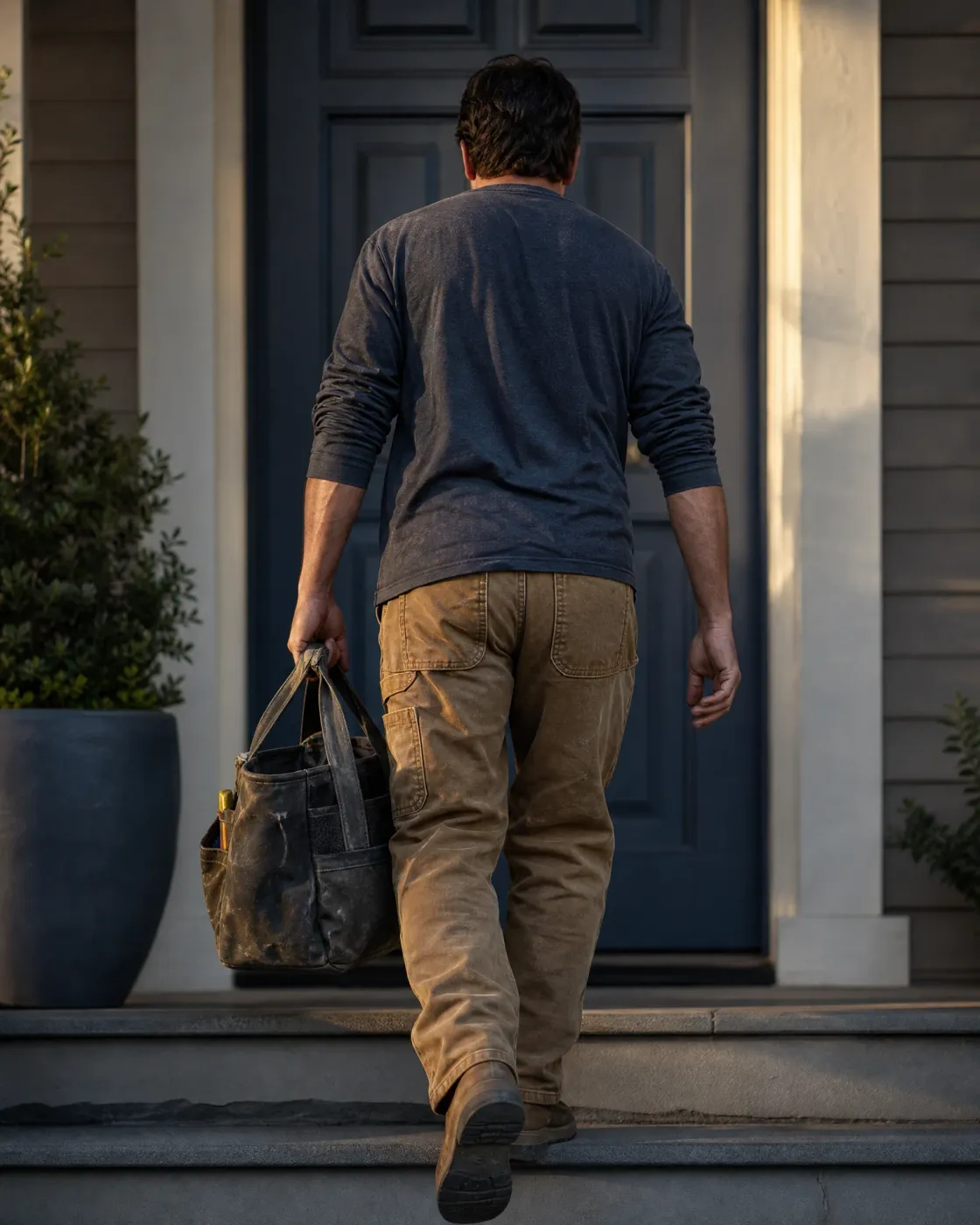
A man in a dark long-sleeve shirt and tan work pants, seen from behind, carries a worn canvas tool bag up concrete steps toward a dark blue front door.
A gas furnace with attached ductwork, gas piping, and condensate lines installed in a concrete-block basement.

Before You Call, Check These

Before anyone comes out, there are a few things worth checking. Look at the thermostat first. Make sure it is set to heat and set above room temperature, and if it runs on batteries, swap them. Next check the air filter. Pull it out and hold it up to a light. If you cannot see light through it, it is restricting airflow enough to cause real problems, from short cycling to a frozen coil to a furnace that overheats and shuts itself off. Check that every supply vent and return in the house is open and clear of furniture or rugs. Closing off too many rooms makes the blower work against pressure it was not built for. Go to the furnace itself and check the switch on the side, the one that looks like a light switch. It is easy to bump and easy to overlook. If the unit has a standing pilot, look for the small flame through the viewing window. If it is out, the pilot will need to be relit, and the instructions are usually printed right on the panel. Last, check the breaker. A furnace that will not start at all sometimes just needs a flipped breaker reset. If all of that checks out and the furnace still will not run, or it runs but trips off partway through a cycle, that points to something internal, a sensor or switch doing its job and shutting the system down before it causes damage. That part is not a homeowner fix.

Heat Exchangers Crack From Cycling

A heat exchanger expands when the burners fire and contracts when they shut off. Years of that cycle fatigue the metal until a seam or crack opens. A cracked exchanger is why a furnace gets condemned rather than repaired, since it can let exhaust mix into the air the blower pushes through the house.

Flame Sensors Fail Quietly First

A flame sensor coats with a thin layer of oxidation over time just from sitting in the burner flame. Once it coats enough, it stops reading the flame reliably and shuts the gas valve down a few seconds into the cycle. That failure shows up as short cycling long before any part actually breaks, which is why it is usually the first thing a tech checks on a furnace that will not stay running.

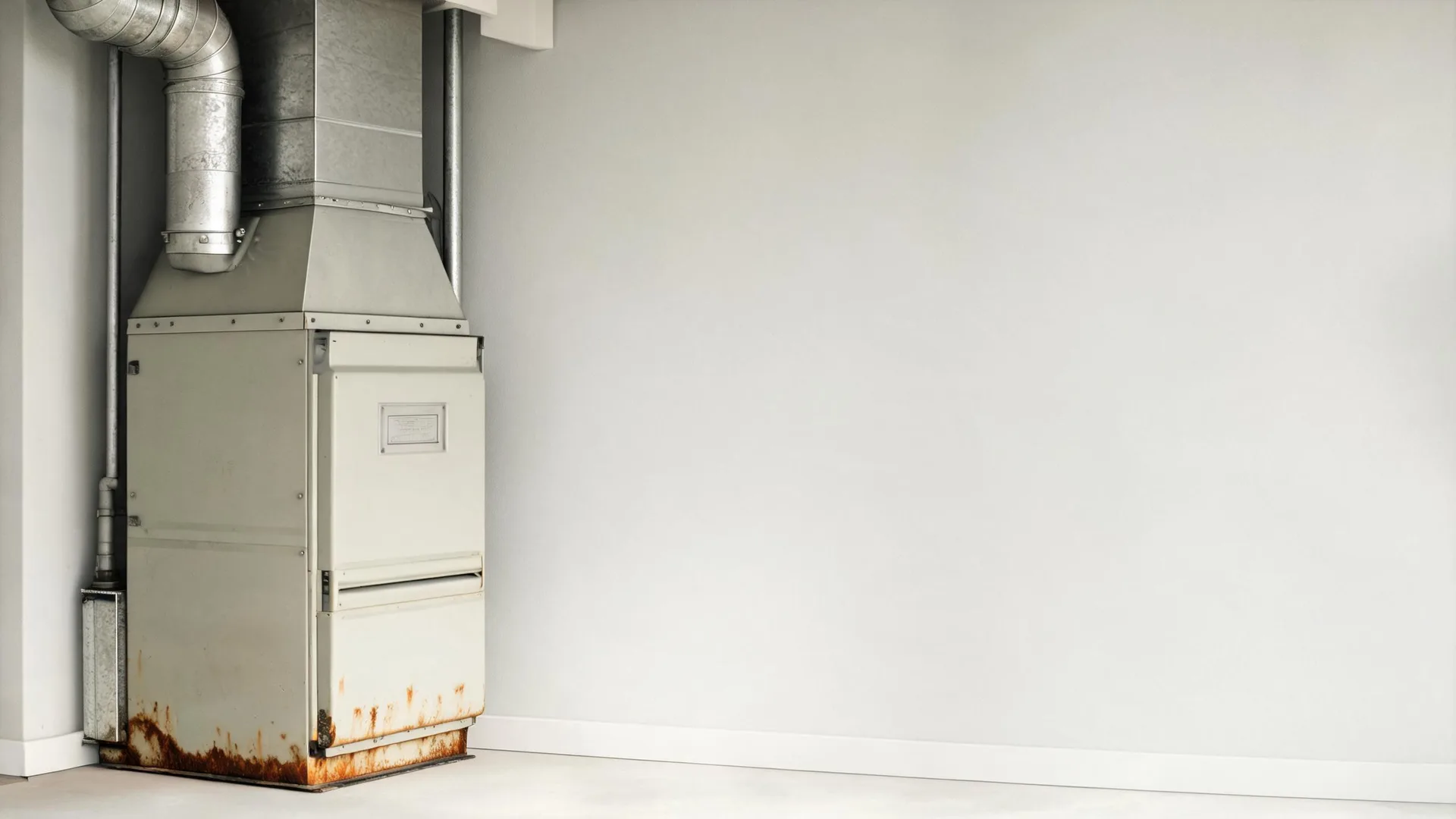
An unfinished basement featuring a forced-air furnace, exposed wooden ceiling joists, bare concrete walls, and miscellaneous items including cardboard boxes and coiled cables on the floor.

A new furnace would cut about $160 a year off heating for a typical Mecosta County home.

  • A new high-efficiency furnace$660 a year
  • An older furnace$820 a year

Estimates for a typical Mecosta County home, compared with an older unit built to the previous federal minimum, from EIA household energy data, Michigan fuel prices and NOAA climate normals. Your home will differ.

Repair makes sense when one part has failed and the heat exchanger is sound.

Replacement makes sense when the heat exchanger is cracked or the furnace keeps needing parts.

A diagnostic call starts with questions, not tools. When did it start, what does it sound like, does it happen on startup or partway through a cycle. That narrows down a lot before a panel ever comes off. From there a tech checks the things that cause most no-heat calls first: power to the unit, the thermostat call, the flame sensor reading, the pressure switch, the limit switch. Each of those gets tested with a meter, not guessed at. If the furnace fires, the tech watches a full cycle start to finish, because some faults only show up a few minutes in, once a part heats up or a switch is under load. Once the actual cause is found, that is the point to talk about what it takes to fix it and whether it is worth fixing on a furnace this age, before any work starts.