Weather here takes a toll
Berrien County logged 123 severe weather events between 2015 and 2024, including 81 damaging wind events and 29 hail events. A furnace tune-up here has to account for what the season outside does to the system.
Takes about a minute. No obligation.
Berrien County logged 123 severe weather events between 2015 and 2024, including 81 damaging wind events and 29 hail events. A furnace tune-up here has to account for what the season outside does to the system.
More than a third of Michigan households went at least a day without power in 2024. When the power drops in a Niles winter, a furnace that was already running clean matters more than one that wasn't.
Your furnace runs about eight months a year here, October through May.
That long a season wears parts down early, so a tune-up now catches what's already worn before the cold sets in.




Heat comes on in October here and runs until May, about eight months straight. September is the month to get a furnace looked at, before it has to carry the house through that stretch. Wait until October and the furnace is already running when anything gets checked. A tune-up in September catches a weak igniter or a cracked heat exchanger before it has to perform, not after. By the time overnight lows settle in for December, January and February, you want that work already done.
A tune-up now is the time to get the furnace itself looked at, not just the outdoor equipment. Have it checked for a weak igniter or cracked heat exchanger before the cold settles in, so if the power does go out this winter, you're not dealing with a furnace problem on top of it.
Find a contractor
A tune-up has a set order because each step depends on the one before it. Static pressure gets tested first, since too much resistance in the ducts strains everything downstream of it. The burner assembly comes apart for cleaning because rust and dust on the burner change how the flame forms. The flame sensor gets cleaned or swapped, since a coated sensor reads the flame wrong and shuts the furnace down even when it's running fine. Amp draw on the blower motor gets checked against what the motor is rated for, because a motor pulling too many amps is already wearing out its bearings. Gas pressure gets measured at the manifold, not guessed at, since too high or too low both throw off the burn. None of this shows up from outside the cabinet. It only gets found by someone opening it up and testing each part on purpose.
A furnace that's about to need attention usually says so before it quits. The flame should burn steady and blue. If it's flickering, yellow, or the burner rattles or bangs when it kicks on, something in the combustion process is off. A furnace that's cycling more often than it used to, running short bursts instead of steady stretches, is working harder to hold the same temperature.
A cracked heat exchanger doesn't always make noise or look wrong. Sometimes the only clue is a headache that goes away when you leave the house, or a carbon monoxide detector that chirps for no obvious reason. Soot around the cabinet or a strange smell when the system runs are worth paying attention to as well. These aren't things to wait out. A check before any of this shows up is what catches a problem while it's still just a worn part.
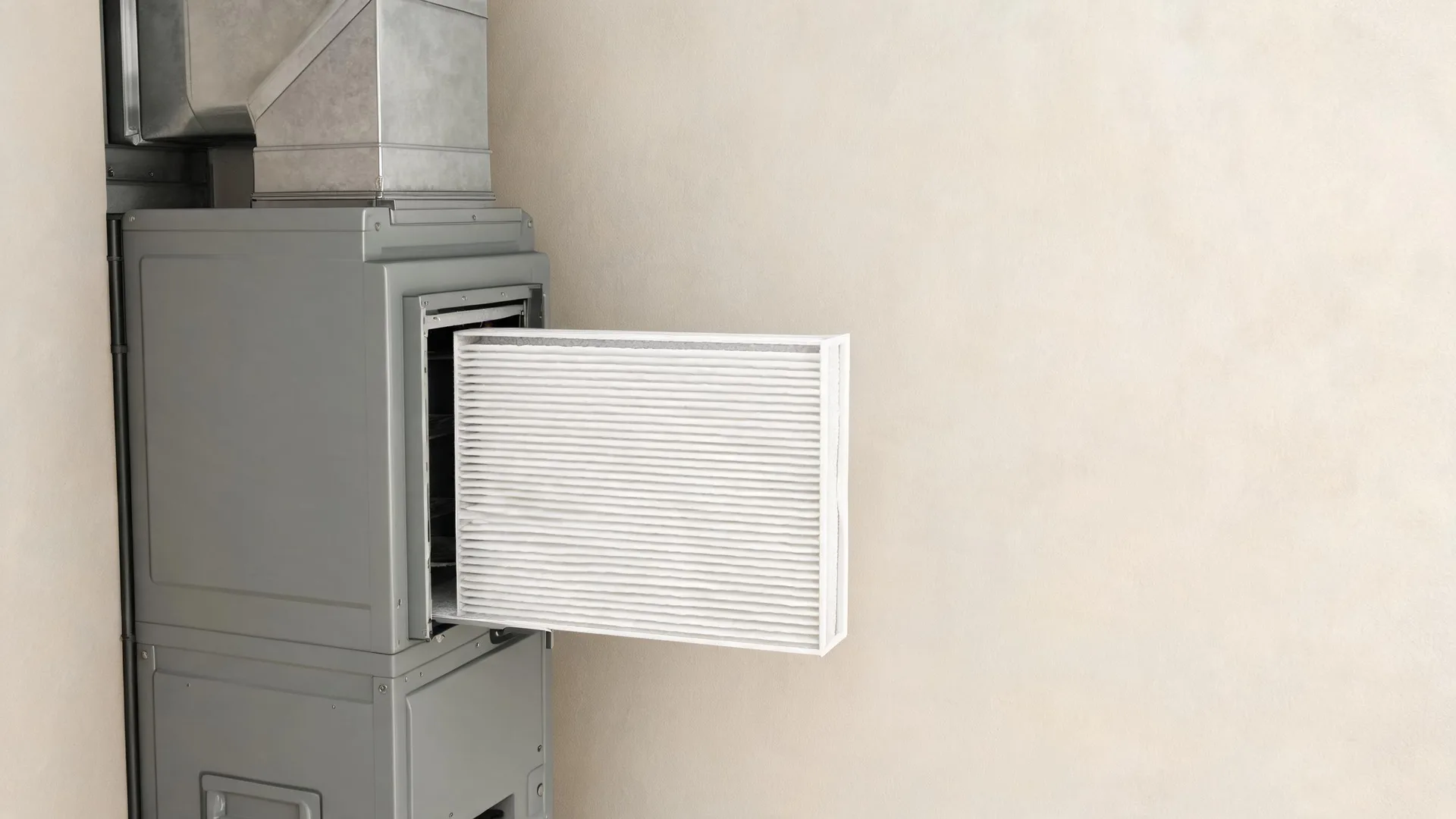
The filter is the first line of defense, and a dirty one chokes the whole system. Airflow drops, the heat exchanger runs hotter than it should, and the furnace has to work longer to move the same warm air through the house. The blower motor feels that strain too, and over time it shortens the life of parts that are expensive to replace. The coil, if the furnace shares a cabinet with the air conditioning, needs to stay clear as well, since a coil caked with dust blocks airflow the same way a clogged filter does. The condensate drain matters for a different reason: a high-efficiency furnace produces moisture as it runs, and if that drain line clogs, the water backs up and can shut the furnace down or damage the control board. None of these parts are complicated, but neglect in any one of them shows up as higher strain somewhere else in the system.
A furnace that runs eight months straight doesn't get much of a break between seasons. Whatever wore down last winter carries right into this one if nobody looks at it. A tune-up means someone opens the cabinet, checks the burner, tests the igniter, and clears out what's built up since spring. That's different from a new filter, which only handles what passes through the duct. Catching a weak part now means it gets fixed on a technician's schedule, not in the middle of a cold snap.