A illuminated two-story red brick house on a quiet residential street at dusk, flanked by mature trees under a deep blue evening sky.

Furnace Maintenance in Jackson, MI

Tell us about the job

Takes about a minute. No obligation.

Tune-up, service, or cleaningFurnace or heatingJackson County, MI
Step 1 of 2

What ZIP code is the job in?

Weather here takes a toll

Jackson County recorded 48 severe weather events between 2015 and 2024, including 31 cases of damaging wind, 3 tornadoes and 13 winter storms with heavy snow and ice. That is a lot of wind and snow moving through, year after year.
What it means for a furnace

Wind-blown debris and ice find their way into vents and intake pipes. Heavy snow and storm damage also knock out power, and in 2024 more than a third of Michigan households went at least a day without it. A furnace due for a check should get one before the snow starts.

Half the homes in Jackson County were built in 1967 or earlier.

A furnace that old has likely had more than one owner and more than one repair, and a yearly check is how you find out what shape it's really in.

Eight months of heat a year means worn parts show up fast

Heat runs October through May
Winter nights average 19°F
Climate zone 5A
Most furnaces in Jackson County burn gasUtility gas heats 71.4% of occupied homes here. That means a burner, a vent and a set of safety controls to check, not just a filter to swap.

Heat comes on in October here and runs until May. That's eight months of the furnace carrying the whole house, starting the first cold snap. A check in September catches a worn igniter or a weak flame sensor while there's still time to order the part and get it swapped before you need the heat every day. Wait until October and you're troubleshooting a furnace that's already working, maybe on the coldest night so far.

Get the furnace checked before the next storm, not after

A furnace that sits outside or pulls combustion air through an outside vent can pick up debris after wind and snow move through. A check before winter gets eyes on the vent and intake pipe while there's still time to clear them or call in a repair. If the power goes out this winter, you'll also want to know the furnace starts back up on its own.

Find a contractor
A man in a dark long-sleeve shirt, tan work pants and a cap climbs porch steps toward a gray door, carrying a canvas tool bag in his right hand, with a potted shrub to the right.
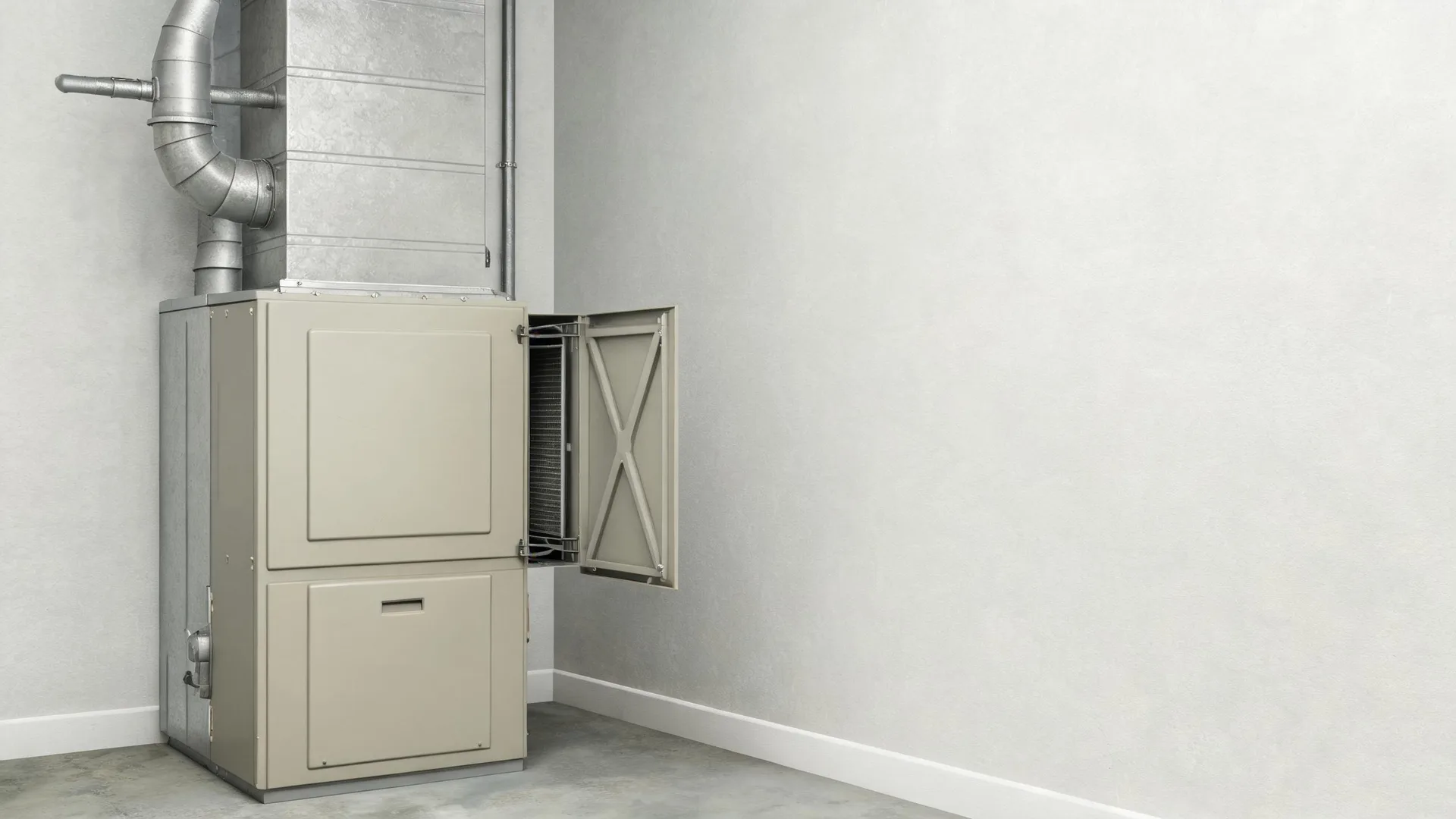
A gray gas furnace with attached ductwork and piping installed in an unfinished concrete basement.

Eight months of work, every year it runs

Eight months of run time wears a furnace down before the next one starts. A check before heat season gets eyes on the igniter and flame sensor while there's still time to order a part if one is close to failing. A tech looking at the furnace now sees it idle, not working flat out on the coldest night of the year.

Dirt and dust build up where you can't see them

A furnace pulls return air across a flame sensor and through a blower wheel. Dust settles on both. A dirty flame sensor reads the flame wrong and shuts the burner down even though nothing is actually wrong. A dirty blower wheel moves less air, so the heat exchanger runs hotter than it should and parts around it wear sooner than they would otherwise.

Small problems turn into no-heat calls

An igniter that's starting to go still lights the furnace most of the time, so nothing seems wrong until the morning it doesn't. A pressure switch or a limit switch left unchecked can fail the same way, quietly, until the furnace won't run at all. A yearly check catches a part that's close to failing while it's still just a weak reading, not a cold house.

Between visits, the filter is the one thing worth checking yourself. A dirty filter chokes airflow across the heat exchanger, and the furnace runs hotter and longer to put out the same heat. Look at it monthly and hold it up to the light. If you can't see light through it, swap it. Keep the area around the furnace clear too, nothing stacked against the cabinet or blocking the return grille. Past that, leave the cabinet closed. The burner, the flame sensor and the pressure switch aren't something to test or clean on your own, and a cover left off or put back wrong is its own problem.

A furnace that has already had one owner before you may have had its vent run modified, its wiring spliced, or a part swapped in in a hurry. None of that shows up by looking at the thermostat. A yearly check means a tech traces the vent, looks at the wiring, and tells you if something was patched together that shouldn't have been. That's worth knowing while the weather is still mild, not on the first night you need the heat. If your furnace came with the house, it's worth asking the tech how old it actually is and what's been done to it before.