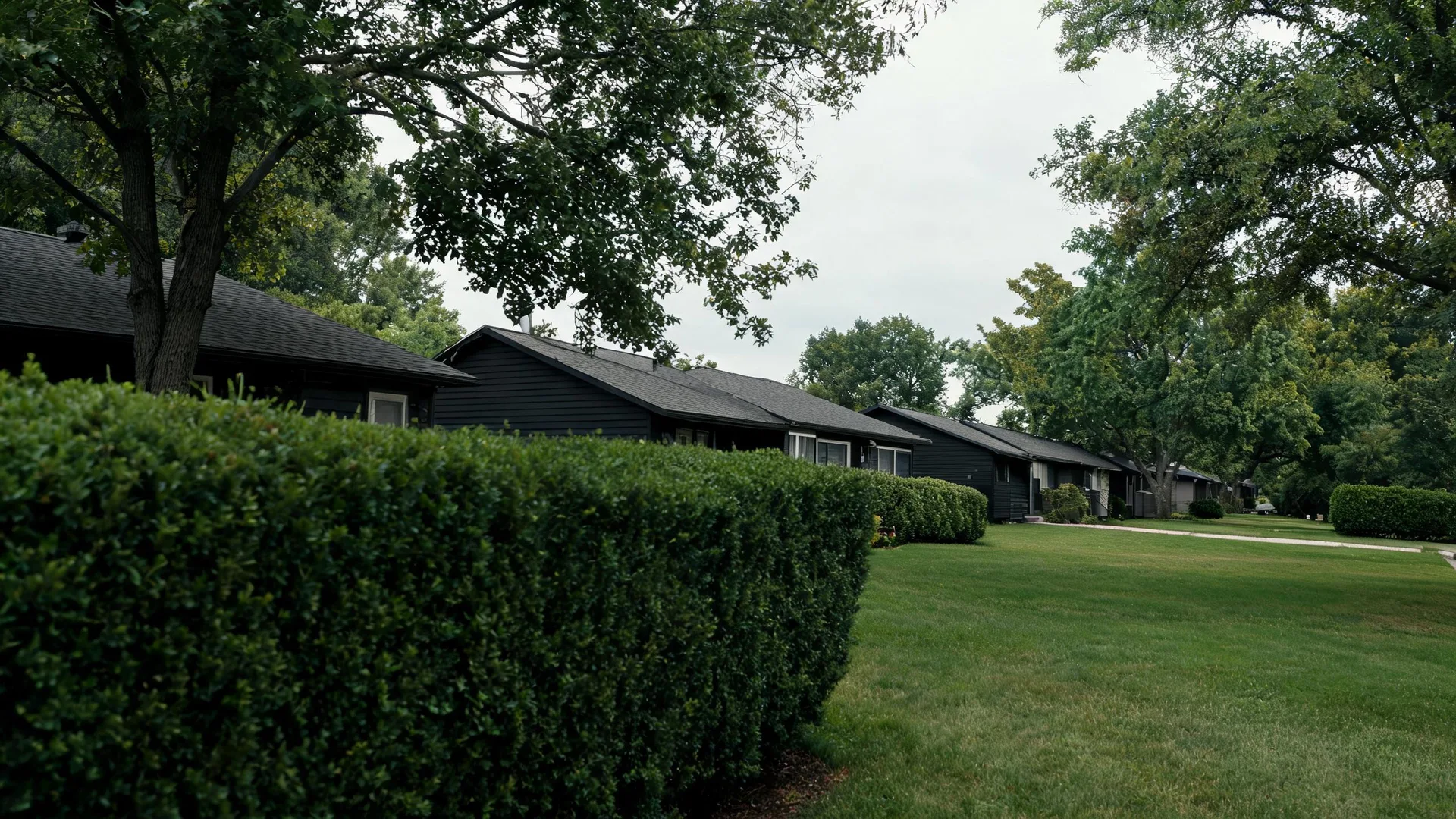
A row of dark-sided single-story houses behind a long trimmed hedge, with mown lawn, a paved path and large leafy trees under an overcast sky.

Furnace Maintenance in Ionia, MI

Tell us about the job

Takes about a minute. No obligation.

Tune-up, service, or cleaningFurnace or heatingIonia County, MI
Step 1 of 2

What ZIP code is the job in?

Ionia County sees real storm damage

Ionia County recorded 50 severe weather events between 2015 and 2024, including 26 damaging wind events, 6 hail events, 5 tornadoes and 13 winter storms. That record covers wind, hail, tornadoes and the kind of snow and ice that shuts roads down.

Outages hit the furnace too

A furnace with a gas flame still needs power to run the blower and controls. In 2024, 34% of Michigan households lost power for 24 hours or more. A furnace that cycles off and back on during a stretch of hard weather needs its ignition and controls working right when the power returns.

Your furnace runs about eight months out of the year here, October through May.

A system working that long a stretch has less downtime to hide a weak part. Get it looked at before the cold sets in.

October is when it starts working. Get it checked in September.

Heat runs October through May
Climate zone 5A
Winter nights average 18°F

Gas heats most homes in Ionia County, 55.7 percent, and LP or bottled gas heats another 22.1 percent. That's the large majority of furnaces around Ionia running on a burner and a flue instead of just a heating element. A tune-up on one of these checks the burner, the venting and the safety controls that shut the gas off if something's wrong, not just the filter. Electric furnaces, at 9 percent here, skip most of that because there's no flame and nothing to vent. If yours runs on gas or LP, the inspection needs to cover the parts that burn fuel safely, not just the ones that move air.

Have the furnace checked before the next outage, not during it

Wind, hail and winter storms already knock out power here for a day or more. A tune-up now gets a contractor eyes on the ignition and controls while the power's on, so the furnace comes back right when it's needed most.

Find a contractor
A man in a dark long-sleeved shirt and olive work pants carries a canvas tool bag up steps toward a blue-gray front door of a shingled house, with a potted shrub beside the entry.
A gray residential gas furnace installed in an unfinished basement, connected to sheet-metal ductwork and PVC pipes.

An old house doesn't tell you the furnace's age, but it's worth checking

Half the homes in Ionia County were built in 1972 or earlier. A furnace that old has likely been swapped out at least once, but the ductwork and gas line feeding it usually haven't. A yearly check gives a contractor a chance to look at the connections and the venting before a cold snap finds the weak one.

Dirt builds up where you can't see it

The burner and the flame sensor sit inside the cabinet, out of sight all year. Dust and soot collect on the sensor until it stops reading the flame right, and the furnace shuts itself down as a safety response. A dirty burner can also burn uneven, which wastes gas and leaves soot behind instead of heat.

Small problems don't stay small

A cracked heat exchanger, a failing igniter, a blower motor losing its bearings: none of these start as emergencies. They start as a faint smell, a longer cycle, a rattle that comes and goes. Left alone, a part that was worn gets pushed until it fails outright, usually on the night you need the heat most.

A furnace filter sits right in the path of the air going into the system. Once it loads up with dust, the blower has to pull harder to get air through it, and some furnaces will run longer cycles just to move enough heat. A clogged filter also lets dust past it over time, and that dust settles on the burner and the flame sensor inside the cabinet. Furnaces with an added coil, the kind paired with central air, have a drain that carries off the condensation that forms during the cooling months. If that drain line clogs, water backs up into a pan that can trip a safety float switch and shut the whole system down. None of this is complicated work, but it only gets caught by someone who opens the cabinet and looks.

Eight months of heat calling on the same igniter and the same blower motor wears on them faster than a mild climate ever would. A contractor doing a tune-up checks the flame sensor for the soot that builds up over a long run, tests the igniter's output, and listens to the blower for bearing wear before it turns into a bad sound in the middle of the night. None of that takes long when the furnace is sitting there working fine. It takes a lot longer, and costs a lot more, once it's found during a breakdown in the cold months.