An unfinished basement interior featuring a large metal furnace unit, exposed ceiling joists, concrete walls, and scattered boxes and cables on the floor.

Furnace Maintenance in Detroit, MI

Tell us about the job

Takes about a minute. No obligation.

Tune-up, service, or cleaningFurnace or heatingWayne County, MI
Step 1 of 2

What ZIP code is the job in?

This county gets hit

Wayne County logged 189 severe weather events between 2015 and 2024. That includes 142 damaging wind events, 23 hail events, 9 tornadoes and 14 winter storms with heavy snow or ice. A third of Michigan households lost power for a day or more in 2024.
Your furnace sits through it

Wind drives debris into an outdoor unit, and hail dents what it hits. Ice and heavy snow build up around equipment that has to keep running. When the power goes out for a day, a gas furnace with electric ignition won't fire until it's back, no matter how cold the house gets.

Furnaces in Wayne County start running in October.

Book the tune-up in September, before the first cold night puts it to work.

Most of this county heats with gas, so a furnace tune-up means more than swapping a filter

83.6% of homes heat with gas
Heat runs October through May
Winter nights average 21°F

Furnaces in Wayne County run from October through May. That's eight months of the year, not a handful of cold snaps. A part that wears down does its wearing over all that runtime, and it tends to show the damage once the furnace is working hardest to keep up. Catching a worn igniter or a weak part before October means finding it in good light, on your own schedule, instead of on a cold morning when the house needs heat and won't get it right away.

Get the furnace checked before a storm takes the power with it

A tune-up gets a technician eyes on the furnace itself, not just the cabinet a storm might dent. Have the igniter and the rest checked now, so a worn part gets found before a winter storm knocks out power and the house is counting on this furnace to come back on its own.

Find a contractor
A gray residential gas furnace installed in an unfinished basement, surrounded by ductwork, a metal flue pipe, and a gas supply line.

An old house asks more of a yearly check

Half the homes in Wayne County were built in 1956 or earlier. A furnace that old has usually been replaced at least once, but the ductwork and gas line it connects to are often original to the house. A yearly check gives a technician a chance to see how the furnace ties into that older system, not just whether the burner lights. A connection loosened over decades, a duct that's shifted, these start small. Caught early, they're a quick fix. Missed, they're why a furnace quits on the coldest night instead of an afternoon when someone's there to see it coming.

Change the filter yourself

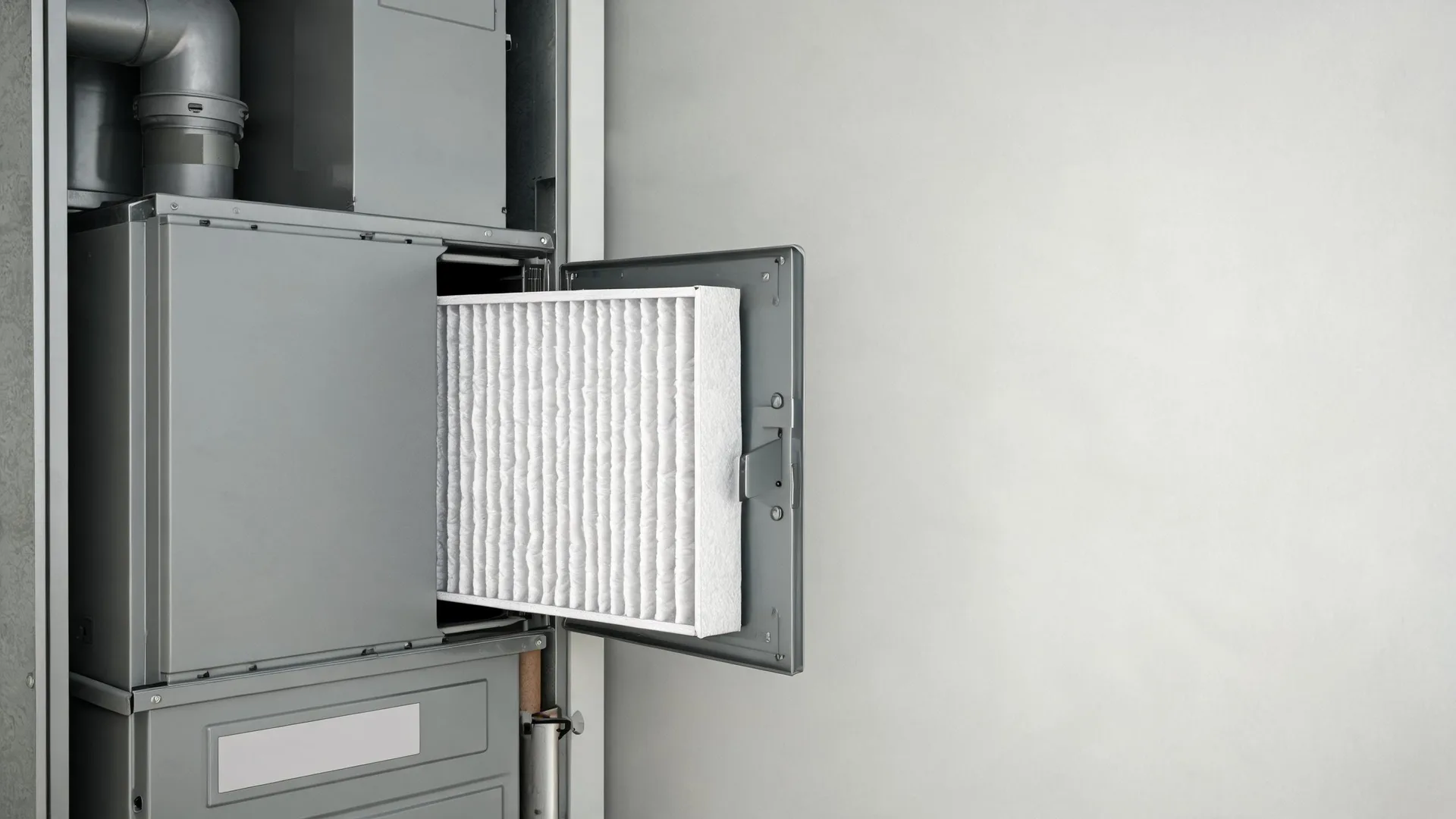
A dirty filter chokes airflow, and the furnace runs longer to push the same heat through the house. Check it by holding it up to a light. If light barely gets through, swap it. A clean filter also keeps dust off the blower wheel and away from the flame sensor, two parts a technician would otherwise have to clean by hand.

Leave the rest alone

Don't open the cabinet or touch the burners, the igniter or the flame sensor. These sit close to a live flame and a gas line, and they're set to exact specs that a wrong touch can throw off. Keep the area around the furnace clear so it can pull in air it needs to burn gas cleanly, and call a technician if you smell gas or hear a new noise. Everything past the filter is their job, not yours.

A furnace usually tells you something is off before it quits outright. The burner flame should burn blue and steady. If it's flickering, or turning yellow or orange, that's a sign of incomplete combustion, and it's worth a look before the furnace gets used hard. Listen for sounds that weren't there before: a bang when it starts up, a rattle from the cabinet, a squeal as the blower spins up. A furnace that short cycles, turning on and off in quick bursts instead of running a full heating cycle, is often struggling with airflow or a failing sensor. Rooms that heat unevenly, or a furnace that runs long stretches without the house warming up, both point to something worth a technician's attention rather than a wait and see.

Ask whether the technician can check the furnace's connection to the ductwork and gas line at every visit, not just the burner and igniter. Those two parts are often original to the house even when the furnace itself isn't, so they're carrying decades of wear a newer system wouldn't have. A yearly visit means the same technician, or at least the same checklist, looking at that connection every time, which is how a loose fitting or a shifted duct gets caught while it's still small. Mention it if you know roughly when the furnace was last replaced. That tells the technician how much of what they're looking at is new and how much has been there since the house was built.