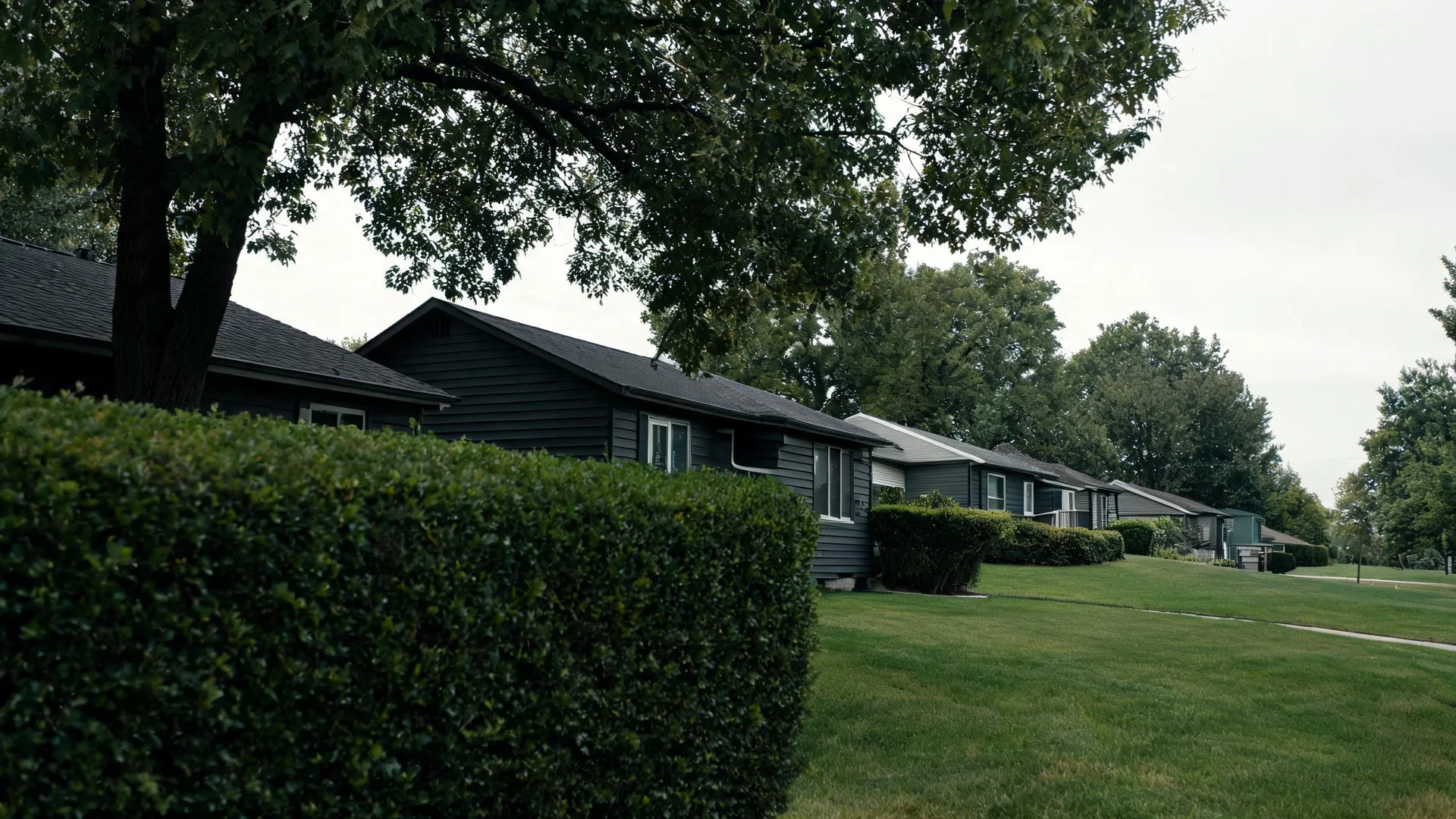
A row of dark-sided single-story houses behind a tall trimmed hedge and a large tree, with a mown lawn and a paved path under an overcast sky.

Furnace Maintenance in Charlotte, MI

Tell us about the job

Takes about a minute. No obligation.

Tune-up, service, or cleaningFurnace or heatingEaton County, MI
Step 1 of 2

What ZIP code is the job in?

Eaton County sees real storm damage

Eaton County recorded 30 severe weather events between 2015 and 2024, including 11 windstorms, 11 winter storms and 8 hail events. That's a steady run of weather rough enough to matter for anything sitting outside.
Power doesn't always hold through it

More than a third of Michigan households went at least 24 hours without power in 2024. A furnace with a gas burner still needs electricity to run the blower and controls, so an outage during a storm can leave a house without heat even when the gas is on.

Most furnaces in Eaton County run on utility gas, the fuel for 63 percent of homes here.

A gas furnace needs its burner, venting and safety controls checked, not just a new filter.

Eight months of heat a year wears a furnace down early

Heat runs October through May
Winter nights average 19°F
Climate zone 5A
Book it before OctoberFurnace season starts in October here. September is when to get it checked.

A tune-up before October is when a technician can still catch a cracked igniter or a failing blower motor, before either one leaves the house without heat. Once the furnace is running every day for the next eight months, a small problem gets found the hard way instead of the easy one. Scheduling the check now, before that stretch starts, is what keeps it a checkup instead of a repair call.

Have the furnace checked before storm season leans on it

A furnace tune-up covers the blower and controls, not just the parts outside, but a storm inspection often goes through the whole system while a technician is already there. Worth asking for both before the weather turns.

Find a contractor
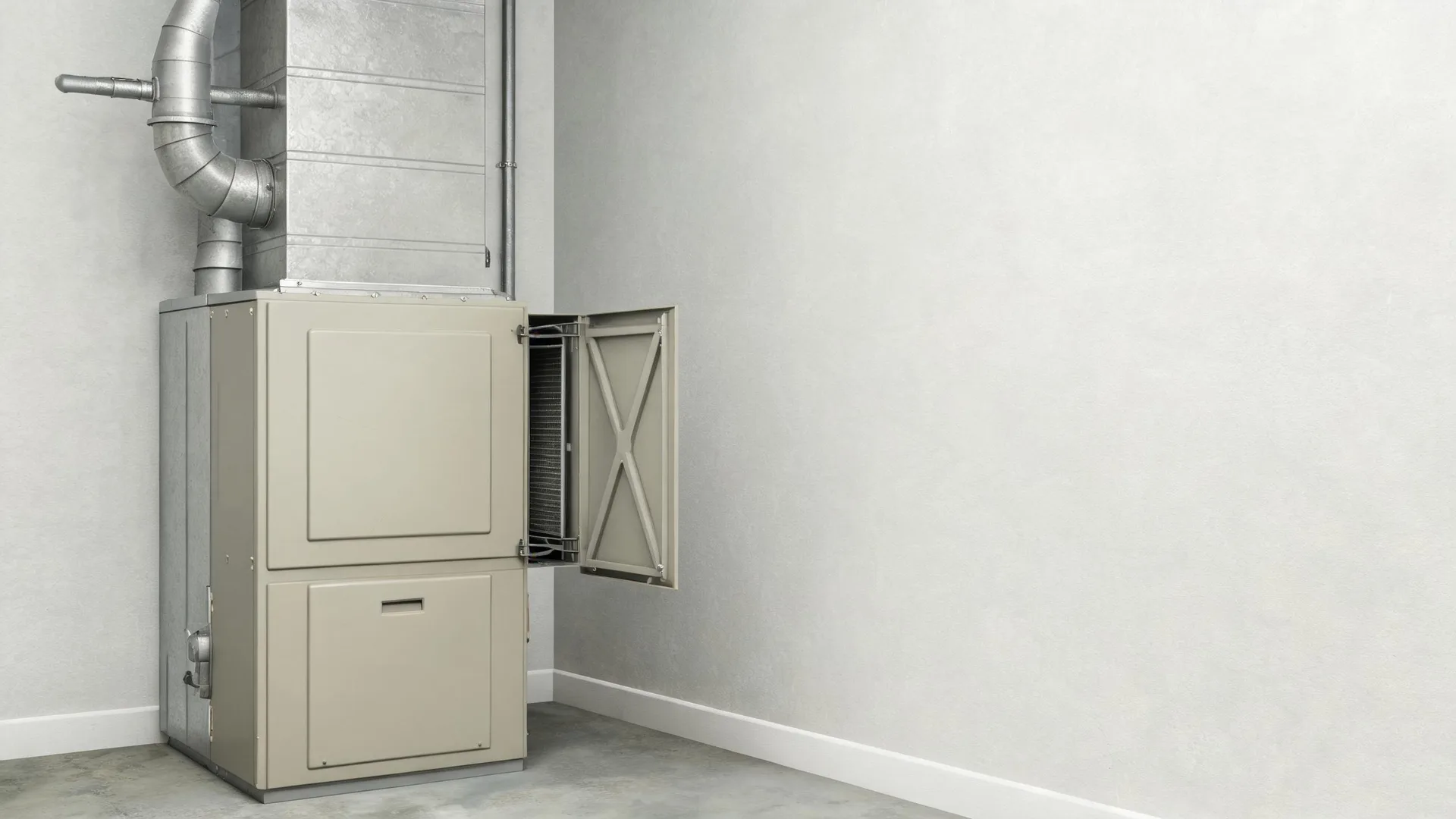
A gray gas furnace with attached ductwork and piping installed in an unfinished concrete basement.

What a running furnace hides

A furnace looks fine from the outside right up until it doesn't start. What a technician checks is what the flame itself is doing. A weak or uneven flame means the burner isn't getting clean combustion, and that can point to a clogged orifice or a cracked heat exchanger, something no homeowner can see without pulling the panel. The flame sensor gets cleaned or tested because a dirty one makes the furnace shut down mid-cycle, long before it fails outright. The igniter gets checked under load, not just looked at, since a hairline crack won't show until it's hot. Belt-driven blowers are rare now, but the blower motor and its bearings still wear, and a motor working harder than it should run hotter and shows up as a short cycle or a warm house that never quite gets to temperature. None of that is visible with the furnace off. It only shows up once the system is running the way it will run for months straight.

A quick visit checks that it runs

A fast tune-up lights the furnace, watches it cycle once, and swaps the filter. That tells you the furnace turns on. It doesn't tell you how clean the burner flame is, whether the heat exchanger has a hairline crack, or whether the flame sensor is coated enough to cause a shutdown three weeks from now.

A thorough one checks why it runs well

A full tune-up pulls the panel, tests the igniter under load, and checks amp draw on the blower motor against what that motor is rated for. Each of those catches a part that is failing slowly, before it fails on a cold morning. That's the difference between a technician confirming the furnace works and confirming it will keep working.

A furnace usually tells you before it quits. One sign is short cycling, where it fires up, runs a few minutes, and shuts off before the house warms. Another is a burner flame that looks yellow or ragged instead of steady and blue, which points to a combustion problem rather than just dust. Listen for a boom at startup, which means gas is building up before it lights instead of catching right away, and watch for a furnace that runs longer and longer to hold the same temperature. Dust blowing out of the vents or a dry, stale smell when the heat kicks on are both worth a look too. Any one of these is reason enough to have it checked before it decides the matter on its own.

A tune-up starts before the burner ever lights. A technician checks the venting first, making sure exhaust has a clear path out, because a blocked flue backs combustion gases into the house instead of outside. The gas valve and pressure get tested too, since too much or too little pressure at the burner changes how clean it burns. Electrical connections get checked for anything loose or corroded, since a bad connection at the control board can cause intermittent failures that look random until someone finds the wire. The condensate line gets checked on furnaces that have one, because a clog there can shut the whole system down or let water back up where it shouldn't be. Every safety control, the limit switch, the pressure switch, the rollout switch, gets tested to confirm it actually shuts the furnace down when it's supposed to, not just that it's wired in. A furnace can look complete with the panel back on and still have one of these left unchecked.