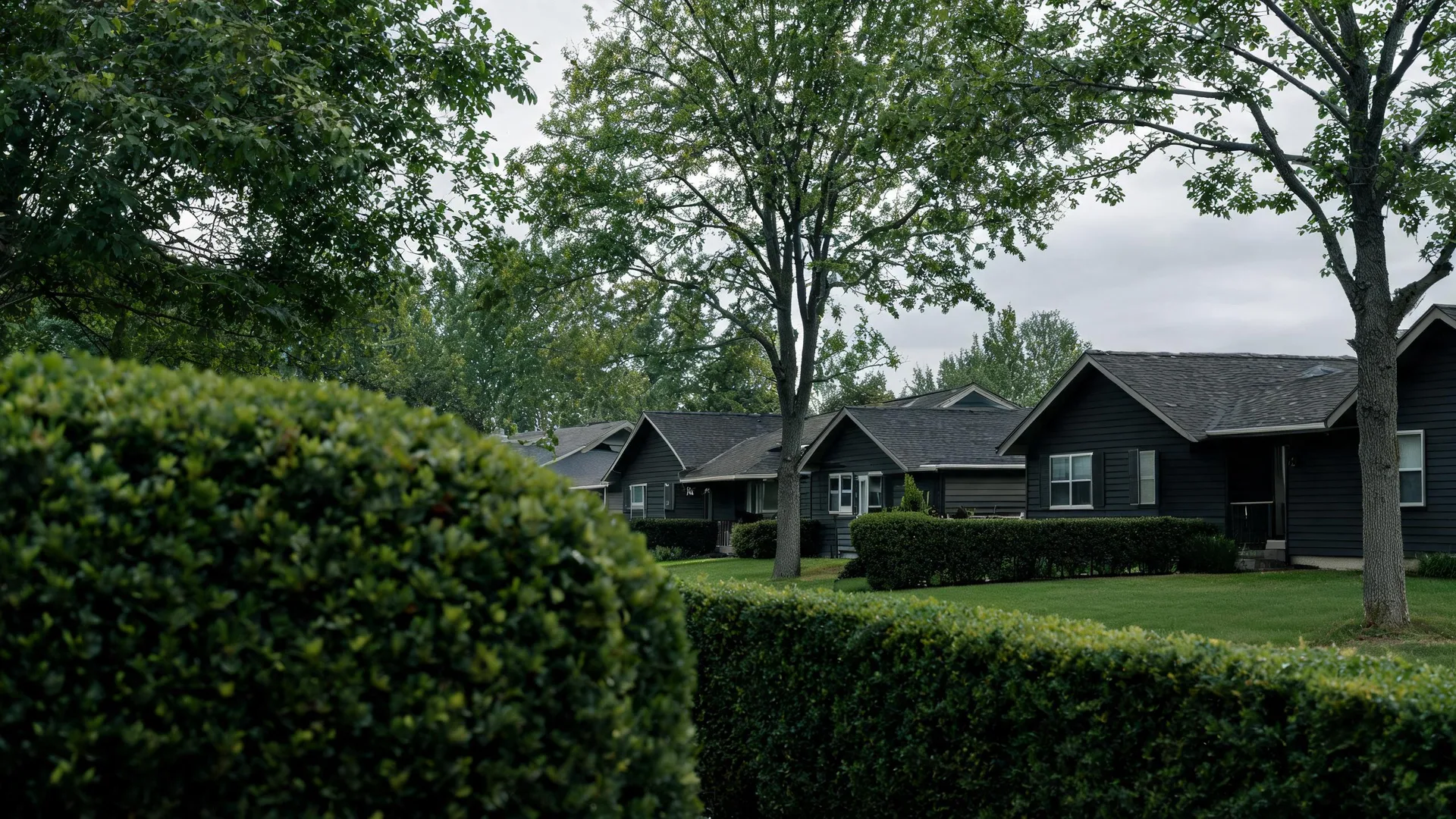
A row of dark-clad single-story houses with gabled roofs behind trimmed hedges, lawn and leafy trees under an overcast sky.

Furnace Maintenance in Big Rapids, MI

Tell us about the job

Takes about a minute. No obligation.

Tune-up, service, or cleaningFurnace or heatingMecosta County, MI
Step 1 of 2

What ZIP code is the job in?

Weather here takes a toll

Mecosta County had 29 severe weather events between 2015 and 2024, including 11 winter storms and 13 damaging wind events. That kind of weather works on a furnace year after year, especially anything mounted outside or tied to the vent system.
Power doesn't always hold

More than a third of Michigan households went at least a day without power in 2024. A furnace that depends on electronic ignition or a blower motor needs that power to run, so an outage during a cold stretch turns into a heating problem fast.

Furnaces in Mecosta County start their season in September and run through May.

Have the furnace checked in August, before it has to carry that first cold month.

Nine months of runtime wears a furnace down early

Heat runs September through May
Winter nights average 16°F
Climate zone 6A
Most furnaces here burn gasUtility gas heats 48.6% of homes in Mecosta County, with LP gas heating another 30.2%.

A tune-up before the season starts is when a technician finds the parts already showing wear from last winter. By the time the furnace has run nine months straight, an igniter or a blower motor that was borderline going in has had all that time to get worse. Catching it early means it gets fixed on a mild day instead of mid winter. A furnace that starts the season in good shape has a better shot at carrying the house through a power cut.

Have the outdoor parts checked while the technician is already there

Winter storms and damaging wind already work on anything a furnace has outside or tied to the vent system. A technician can check that part along with the rest of the tune-up, before the next storm finds the weak spot for you.
Find a contractor
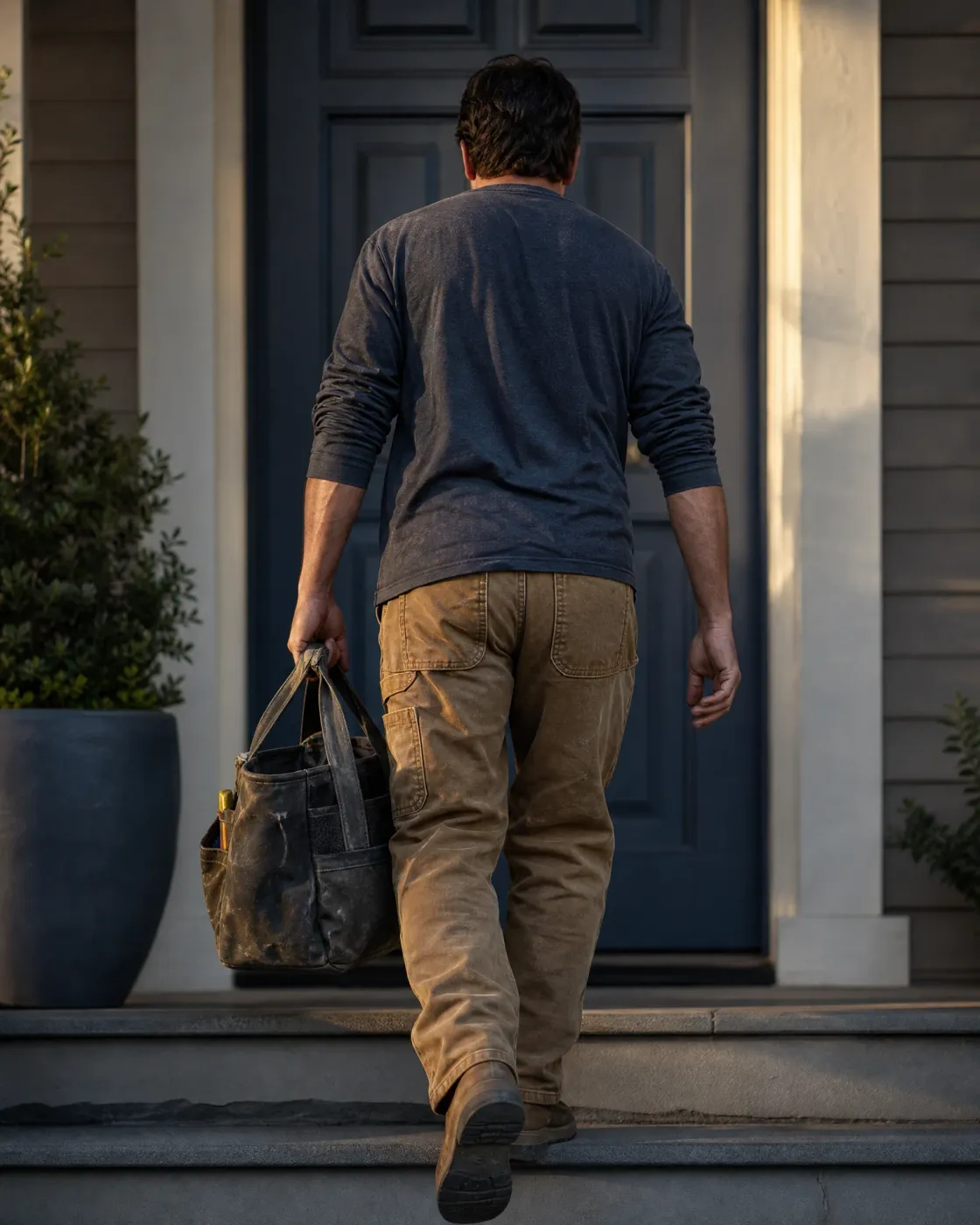
A man in a dark long-sleeve shirt and tan work pants, seen from behind, carries a worn canvas tool bag up concrete steps toward a dark blue front door.
A gray gas furnace with attached ductwork and piping installed in an unfinished concrete basement.

A real tune-up takes the panels off

A quick tune-up means someone swaps the filter, glances at the flame, and packs up. A thorough one means the panels come off. The technician checks the flame sensor for the thin layer of residue that builds up on it over time and keeps it from signaling the gas valve properly. They check the igniter for hairline cracks, since that part fails from stress each time it heats up and cools down. They pull the blower wheel and look for dust caked on the blades, which throws it off balance and wears the motor bearings early. They check the heat exchanger for cracks or corrosion, because a cracked one can let exhaust mix into the air the blower pushes through the house. They test the gas pressure at the manifold instead of assuming it's set right. They check the flue and venting for blockage or corrosion, since a furnace that can't vent properly will shut itself down or worse, won't. Ask what they checked, not just what they replaced. If the answer is short, the tune-up probably was too.

Wear shows up before a breakdown does

A cracked igniter still lights the burners. A dirty flame sensor still senses, for a while. Neither one announces itself. It just gets a little worse each cycle until the morning it doesn't fire at all, usually on the coldest night of the stretch.

What the tune-up is actually for

Pulling the blower wheel and checking the flame sensor is how a technician finds the part that's close to failing instead of the part that already has. A visual check from across the room won't show a hairline crack or a thin layer of residue. Taking the panels off will.

Skip the tune-up and the furnace doesn't fail all at once. It keeps running, a little worse each month, until something gives out. Dust builds up on the blower wheel and throws it off balance, and that extra strain wears the motor bearings faster than they're built for. A flame sensor coated in residue starts taking longer to detect the flame, until one cycle it doesn't catch at all. A dirty filter chokes airflow across the heat exchanger, and a heat exchanger that overheats and cools down over and over is more likely to crack. None of this shows up as a warning. It shows up as a furnace that won't start.

A tune-up isn't one task, it's a sequence, and skipping steps defeats the point. The technician works through the gas side and the air side separately, because a furnace that burns clean but moves no air is still failing. Static pressure gets checked against what the furnace is rated for, since too much resistance in the ductwork makes the blower work harder than it should and shortens its life. Safety switches get tested too, including the one that shuts the furnace down if it overheats. That switch is the only thing standing between a blocked vent and a real problem, and it has to be tested under real conditions, not just looked at. A furnace can pass a glance and still fail a real check.