Macomb County gets hit often
Macomb County recorded 142 severe weather events between 2015 and 2024, including 99 damaging wind events and 26 hail events. More than a third of Michigan households went at least 24 hours without power in 2024.
Takes about a minute. No obligation.
Macomb County recorded 142 severe weather events between 2015 and 2024, including 99 damaging wind events and 26 hail events. More than a third of Michigan households went at least 24 hours without power in 2024.
A gas furnace still needs electricity to run the blower, the control board and the igniter. When the power goes out, the furnace stops too, no matter how much gas is still coming into the house.
NOAA nClimDiv, 1991–2020 normals
Gas heats 88 percent of homes in Macomb County.
When a furnace needs replacing here, the simplest job is putting in the same kind of system that's already piped for gas.



Furnaces here run from October through May, eight months out of twelve. That gives you June, July, August and September to get a new one in before it has to work. Waiting until the first cold snap in October means picking a furnace under pressure, with whatever unit a contractor can get installed fastest. Doing it in September, the month before heat season starts, means the system gets sized and installed on a normal schedule instead of an emergency one. Overnight lows around Macomb County average 21°F in the dead of winter, so this isn't a machine you want to be troubleshooting in January.
If the power goes out this winter, the new furnace goes out with it until the electricity comes back. Ask about what it takes to keep the blower and control board running when the lines go down, and where the outdoor equipment sits so wind and hail don't find it.
Find a contractor
Eight months of heat a year means the new furnace runs about as much as it's going to, right from the first winter. That's the case for sizing it to the house rather than matching whatever's being pulled out. A unit that's too big short cycles, turning on and off instead of running steady, and that's harder on the igniter and the blower than a long, even run. A contractor can size it off a load calculation for the house, not a guess based on square footage. Ask for that before you ask for a price.
A furnace is sized to the heat loss of the house, not picked off a shelf. A bigger house, more windows, higher ceilings, all of it adds up to a bigger unit and a bigger price. The ductwork matters too. If the existing ducts can carry the new furnace's airflow, the job is a straight swap. If they're undersized or in the wrong place, bringing them up to the new system adds work before the furnace itself ever gets installed.
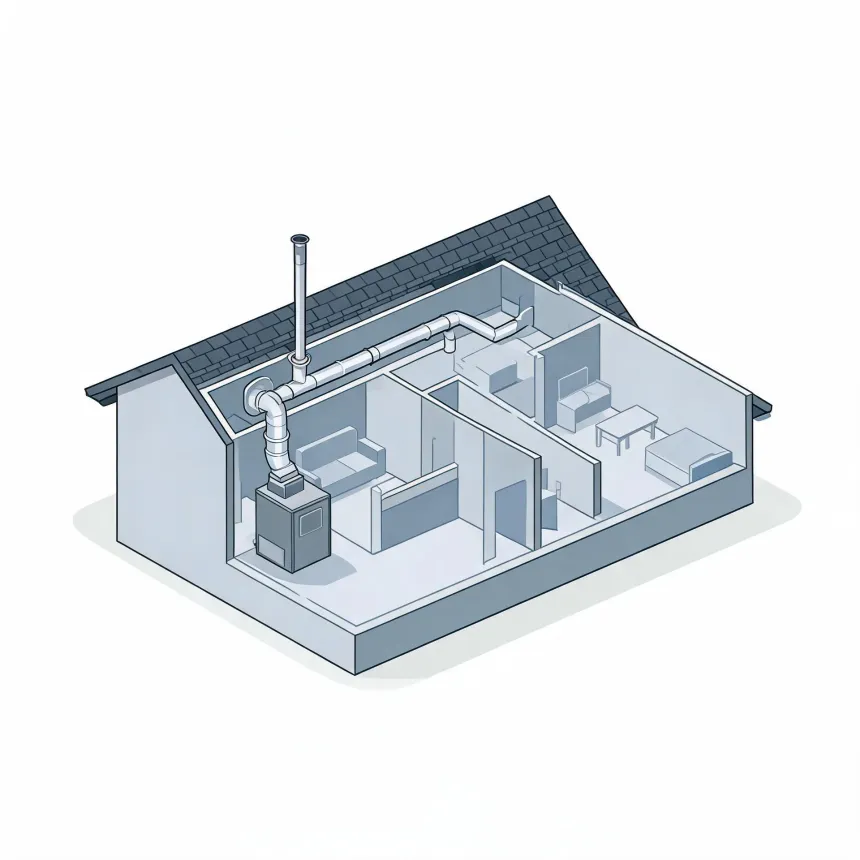
A higher efficiency furnace condenses exhaust gas into water instead of venting it hot, which means it needs a drain line and PVC venting instead of a metal flue. That's more parts and more labor than a standard furnace venting straight up through the chimney. The tradeoff shows up later on the gas bill, not on the install day, so it's worth asking a contractor to walk through both options rather than defaulting to whichever one they quote first.
Estimates for a typical Macomb County home, from EIA household energy data, Michigan fuel prices and NOAA climate normals. Your home will differ.
The old furnace comes out first, disconnected from the gas line, the vent and the ductwork before anything new goes in. Most installs run a full day, sometimes longer if the ductwork needs work or the vent has to be rerouted for a new efficiency rating. The contractor will check the gas line sizing, the electrical connection and the condensate drain if the new unit needs one. Once it's set, they'll fire it up, check the temperature rise across the heat exchanger and make sure the blower is moving the right amount of air through the ducts. A combustion analyzer tells them whether it's burning clean before they call the job done. The old furnace and any removed ductwork or venting material leave with the crew, not with you.