




A dark two-story house with a covered porch stands behind a hedge and large deciduous trees, viewed from a low angle across a mowed lawn under an overcast sky.

Furnace Installation in South Haven, MI

Tell us about the job

Takes about a minute. No obligation.

New system or replacementFurnace or heatingVan Buren County, MI
Step 1 of 2

What ZIP code is the job in?

Van Buren County saw 59 severe weather events between 2015 and 2024. Damaging wind caused 33 of those, winter storms another 17, and hail the rest. A furnace install here is a chance to think past the unit itself, down to what happens when the power drops. Across Michigan, over a third of households lost power for a day or more in 2024. A gas furnace still needs electricity to run its blower and controls, so an outage can mean no heat even with the gas line intact.

8 months
October through May, your furnace is on duty
20°F
the average winter night it heats against
58%
of homes here heat with gas, so most furnaces here burn gas
80% AFUE
the federal minimum any new unit must meet
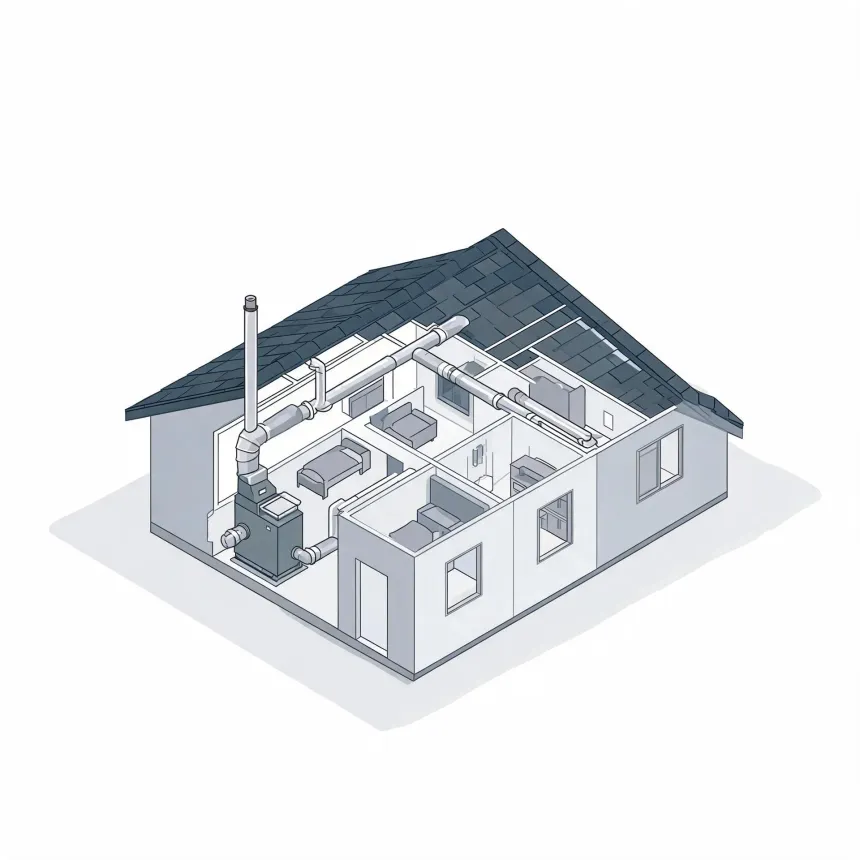
Isometric cutaway illustration of a single-story house showing interior rooms with furniture, ceiling ductwork, a furnace unit with a tall flue pipe, and a dark shingled roof.
Your furnace works hardest from November through March.

NOAA nClimDiv, 1991–2020 normals

Gas heats 58% of the homes in Van Buren County, more than any other fuel.

A gas furnace is the system most contractors here install and service, so parts and know-how are easy to find.

Get it installed before October, not after the first cold snap

Heat runs October through May
Climate zone 5A
Winter nights average 20°F
Eight months of heat a yearFurnaces here run October through May, more than most of the country asks of one machine.

Van Buren County falls in climate zone 5A, a zone where heating does more work than cooling over the year. Any furnace installed here has to meet the federal minimum for that zone, which currently sits at 80 percent efficiency. That means at least 80 percent of the gas it burns turns into heat for the house, with the rest lost up the flue. The rule steps up to 95 percent for furnaces manufactured on or after December 18, 2028, so a unit bought now still only has to clear the lower bar. A contractor can tell you where a given model lands above that line, and what that costs to run through a Van Buren County winter.

Plan for the outage, not just the cold

A new furnace is only as good as what happens when the power goes out. Ask about battery backup for the controls and blower, and a surge protector for the outdoor components. If you're ever without power for a day, a plan for backup heat matters as much as the furnace itself.

Find a contractor
A man in a dark shirt and brown pants carries a worn canvas tool bag up concrete steps toward a gray-blue front door of a house with horizontal siding and a potted shrub.
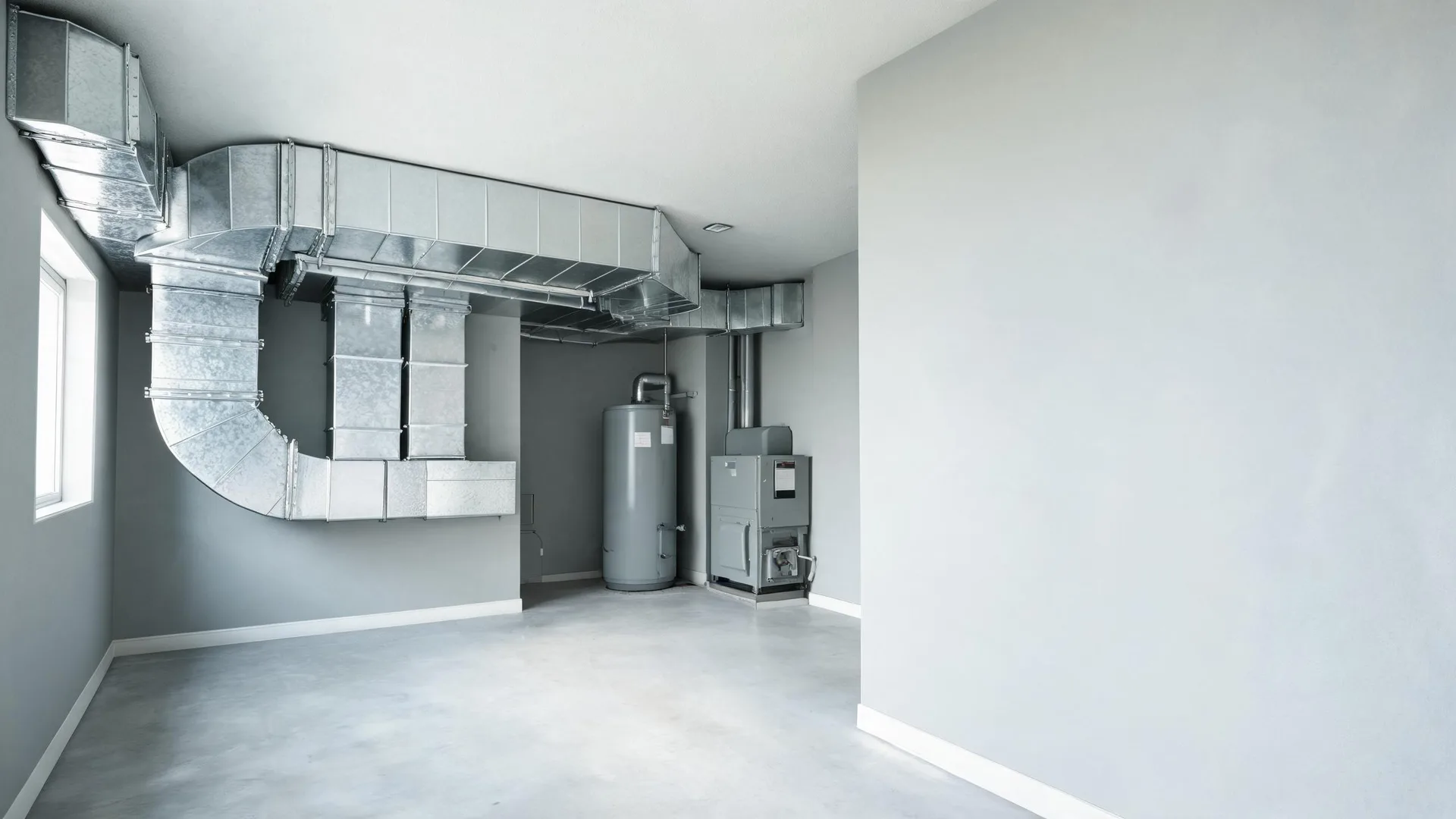
A gas furnace with attached ductwork, gas piping, and condensate lines installed in a concrete-block basement.

Eight months is a long time to carry a wrong-sized unit

Eight months of run time a year means eight months for a weak part to make itself known. When you size this install, don't just match the old unit's output. Have the contractor run a load calculation on the house as it stands now. A furnace sized right runs steady through the long stretch from October to May instead of straining on the coldest nights and short-cycling on the mild ones. That strain is what gets expensive, and it shows up earlier on a machine that runs this many months a year.

The old furnace still has to come out right

A furnace isn't just unhooked and hauled off. The gas line gets capped or reconnected to the new unit, the flue or vent pipe gets checked since a new furnace often vents differently than the old one, and the electrical and condensate connections all get redone to match. Skipping any of that step is how a new furnace ends up vented wrong or fighting a line sized for the old one.

A mismatched vent is a problem you can't see

Older furnaces often share a flue with the water heater, sized for two appliances burning at once. Pull the furnace out and put in a newer, higher-efficiency model, and that shared flue can end up too large for what's venting through it now. An oversized flue lets exhaust cool and linger instead of drafting out, which is why this gets checked at install instead of left for someone to notice later.

An unfinished basement containing a metal furnace with ductwork, exposed wooden joists on the ceiling, cardboard boxes, a coiled cable, and a single hanging incandescent bulb.

A high-efficiency gas furnace would save about $120 a year to run in Van Buren County compared with a gas furnace.

  • A high-efficiency gas furnace$570 a year
  • A gas furnace$690 a year

Estimates for a typical Van Buren County home, from EIA household energy data, Michigan fuel prices and NOAA climate normals. Your home will differ.

Installation day starts with the old furnace coming out, not the new one going in. The contractor shuts off gas and power to the unit, disconnects the vent and ductwork, and clears the space down to the connections. The new furnace gets set, leveled, and tied into the duct trunk, the gas line, and the vent pipe. Electrical and any condensate drain lines get run next, since a higher-efficiency furnace drains differently than an older one. Once it's hooked up, the contractor fires it and checks gas pressure, flame, and airflow before closing the panels. Only after it runs clean through a full cycle does the job end, not when the unit is bolted in place.