




An unfinished basement interior showing a gray furnace unit beneath a bare incandescent bulb, surrounded by exposed joists, concrete walls, cardboard boxes, and utility pipes.

Furnace Installation in Lapeer, MI

Tell us about the job

Takes about a minute. No obligation.

New system or replacementFurnace or heatingLapeer County, MI
Step 1 of 2

What ZIP code is the job in?

Lapeer County saw 95 severe weather events between 2015 and 2024. Most of that was wind, 65 events, with 17 winter storms and 12 hail events mixed in. A new furnace doesn't have to survive a storm by itself, but the system around it does. A furnace needs power to run even when the fuel is gas, from the igniter to the blower motor, so a storm that knocks out electricity knocks out your heat too. Statewide, a third of households went at least a full day without power in 2024. That's worth asking your contractor about before the install, not after the lights go out.

8 months
October through May, your furnace is on duty
18°F
the average winter night it heats against
62%
of homes here heat with gas, so most furnaces here burn gas
80% AFUE
the federal minimum any new unit must meet
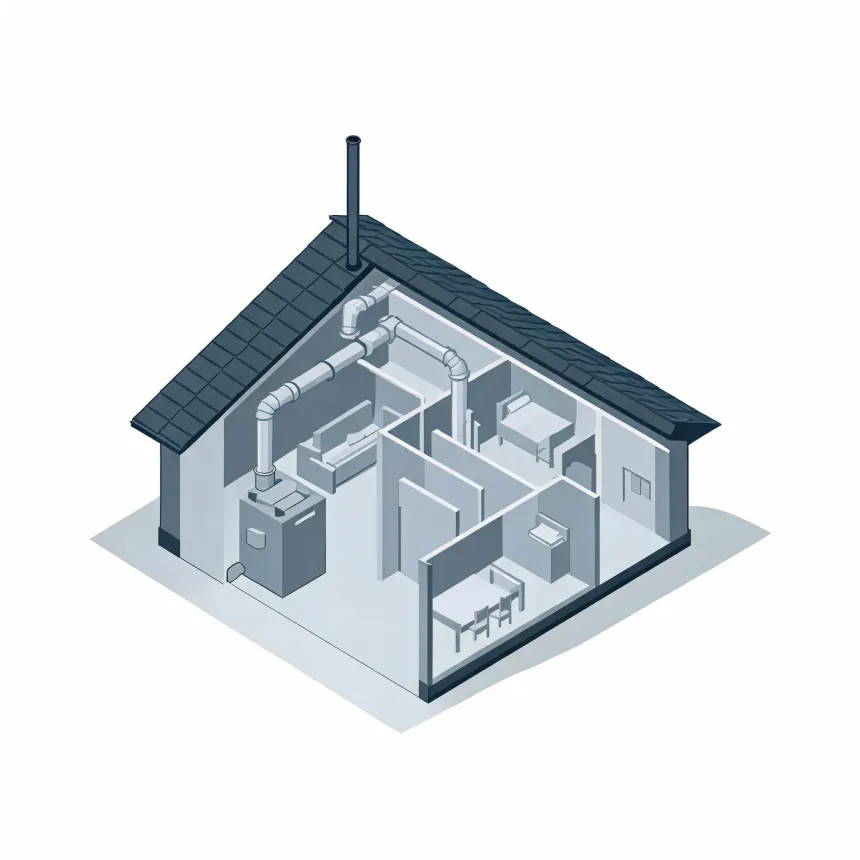
Isometric cutaway illustration of a small single-story house showing interior rooms with furniture, a furnace unit with attached ductwork running to a roof flue, and a dark shingled roof.
Your furnace works hardest from November through March.

NOAA nClimDiv, 1991–2020 normals

Furnaces in Lapeer County start running in October.

Get yours installed in September, before you need it to work.

Eight months of heat a year means this furnace doesn't get much rest

Heat runs October through May
Winter nights average 18°F
Climate zone 5A
Gas is how Lapeer County heats61.5% of homes here run on utility gas, more than any other fuel.

Lapeer County falls in climate zone 5A, a cool zone where heating carries more of the load than cooling does. Any furnace installed here now has to turn at least 80 percent of the gas it burns into heat over the winter. That's the federal minimum for units built from November 2015 onward, and it's not optional. The number moves again in December 2028, when new furnaces will have to hit 95 percent. A unit installed before then stays legal at 80 percent, but it's worth asking your contractor where a given model falls, since efficiency this high usually means lower gas bills over a winter that runs long here.

Plan for the power going out, not just the furnace going in

Ask your contractor where the furnace goes and what backs it up before the crew shows up. A unit with a plan for power loss keeps your house warm when the lines go down, not just when they don't.

Find a contractor
A man in a dark cap, gray T-shirt and brown work pants walks up porch steps toward a dark front door, carrying a canvas tool bag filled with tools, with a potted shrub beside the entry.
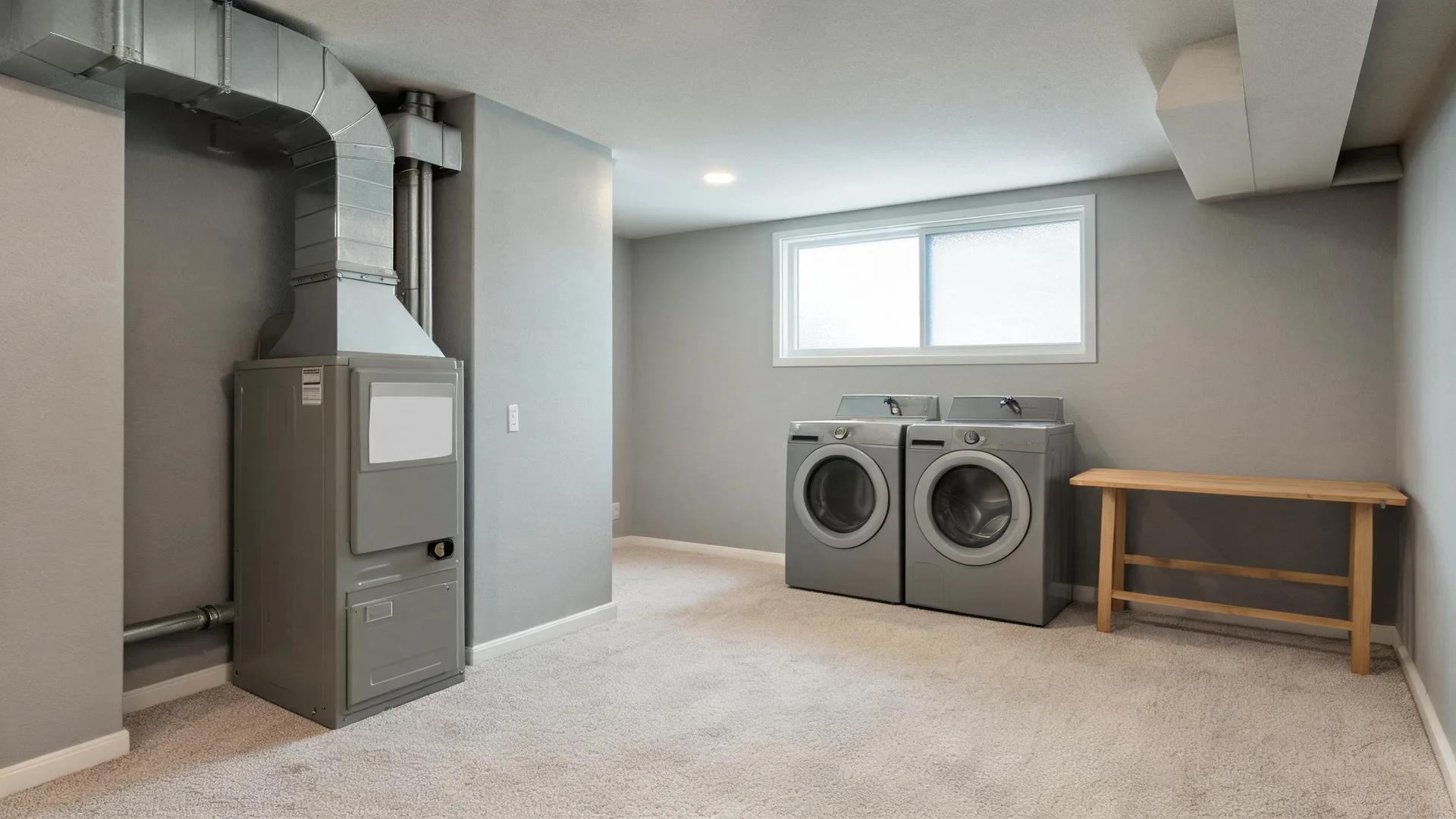
A gray residential gas furnace installed in an unfinished basement, surrounded by ductwork, a metal flue pipe, and a gas supply line.

It runs eight months a year, so get the size right before anything else

Eight months of running time means a lot of cycles on the igniter, the blower motor and everything that controls them. When you're sizing the new system, don't just match the old one. Have the contractor run a load calculation on the house as it is now, not a guess based on square footage or what's already in the basement. A furnace sized right for Lapeer winters runs steady and even. One sized wrong, even by a little, short cycles or runs long, and either way it's working harder than it should for eight months straight. That's where the parts give out first.

Sizing comes from a calculation, not a guess

A load calculation looks at the walls, the windows, the ceiling height and how the rooms connect, then works out how much heat the house actually loses on a cold day. That number is what sizes the furnace. Square footage alone skips all of that, and so does matching whatever size is already down there.

Too big is its own problem, not a safety margin

An oversized furnace heats the house fast, shuts off, then starts again soon after because the air cooled back down before the ducts and walls ever warmed up. That short cycling wears on the igniter and the blower motor and leaves rooms farther from the furnace colder than the ones close to it. Bigger isn't a cushion. It's a different way to wear out.

A gray forced-air furnace with ductwork stands in an unfinished concrete basement surrounded by storage items and clutter.

A high-efficiency gas furnace would save about $120 a year to run in Lapeer County compared with a gas furnace.

  • A high-efficiency gas furnace$610 a year
  • A gas furnace$730 a year

Estimates for a typical Lapeer County home, from EIA household energy data, Michigan fuel prices and NOAA climate normals. Your home will differ.

Installation starts with pulling the old furnace out, and that takes longer than people expect once the ductwork and gas line are disconnected and capped. The new unit gets set in place, then the technician works through venting, gas supply, the return and supply plenums, and the electrical connections one at a time. Every joint in the gas line gets tested for leaks before anything is fired up. Once it's connected, the furnace runs through a startup cycle while the technician checks static pressure in the ducts, measures the temperature rise across the heat exchanger, and confirms the flame sensor and igniter are both working the way they should. A combustion analysis follows, checking what's actually coming out of the flue, since a furnace can look like it's running fine and still be burning unevenly inside. Only after all of that gets signed off does the job end with a walkthrough of the thermostat and the filter location, not with the furnace just switched on and left running.