Ingham County sees its share of severe weather
Ingham County logged 44 severe weather events between 2015 and 2024, including 21 damaging wind events, 10 hail events, 12 winter storms, and a tornado. A furnace here deals with more than cold.
Takes about a minute. No obligation.
Ingham County logged 44 severe weather events between 2015 and 2024, including 21 damaging wind events, 10 hail events, 12 winter storms, and a tornado. A furnace here deals with more than cold.
More than a third of Michigan households went at least 24 hours without power in 2024. A furnace that depends entirely on the grid leaves you without heat exactly when a winter storm knocks the power out.

NOAA nClimDiv, 1991–2020 normals
Gas heats more homes in Ingham County than any other fuel, at 68.5%.
A gas furnace is the system a contractor here has installed and serviced the most.


Eight months of heat is a long stretch for one machine to carry. A furnace sized too small for the house spends more of those months running flat out, trying to keep up. One sized right cycles on, satisfies the thermostat, and shuts off, the way it's supposed to. Over October through May that difference shows up in wear on the parts and in how long the system holds up. The lowest price on the install doesn't tell you which unit was actually sized for that load.
When a storm takes the power out, a standard furnace stops with it. If you're installing new, this is the point to ask about options that keep working through an outage, and where the outdoor unit sits matters too, away from falling branches and clear of ice runoff. Get this settled during the install and you won't be figuring it out during the next one.
Find a contractor
A load calculation done on this house is what tells the installer the right size furnace to put in, not a guess off square footage. If your house was built in 1971 or earlier, whoever installed the furnace you're replacing may have sized it off rules of thumb instead of an actual calculation. Ask for the load calc in writing before the new one goes in, no matter when the house was built.
An oversized furnace heats the house fast, satisfies the thermostat, and shuts off again before it finishes a full cycle. Short cycling like that means the heat exchanger goes through more temperature swings, the blower starts and stops more often, and the air coming out never quite evens out room to room. It's not a safer bet just because it's bigger.
A proper sizing calculation walks through the walls, the windows, the insulation, the ceiling height, even which way the house faces, and works out how much heat it actually loses on the coldest day. Square footage alone skips all of that. Two houses the same size can need different size furnaces, and the only way to know is to run the numbers on the one you've got.
Estimates for a typical Ingham County home, from EIA household energy data, Michigan fuel prices and NOAA climate normals. Your home will differ.
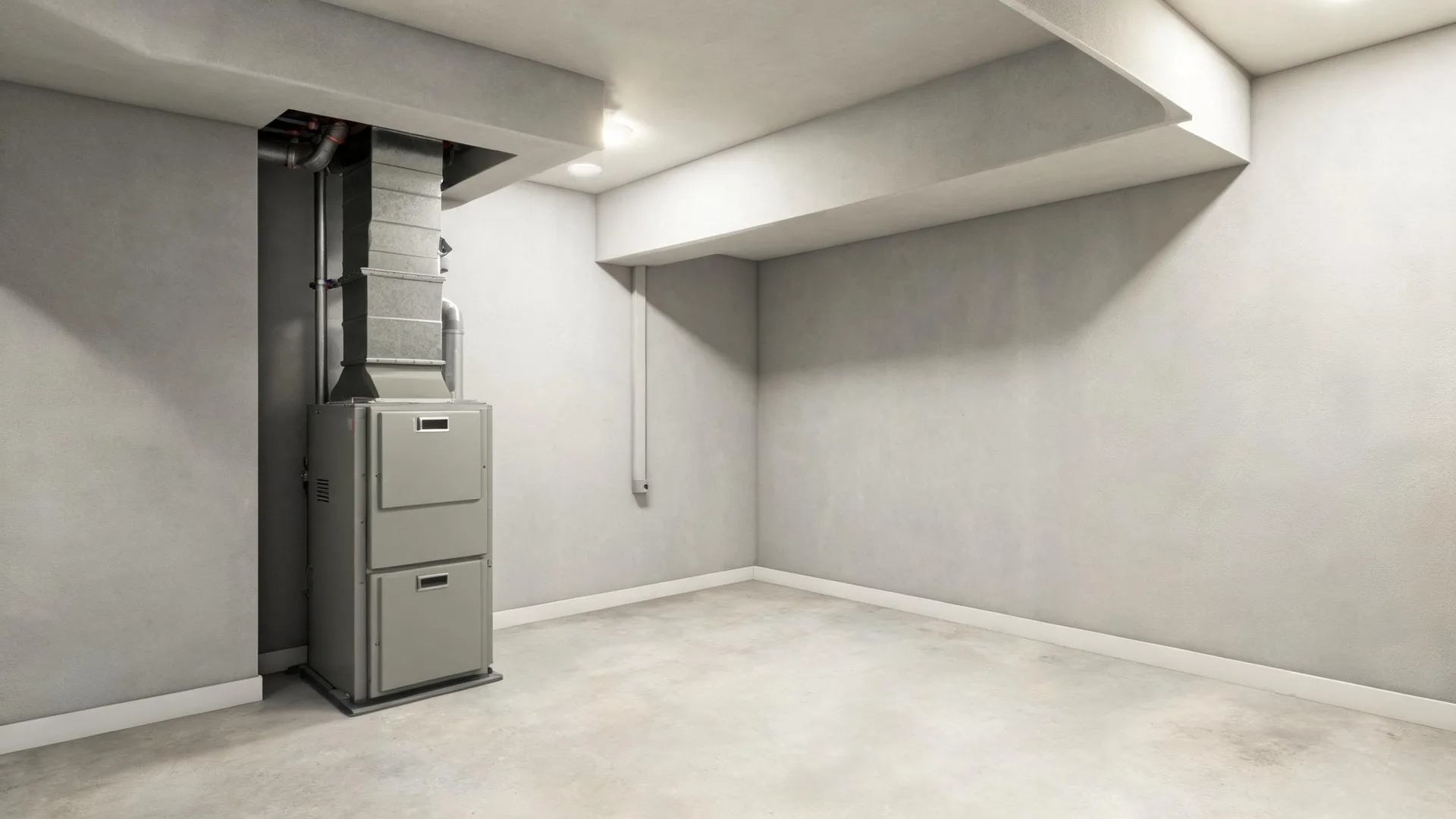
Install day starts with the old furnace coming out, along with the flue pipe and any ductwork that doesn't match up with the new unit. The installer sets the new furnace, connects the gas line, the ductwork, and the venting, then wires it to the thermostat. Once it's in place, the gas and electrical connections get tested before anything is buttoned up. The next step is airflow: the blower speed gets set to match the ductwork, not just left on a default setting. Then comes startup, checking the flame, the temperature rise through the furnace, and the draft pulling exhaust out through the vent the way it should. A combustion analyzer checks the exhaust itself, confirming the furnace is burning gas cleanly rather than running rich or starving for air. None of that shows up by looking at the unit afterward. It's the difference between a furnace that's installed and one that's installed right.