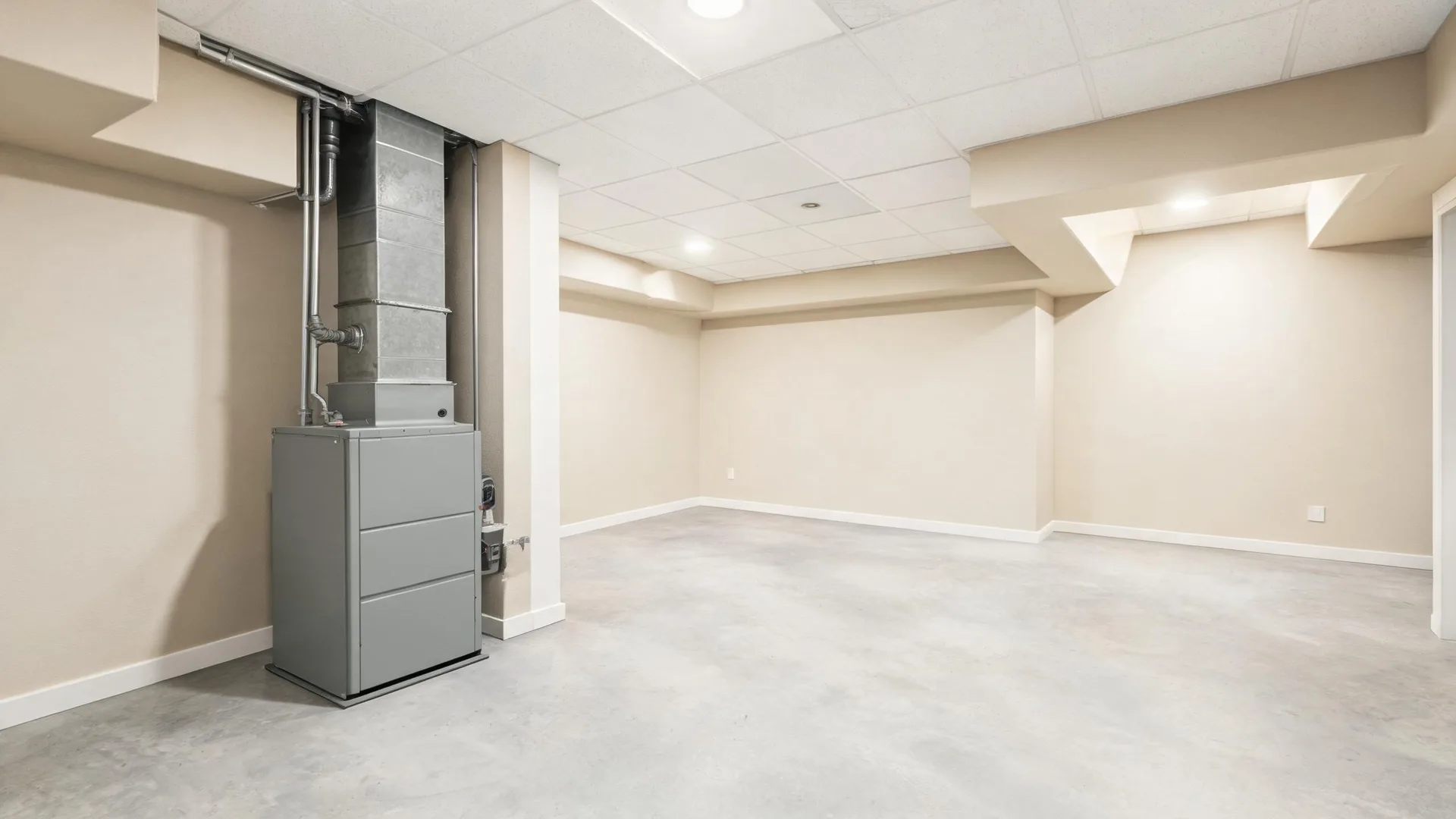
An unfinished basement featuring concrete block walls, exposed floor joists, a bare concrete floor, and a forced-air furnace with a large metal exhaust duct in the corner.

Furnace Installation in Coldwater, MI

Tell us about the job

Takes about a minute. No obligation.

New system or replacementFurnace or heatingBranch County, MI
Step 1 of 2

What ZIP code is the job in?

Branch County sees real storm numbers

Branch County recorded 69 severe weather events between 2015 and 2024, including 47 damaging wind events, 15 winter storms, 4 hail events and 3 tornadoes. Statewide, 34% of Michigan households lost power for a day or more in 2024.

A furnace has to survive what's outside it

Wind and hail reach whatever sits outside, and a long power cut can take a furnace down no matter how new it is. A new furnace install is the chance to plan for both before winter tests it.

8 months
October through May, your furnace is on duty
19°F
the average winter night it heats against
57%
of homes here heat with gas, so most furnaces here burn gas
80% AFUE
the federal minimum any new unit must meet
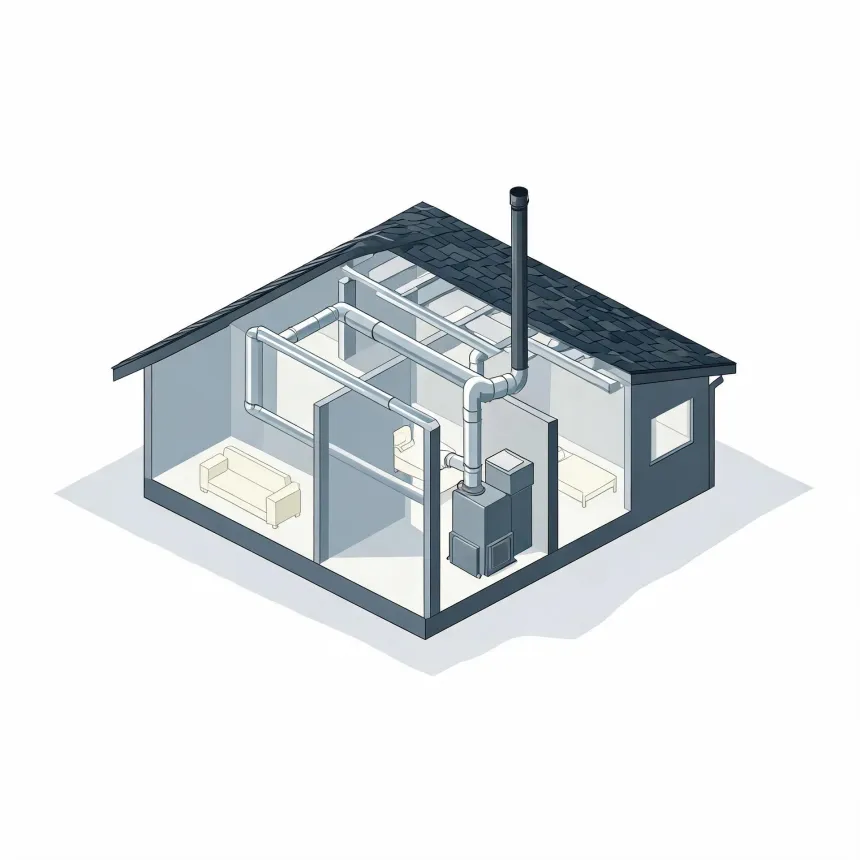
Isometric cutaway illustration of a small single-story house showing a furnace with a flue pipe through the roof and ducting running to rooms containing a sofa, chair and bed.
Your furnace works hardest from November through March.

NOAA nClimDiv, 1991–2020 normals

Furnace replacement in Branch County is planned work when it happens before October.

Wait for a cold snap and you take whatever install date is left, not the one that works for you.

Eight months of heat a year wears a furnace faster than most places ever will

Heat runs October through May
Winter nights average 19°F
Climate zone 5A
Gas furnaces are what this county runs on57% of homes in Branch County heat with utility gas

Branch County falls in climate zone 5A, a cool zone where the furnace carries more of the year's work than the air conditioner does. Any furnace installed here has to turn at least 80 percent of the gas it burns into heat over the winter, the federal minimum since late 2015. That floor goes up to 95 percent for furnaces built on or after December 18, 2028, so the baseline itself is about to change. A furnace meeting that higher mark wastes less gas out the flue for every dollar spent heating the house. Federal tax credits exist for qualifying high-efficiency equipment, and a contractor can say which models installed now qualify.

Plan around the outages before winter needs you to

A furnace install means picking where the outdoor unit sits and what keeps the house warm if the power drops. That planning happens now, while you're already choosing the system, not during the next outage.

Find a contractor
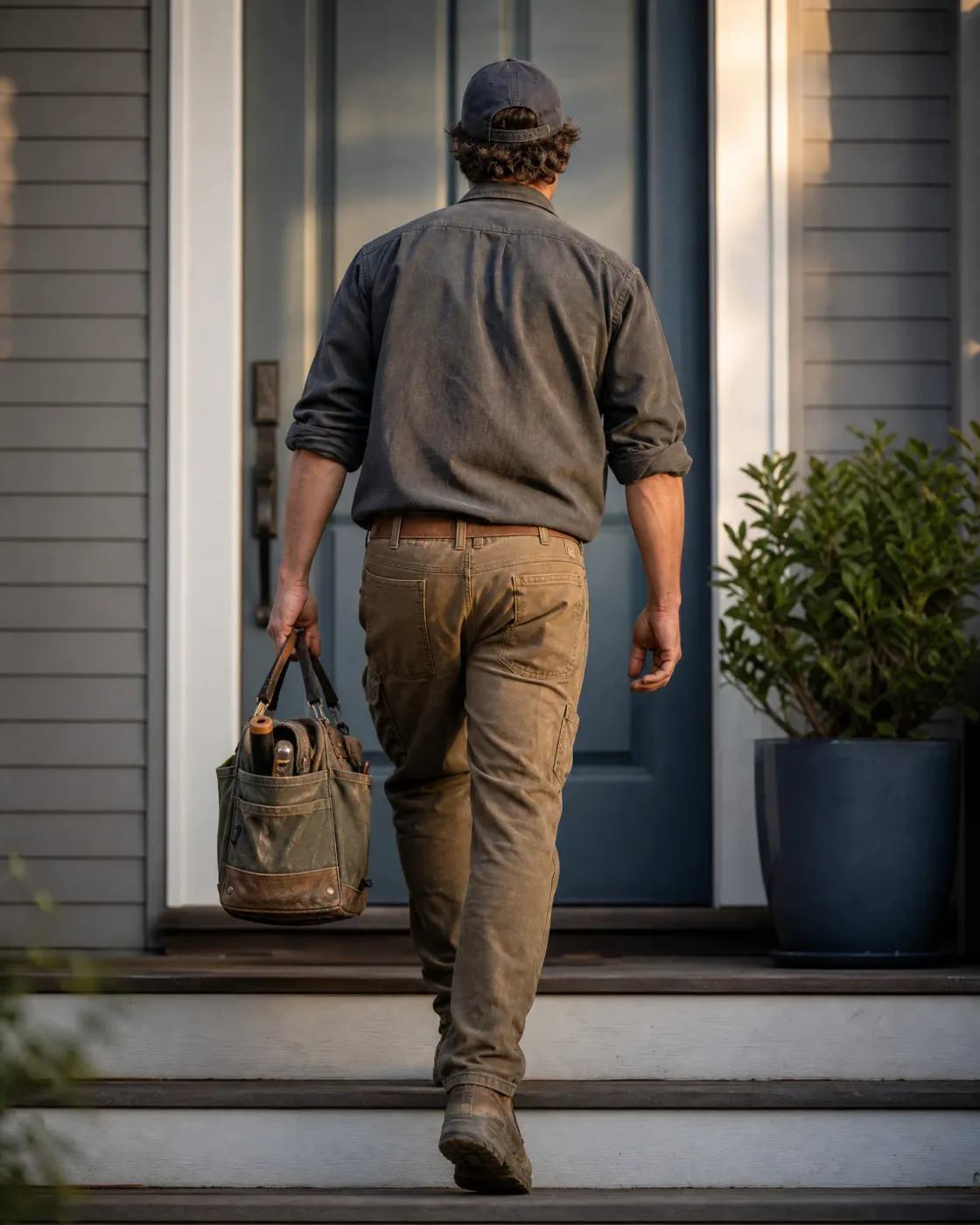
A man in a cap, gray shirt and tan work pants walks up steps toward a dark front door, carrying a worn canvas and leather tool bag, with a potted shrub to the right.
A gray high-efficiency gas furnace installed in an unfinished basement, surrounded by gas lines, a condensate drain, and sheet-metal ductwork.

This furnace is going into an older house

Half the homes in Branch County were built in 1969 or earlier. A furnace going into one of those houses is going into ductwork and a layout sized for whatever ran there decades ago, not for the model on the showroom floor. If your system came with the house, or came with an addition built later, the new furnace still has to work with what's already in the walls. That's a sizing and ductwork question a contractor checks on-site, not something a brochure can answer.

Sizing runs on heat loss, not square footage

A contractor figures out how fast a house loses heat on the coldest days, room by room, counting windows, walls and ceiling area. That number, not the floor plan alone, sets the output the new furnace needs. Two houses the same size can need different furnaces if one has more window area or a different ceiling height.

Oversized and undersized both cause problems

A furnace too big for the house heats the air fast, shuts off, then starts again soon after. That short cycling wears the ignition parts and the blower motor faster and leaves rooms far from the furnace colder than the rest. A furnace too small runs long stretches without catching up on the coldest days. The right size runs longer, steadier cycles and wears evenly.

A gray forced-air furnace with sheet-metal ductwork stands in an unfinished basement with exposed wooden joists, concrete walls, and a hanging incandescent bulb.

A high-efficiency gas furnace would save about $120 a year to run in Branch County compared with a gas furnace.

  • A high-efficiency gas furnace$580 a year
  • A gas furnace$700 a year

Estimates for a typical Branch County home, from EIA household energy data, Michigan fuel prices and NOAA climate normals. Your home will differ.

Installation day starts with the old furnace coming out, and that alone can take a few hours once the ductwork, gas line and venting are disconnected. The new unit gets set in place, then the technician works through the gas line, the venting, the ductwork connections and the electrical, in that order or close to it. Venting matters as much as anything else on the list, since it has to carry combustion gas out of the house safely, and a contractor will check the vent pipe and its slope against what the new furnace needs. Once everything's connected, the system gets fired up and tested through a full cycle, checking the flame, the heat exchanger and the airflow coming out of the registers. A contractor will also check the gas pressure at the manifold and confirm the thermostat is talking to the new equipment correctly. The whole thing ends with a walkthrough, so the homeowner knows what the filter looks like, where the shutoff is, and what the first few weeks of running a new furnace should feel like.